
Planted Vegetative Strips (PVS)
Type: Technologies
Creation: 2011-06-14 19:28 Updated: 2019-06-14 11:46
Compilers: Philippine Overview of Conservation Approaches and Technologies
Reviewers: Deborah Niggli, Alexandra Gavilano
Country/ region/ locations where the Technology has been applied and which are covered by this assessment
- Country: Philippines
- Region/ State/ Province: Isabela
- Further specification of location (e.g. municipality, town, etc.), if relevant: Isabela
- Map: View Map
Description of the SLM Technology
Short description of the Technology
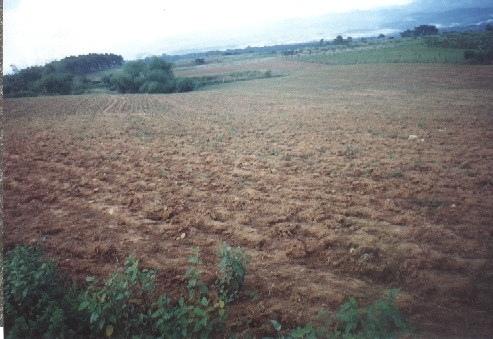
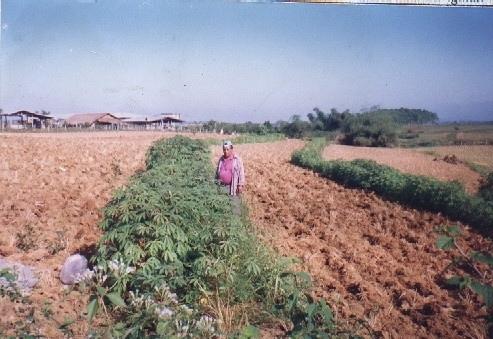
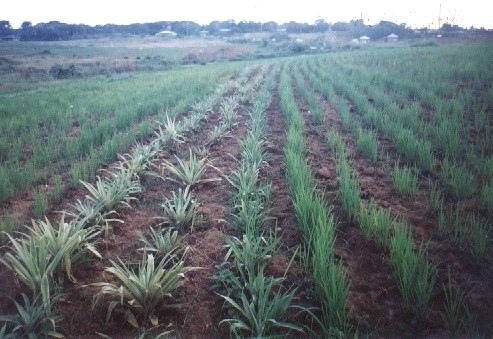
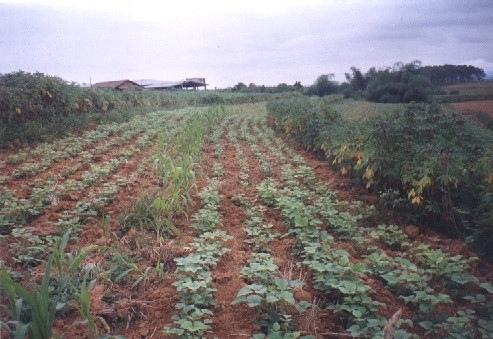
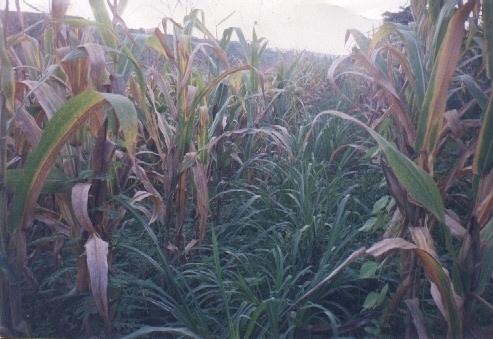
Planting of economic crops/forages in strips along the contour to control soil loss through erosion.
Detailed description of the Technology
The technology was introduced in the upland corn growing areas in Isabela province. The province is one of the main corn growing areas in the Philippines. As a means of minimizing/controlling soil erosion, economic crops like cassava and pineapple and forage grasses are planted in strips along the contour. Cassava and pineapple strips are established together with forage grass. When the cassava and pineapple is harvested, the forage will continue to provide protection against soil erosion. Planting of cassava is done yearly, while the replanting cycle for pineapple is 2 to 3 years. In some cases, forage grass is grown alone. It is more or less permanent and it is trimmed regularly. Overtime, natural terraces are formed and soil erosion is minimized. The system is advatageous in the economic benefit can be gained from both the alley crops is there on the contour strips.
Photos of the Technology
- 📍 Isabela
- 📷 Victor Crisologo, Jr (Isabela, Philippines)
- 📍 Isabela
- 📷 Jose D. Rondal (Quezon City, Philippines)
- 📍 Isabela
- 📷 Victor Crisologo, Jr (Isabela, Philippines)
- 📍 Isabela
- 📷 Victor Crisologo, Jr (Isabela, Philippines)
- 📍 Isabela
- 📷 Victor Crisologo, Jr (Isabela, Philippines)