
Mulching in rainfed vineyards on terraces in the loess hill zone
Type: Technologies
Creation: 2011-04-08 10:07 Updated: 2019-08-14 21:00
Compilers: Qobiljon Shokirov
Reviewers: David Streiff, Alexandra Gavilano
Country/ region/ locations where the Technology has been applied and which are covered by this assessment
- Country: Tajikistan
- Region/ State/ Province: RRS
- Further specification of location (e.g. municipality, town, etc.), if relevant: Faizabad, Javonon, Karsang
- Map: View Map
Description of the SLM Technology
Short description of the Technology
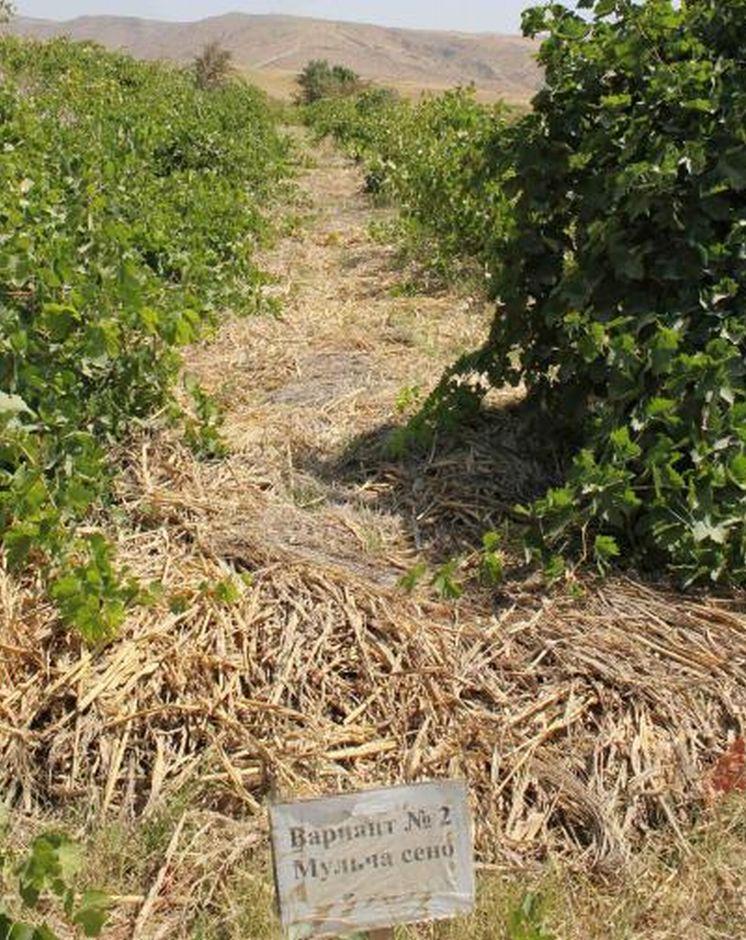
This technology consists of vineyards plots that are mulched with grass and established on terraced land in the loess hills of Tajikistan.
Detailed description of the Technology
On the terrain of the Tajik Soil Institut's research station in Karsang, Faizabad District, Tajikistan, a vineyard was established on forward sloping terraces with about 12° inclination on land formerly used as extensive pastures. This technology dates back to the times of the Soviet Union in 1968. Bulldozers were used to establish the terraces.
Before the planting of vines the soil was ploughed. Local vine sorts were used for the plantation and intercropping is done with wheat and fodder crops. About 1300 vine seedlings were planted per hectare.
Purpose of the Technology: Mulching treatment with grass was initiated to increase soil moisture in the soil, improve soil quality such as soil organic matter and other elements and protect soil from erosion by water and wind.
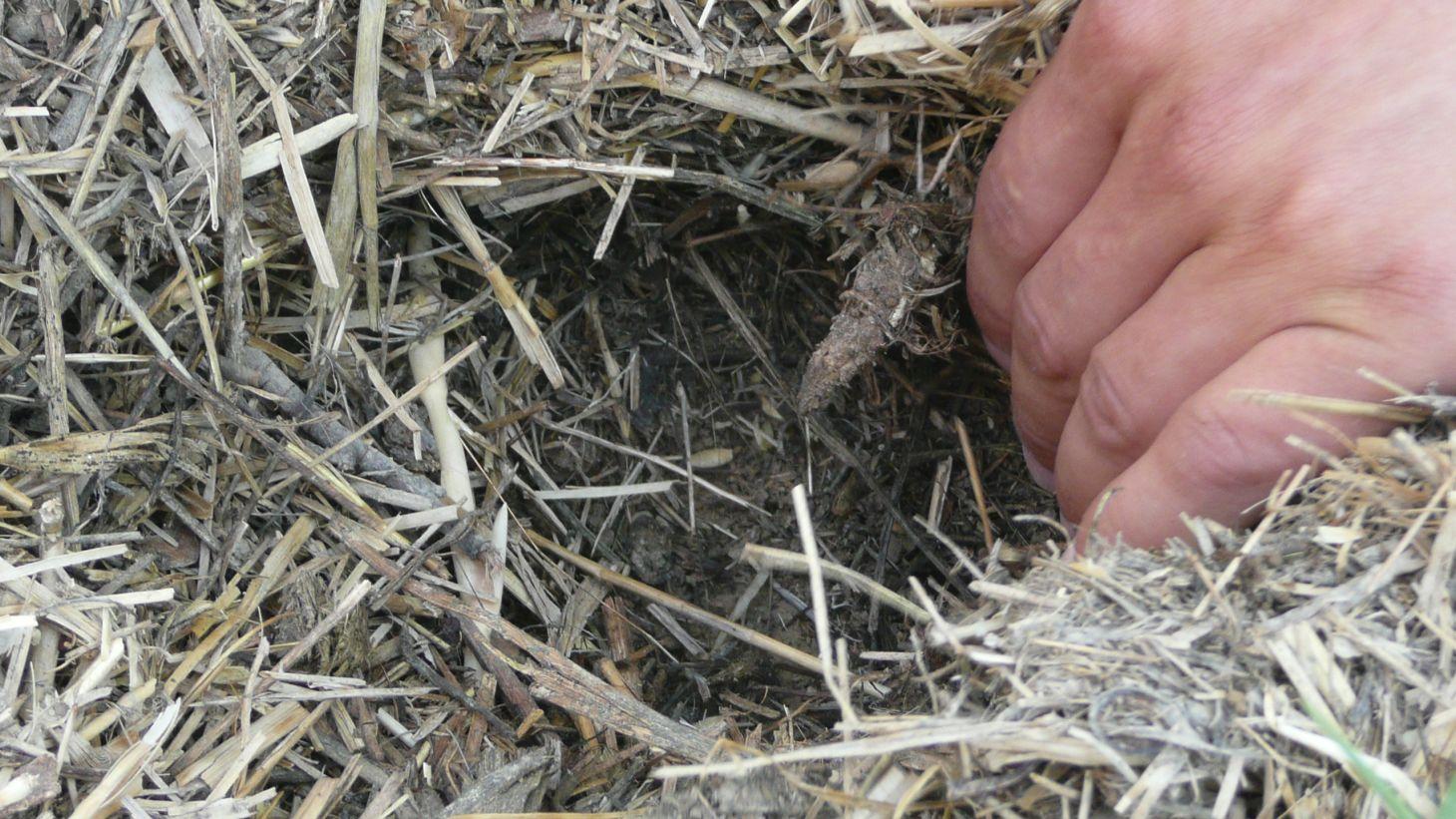
Establishment / maintenance activities and inputs: Mulching with grass was set up by the Tajik Soil Institute and but has been maintained by the farmers who lease the land. Mulching with grass is relatively easy but can be very challenging; depending on the availability of resources. First, plots between the vineyard rows were ploughed by using animal power, in most cases horses. Natural grasses were cut from the property of the research station and applied as a mulch in between plots within the designated vineyard plots. Since then the experiment has been maintained by the farmers and over the last ten years layer of mulch with grass has been growing and building up the top soil layer. This layer of mulch prevents rainwater from eroding the top soil, improves soil organic carbon, provides shade to plant roots, and most importantly keeps soil moisture moderately in hot summer months, which is very essential in these rainfed areas.
Natural / human environment: The terraces have greatly helped to reduced soil erosion and the vines supported this effect in further stabilising the soil. Soil humidity has improved through increased soil moisture and reduced evaporation due to mulching throughout the year. As the vineyard was established on pasture land, a disadvantage is the reduced grazing land area. The disadvantage of mulching is that no inter cropping between the vines can take place for several years.
In summer of 2011, WOCAT questionnary was used to analyze and evaluate current conditions of the vineyard mulching treatment. At the same time proper soil samples were taken from the plots with mulch and control plots in 0-15 and 15-30cm for further comparison for soil organic carbon (SOC). All together 240 soil samples were taken from eight different plots and each have been analyzed for soil SOC content.
From this study it was revealed that plots with mulch has significantly higher SOC content than control plots. In average, plots with mulch consisted of 1.3% SOC and control plots in average contained 0.4% SOC within the 0-15cm depths. Average SOC content for plots with mulch and control plots were observed but there were no significant difference in 30cm depth, both contained 0.4-0.5% of SOC.
Photos of the Technology
- 📍 Faizabad, Tajiksitan, RRS
- 🗓 2011-07-08
- 📷 Sebastian Ruppen
- 📍 Faizabad, Tajikistan, RRS
- 📷 Qobiljon Shokirov