
Creation of a perennial grass seed area (CACILM)
Type: Technologies
Creation: 2011-12-12 05:46 Updated: 2019-09-04 22:56
Compilers: Konstantin Pachikin
Reviewers: Fabian Ottiger, Alexandra Gavilano
Country/ region/ locations where the Technology has been applied and which are covered by this assessment
- Country: Kazakhstan
- Region/ State/ Province: Kazakhstan
- Further specification of location (e.g. municipality, town, etc.), if relevant: East-Kazakhstan
- Map: View Map
Description of the SLM Technology
Short description of the Technology
Improvement of pastures through planting perennial legumes, cereals and grasses and creating seed banks.
Detailed description of the Technology
As a result of an increase in the number of livestock pastures were overstocked and soil and vegetation cover was degraded. To restore pastures in the area surrounding the Katon-Karagay village, a technology to improve pastures through sowing perennial legumes (sainfoin, lucerne, eastern galega), cereals (smooth brome, orchard grass, Russian wild rye), forage crops and mixed grasses was developed within the framework of the GEF/SGP “Organization of Katon-Karagay Village Pasture Management to Minimize Land Degradation” Project. The introduction of this technology allows for an increase in pasture productivity, and an improvement in the quality and weight of livestock. This leads to an increase in the income and improvement in the quality of life for the local population. The technology was applied to an area of 80 ha surrounding the Katon-Karagay village, where previously intensive livestock grazing was practiced. At present this area is under a short-term lease (5 years) to the "Mametek" Farmers’ Association (FA). The technology was introduced within the framework of the approach on "Pasture management through restoration of distant stock-breeding system and drastic improvement of pastures", in which "Mametek" FA is one of the key parties. Practice is documented in the frame of CACILM.
Purpose of the Technology: The purpose was to restore the degraded area surrounding Katon-Karagay village for later use as a pasture, to secure perennial grass and cereal seed production for the restoration of degraded pastures and to improve pasture productivity in other areas.
Establishment / maintenance activities and inputs: The establishment and maintenance activities include fencing of the area to prevent the destruction of crops by livestock. Soil processing - plowing to a depth of 25-27 cm with subsequent harrowing and evening. Spring sowing of cover crops (barley, oats) to a depth of 5-10 cm. After cover crops are sown, perennial grasses and cereals should be sown to a depth of 2-3 cm. They should be sown in the same area as the one-year crops. One-year crops and perennial forage crops should be mown annually in autumn. The seeds for sowing in other areas should be collected in the 3 years after sowing. The seeds are intended for the further restoration of pastures in other areas. To utilize the technology the following initial activities should be conducted: purchase of materials (poles, wire), soil processing (leasing of tractors and seeders), purchase of seeds for sowing, leasing of machinery for mowing and taking away the hay. The work should be conducted by the farmers’ association with an additional labour force for a period of up to 15 days. Since the grasses are perennial, there is no need for further activities, only nitric fertilizers should be applied from time to time.
Natural / human environment: The project area is situated in an inter-mountain valley at a height of about 1000 m. The area is located within a semi-arid natural zone. The area is located within the Katon-Karagay State Natural Park and has limited economic use, mainly as pasture
Photos of the Technology
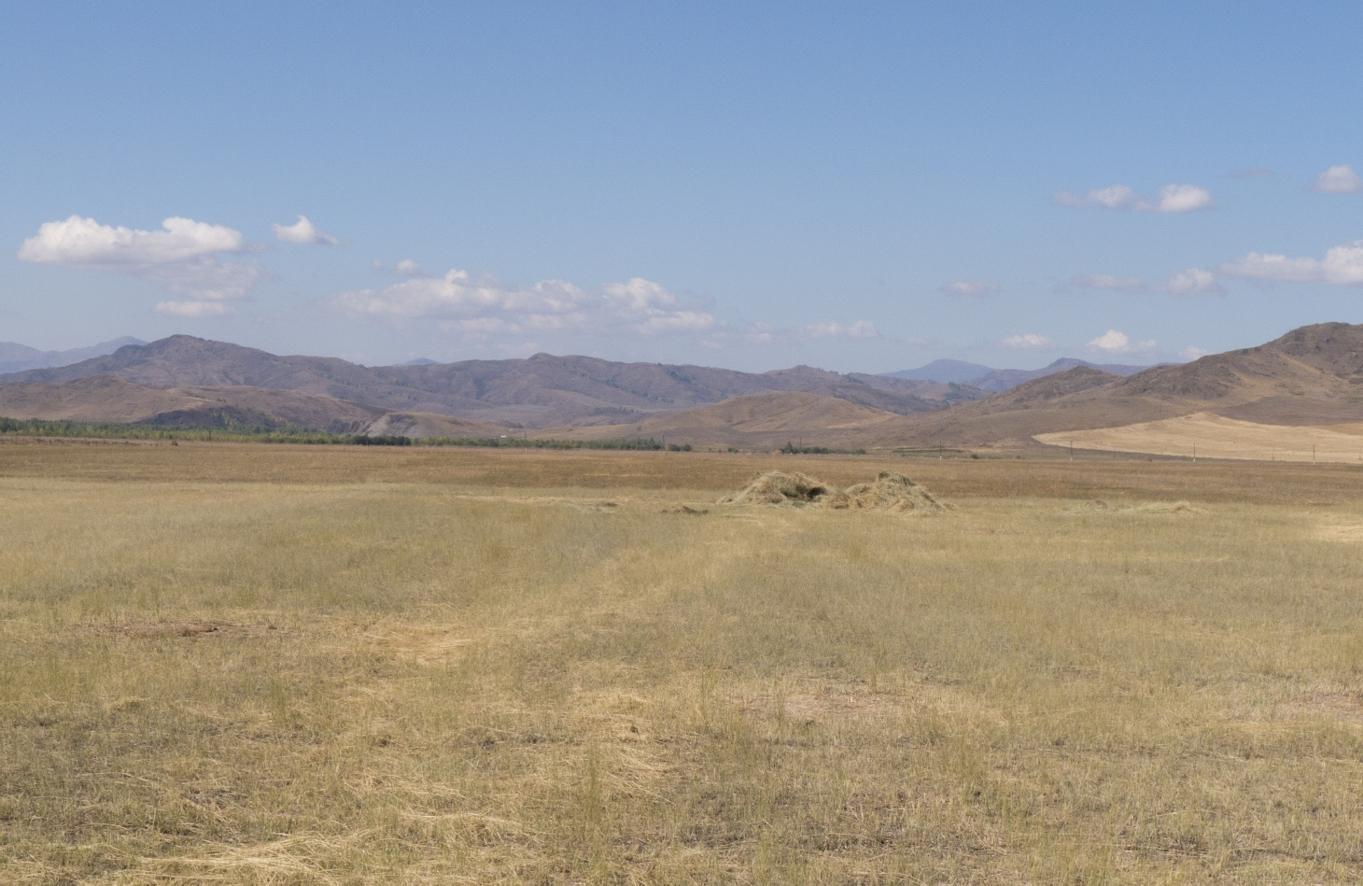
- 📍 Katon-Karagay village , East Kazakhstan
- 🗓 2011-12-09
- 📷 K.Pachikin
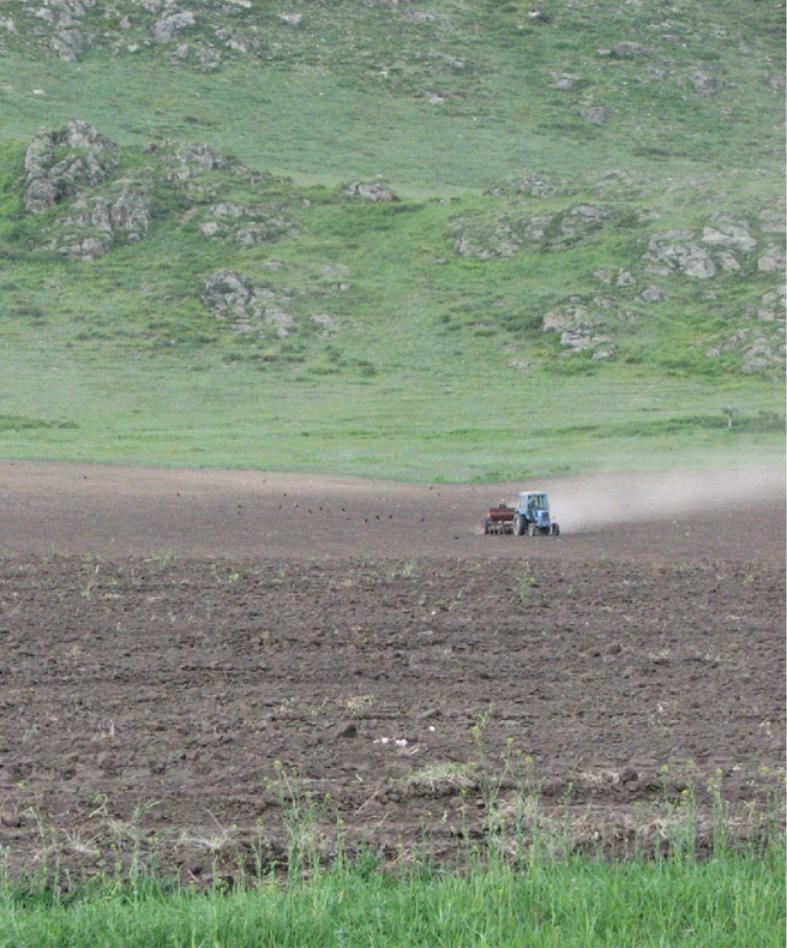
- 📍 Katon-Karagay village, East-Kazakhstan
- 🗓 2010-05-05
- 📷 K.Pachikin