
Improvement of land under arid conditions through the creation of pistachio plantations (CACILM)
Type: Technologies
Creation: 2011-12-12 11:45 Updated: 2019-11-25 20:17
Compilers: Rustam Ibragimov
Reviewers: Alexandra Gavilano, Fabian Ottiger, Rima Mekdaschi Studer
Country/ region/ locations where the Technology has been applied and which are covered by this assessment
- Country: Uzbekistan
- Region/ State/ Province: Uzbekistan/Djizak oblast
- Further specification of location (e.g. municipality, town, etc.), if relevant: Farish district
- Map: View Map
Description of the SLM Technology
Short description of the Technology
This technology is aimed at the creation of pistachio plantations on gentle slopes to improve the land’s productivity and to rehabilitate the arid land in the hill zone.
Detailed description of the Technology
Adyr (hilly) lands occupy around 400,000 ha of the territory of Uzbekistan. Increasing anthropogenic stress and unsustainable land use practices put these lands on the verge of desertification. Currently, the foothills are mostly used as pastures and as rain-fed cropland for growing mainly winter wheat. Due to the low amount of precipitation, the production of rain-fed wheat is unsustainable and rarely exceeds 8-10 centners/ha (usually 3-5 centners/ha), which sometimes is not enough to compensate for the cost of seed grain. Pastures become compacted due to overgrazing. Rehabilitating lands in the foothill zone and ensuring their sustainable use in the future requires alternative production methods. The creation of tree plantations with multi-effect features would ensure both ecological and material benefits for the local population (in the frame of CACILM).
Purpose of the Technology: The purpose of this technology is the restoration of landscapes in the foothill and arid hill zone, adaptation to climate change and an increase in agricultural productivity and income.
Establishment / maintenance activities and inputs: The purpose of this technology is the restoration of landscapes in the foothill and arid hill zone, adaptation to climate change and an increase in agricultural productivity and income.
The technology is based on the use of the biological trait of pistachios, which enables the tree to grow in exceptionally dry conditions without irrigation. Planting is organized in the traditional way, beginning with soil preparation, which includes tilling & sub-soiling the field. Planting is preceded by the marking of the plot with pegs denoting the planting spots in accordance with a 6х8 meter layout (planting density is 208 pcs/ha). To prevent animal grazing, the plantation is fenced with barbed wire on wooden poles & the planting of briar. In 2-3 years, the briar becomes a live fence, & barbed wire can be re-used in other plots.
Post-planting watering is performed at a rate of 1,5-2 liters / plant. During the three months of summer, irrigation is performed 3-5 times a month using a simple drip technique using plastic bottles. For rain-fed areas partially provided with water (300-500 mm/year), irrigation is performed only for the first two years. Until the pistachio enters the productive yield phase (the first 8 years), the inter-row space of the plantation is used for growing tilled drought-resistant crops such as safflower, peas, melons, gourds & alfalfa. Alfalfa is especially important for improving soil properties (structure- & organic matter formation, nitrogen fixation, etc.). The technology requires no additional start-up investments, since soil preparation was already performed during creation of the pistachio plantation.
Mineral fertilizers are applied: 290 kg/ha of ammonium nitrate (N 33-34,5%) & 220 kg/ha of superphosphate (P 45%). Grafting with the selected variety is performed 3-4 years after planting in order to stimulate early fructification
Natural / human environment: The local population used to lack additional revenue sources outside of livestock production. Pistachio plantations are of exceptional importance for people living in the areas where almost no other fruit bearing species would grow without supplementary irrigation. In the long run, pistachio production is much more profitable than livestock production, as well as more environment-friendly. The average productivity of pistachio is around 10 centners/ha and the lifespan is more than 1000 years. Briar planted along the fence bears fruit for 20-25 years, which is a supplementary source of income. Crops planted in the inter-row space partially compensate for the initial investment in the technology and improve the soil.
Photos of the Technology
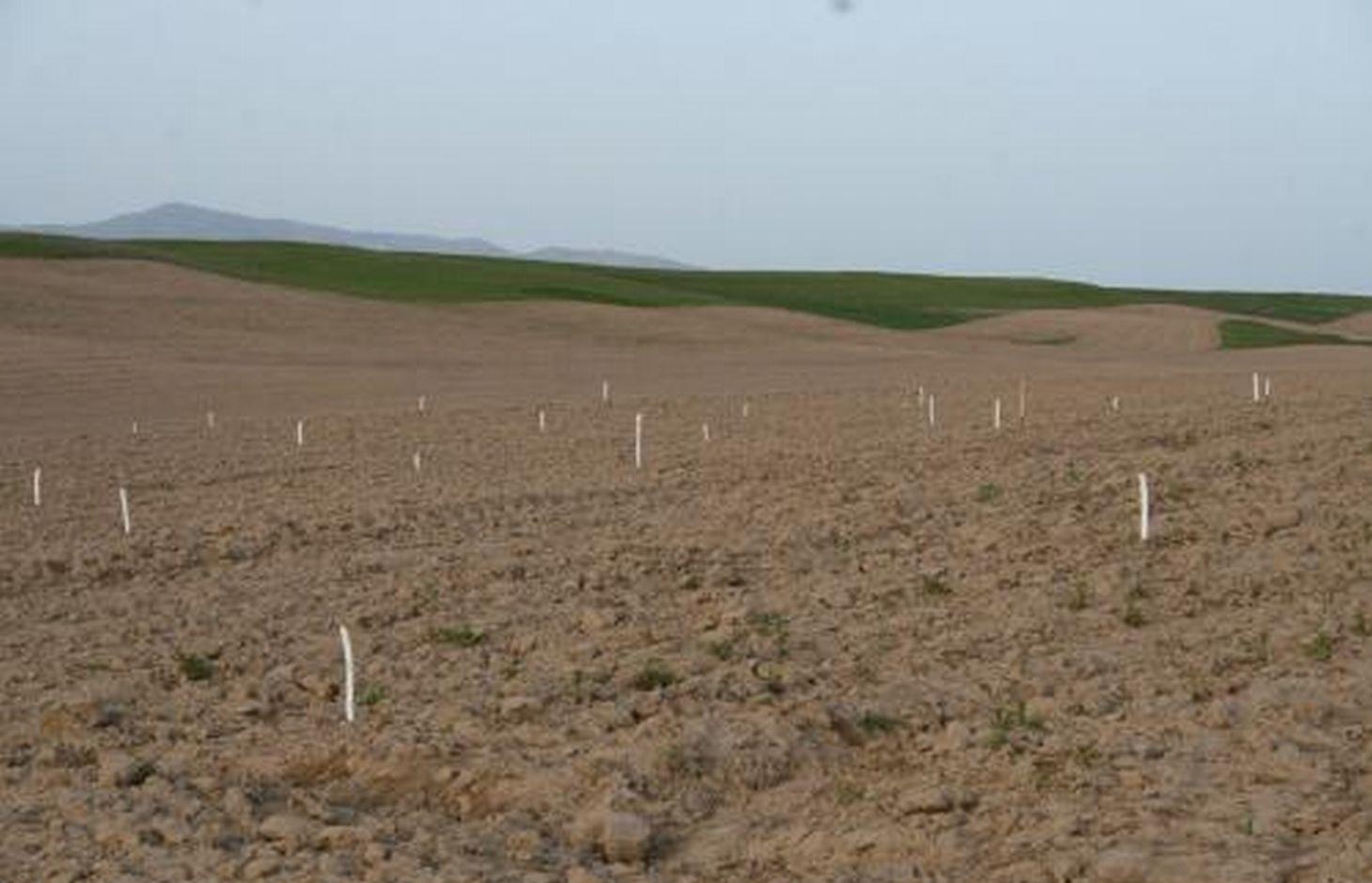
- 📍 Farming enterprise “SBI Mukhammadamin” , Farish district/ Djizak oblast ,
- 📷 A. Volkov
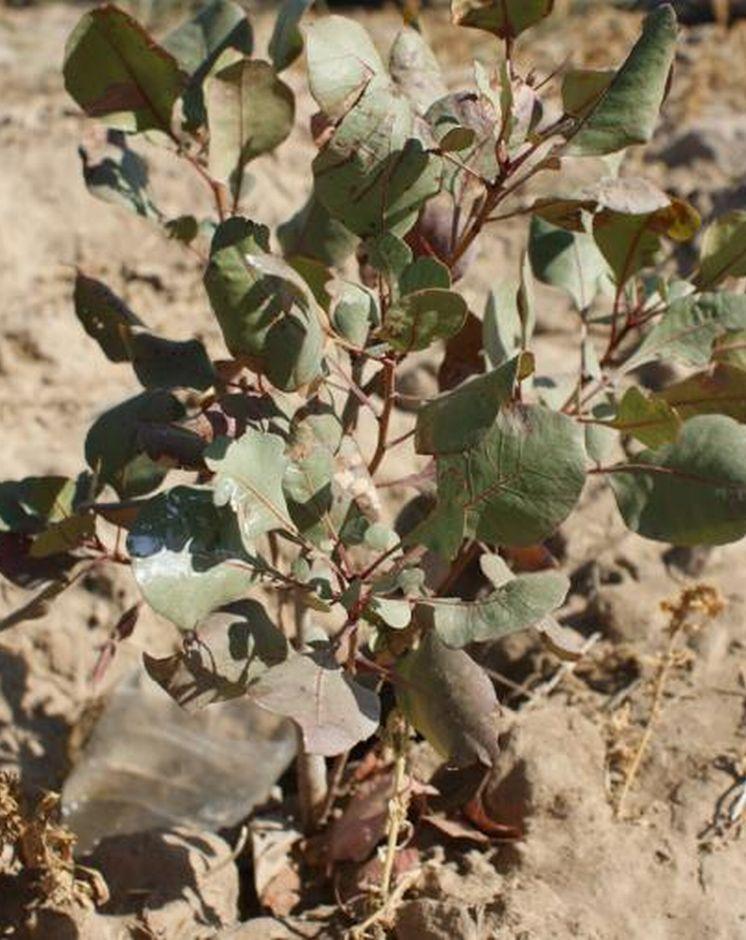
- 📍 Farming enterprise “SBI Mukhammadamin” , Farish district/ Djizak oblast
- 📷 A. Volkov