
Use of mineralized artesian water to organize irrigated crop farming in the Kyzylkum (CACILM)
Type: Technologies
Creation: 2011-12-16 07:38 Updated: 2019-08-22 10:24
Compilers: Rustam Ibragimov
Reviewers: Alexandra Gavilano, David Streiff
Country/ region/ locations where the Technology has been applied and which are covered by this assessment
- Country: Uzbekistan
- Region/ State/ Province: Uzbekistan / Navoi oblast
- Further specification of location (e.g. municipality, town, etc.), if relevant: Kanimekh district
- Map: View Map
Description of the SLM Technology
Short description of the Technology
Cultivating several food and forage crops in the Kyzylkum desert using mineralized irrigation water from a flowing artesian well
Detailed description of the Technology
Pasture-based livestock production is an important component of Uzbekistan’s agricultural sector, producing more than 60% of all the livestock output. Concentrated on an area of 17,5 mln. ha, it is based on the full or partial pasture keeping of animals. Assuming that the average pasture’s productivity is 1,7 centners/ha (100%), forage availability during spring is 80%, 100 % in the summer & autumn & 60-65% during winter. Total forage shortage in the Kyzylkum desert is about 540 thousand tons (15% of total demand). Considering this, production of reserve stock of forage is a relevant task.
The Kyzylkum desert has artesian wells, which each produce 13-15 l/s. Water in the wells has neutral acidity (pH- 7,4) & medium salinity (Ec= 5.6-8.3 ds/m). The technology of salinity tolerant crops (halophytes) for livestock forage was introduced on the basis of irrigation using water from these wells. The suitability of these feeds to various groups of livestock animals was determined and a system of pre-feeding preparation was developed, taking into account the mineralization of irrigation water and quality of the halophytes (in the frame of CACILM).
Purpose of the Technology: The purpose of this technology is land improvement through retention of topsoil, rehabilitation of vegetation cover, prevention of overgrazing through reducing livestock pressure by organizing irrigated forage production.
Establishment / maintenance activities and inputs: The agricultural processes for establishing irrigated land are traditional and include plot leveling, plowing, chiseling, harrowing, sowing, cutting irrigation furrows and caring for the plantation. The following forage crops were successfully tested: winter cereal crops (Movlono barley, Kyrgyzskaya-1 rye, Prag Serebristy triticale, Kroshka millet), forage crops (Belozubaya maize, Aip-13150 pearl millet, Oq Zhuhori and Venichnoe sorghum, Sudan grass, Tashkentskaya and Eureca alfalfa, D-1 and D-2, common licorice) & forage halophytes (К. scoparia (L.) Schrad, Bassia hyssopifolia (Pallas) O. Kuntze, S. altissima & Climacoptera lanata).
Natural / human environment: Using mineralized waters for irrigation is only possible in soils with a light texture The introduction of crop rotation with halophytes, which remove up to 40% of salts from the soil, is also mandatory for the ecologically sustainable application of saline water. Traditionally livestock production is the main source of income for the population of the Kyzylkum and important to create family savings. To improve their livelihoods, livestock numbers are increased without consideration of the area or condition of pastures. Unsystematic grazing and pasture use beyond its capacity threatens biodiversity. Forage production facilitates the creation of a reserve stock of forage and alleviates pressure on the pastures. There are 63 artesian wells in the Kanimekh district, which can be used for irrigated crop farming on an area of 350-400 ha. In the Kyzylkum desert, this technology may be introduced on an area of 25 000 ha.
Photos of the Technology
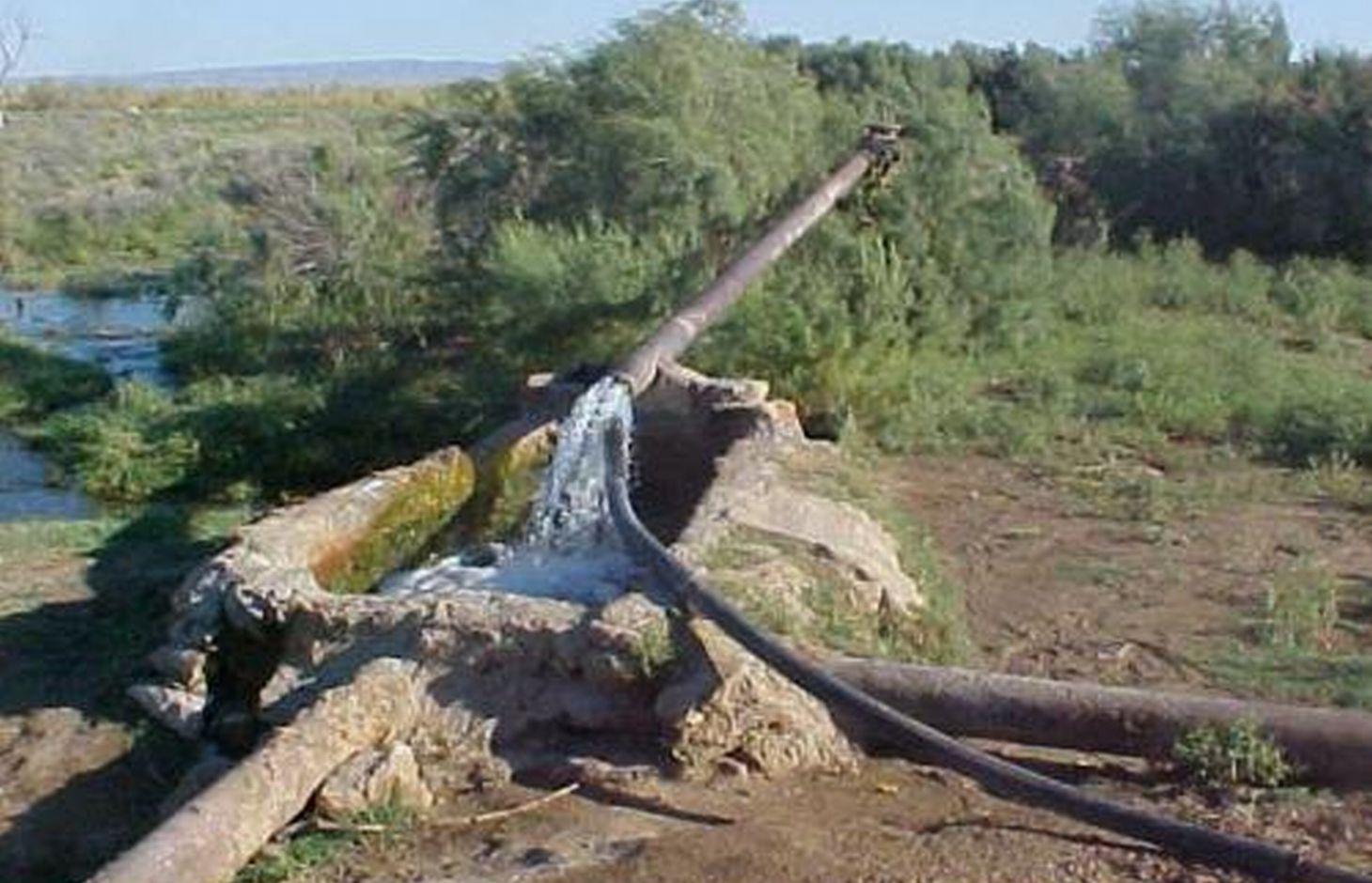
- 📍 ширкатное хозяйство «Маданият», Канимехский район/ Бухарская область
- 🗓 2008-02-09
- 📷 А.Раббимов (703000, Узбекистан г. Самарканд, УзНИИ каракулеводства и экологии пустынь. Тел. (+998)669295401)
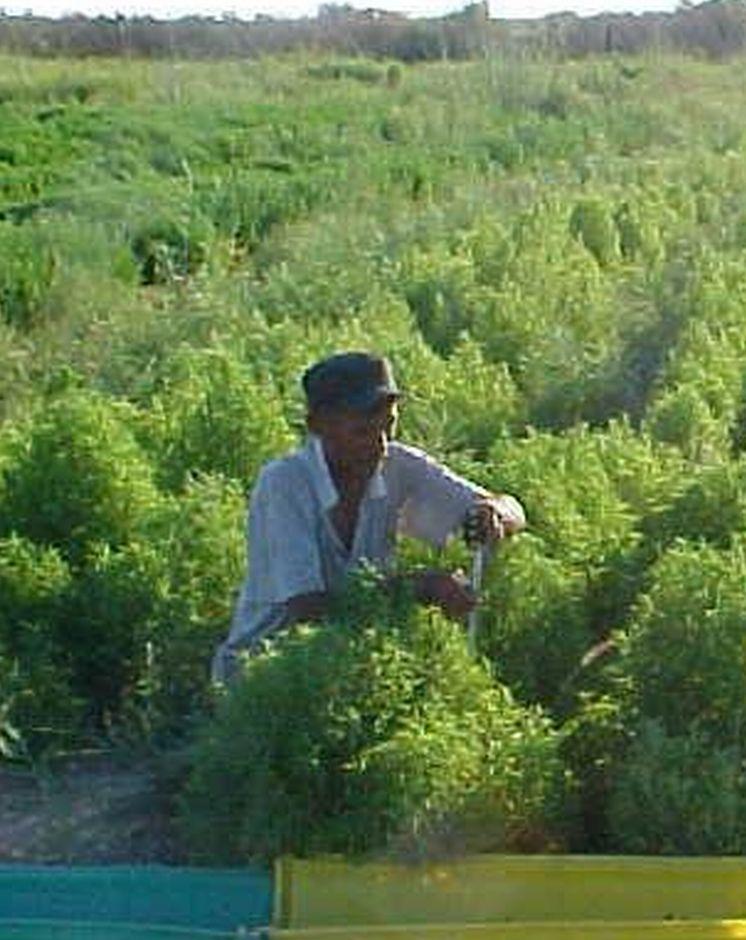
- 📍 ширкатное хозяйство «Маданият», Канимехский район/ Бухарская область
- 🗓 2008-02-09
- 📷 А.Раббимов (703000, Узбекистан г. Самарканд, УзНИИ каракулеводства и экологии пустынь. Тел. (+998)669295401)