
Growing cereals by using minimum tillage (CACILM)
Type: Technologies
Creation: 2011-12-16 08:26 Updated: 2019-05-09 15:05
Compilers: Abdybek Asanaliev
Reviewers: Fabian Ottiger, Alexandra Gavilano
Country/ region/ locations where the Technology has been applied and which are covered by this assessment
- Country: Kyrgyzstan
- Region/ State/ Province: Kyrgyz Republic
- Further specification of location (e.g. municipality, town, etc.), if relevant: Chui oblast, Kant rayon, Kant village
- Map: View Map
Description of the SLM Technology
Short description of the Technology
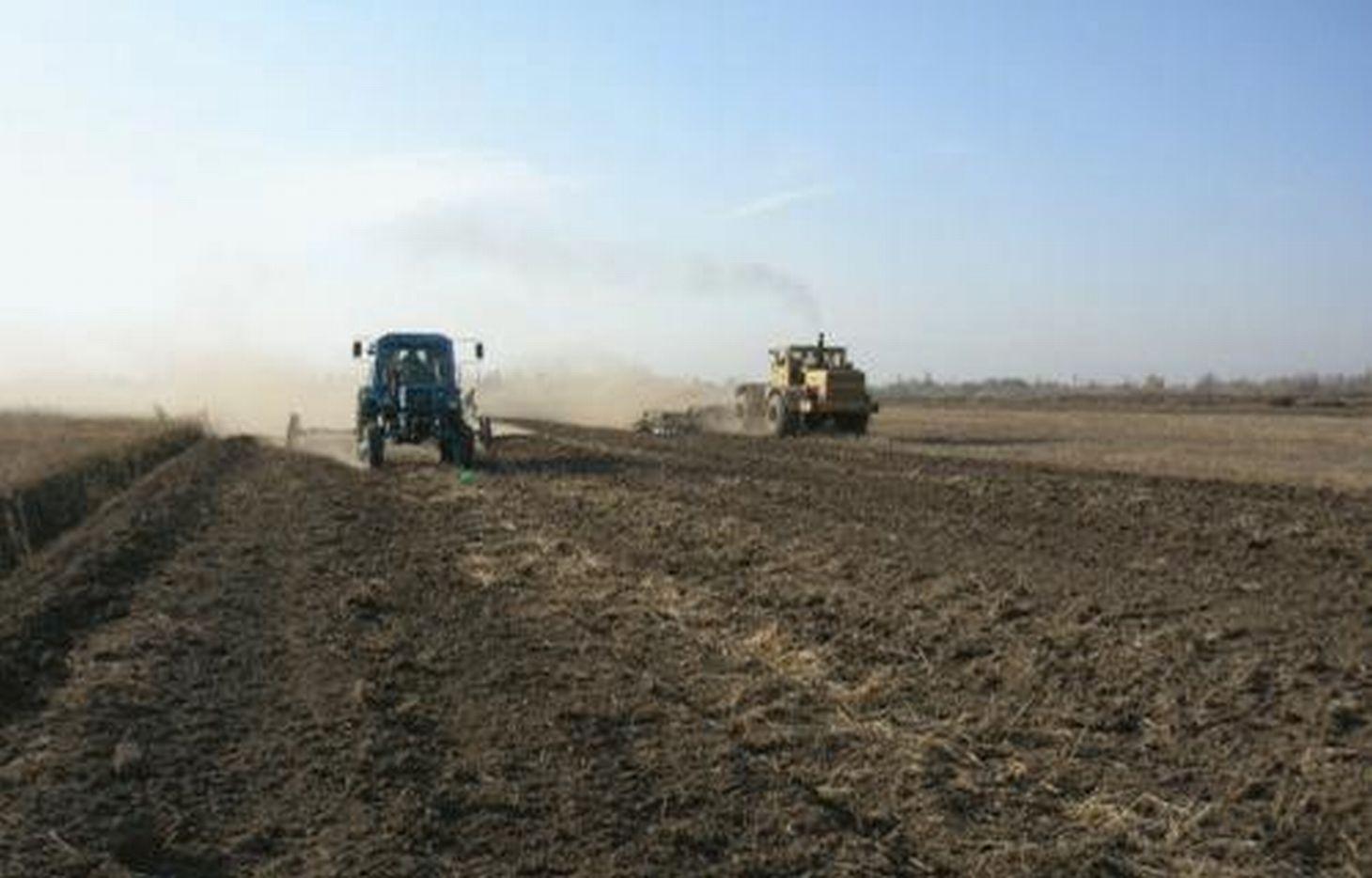
A minimum tillage depth of 10-12 cm by a tractor with a ploughshare creates a friable soil layer, facilitates preservation of productive moisture until the agricultural crops’ sowing, as well as eliminates the extreme soil compaction owing to the operation of heavy machinery and tractors.
Detailed description of the Technology
In case of the minimum tillage application on a field it is necessary to critically consider the classical tillage methods for cereal cultivation. During the Soviet era the State allocated funds for the implementation of agricultural practices, considering that agriculture was subsidised by the state. Under such conditions, farmers did not have much interest in applying progressive techniques, for example minimum tillage. In the post-Soviet era, the farming conditions changed; land tenure was changed to private ownership; and agronomic practices are now covered entirely by the farmers. Implementation of the traditional moldboard ploughing at a the depth of 20-25 cm over many years led to the formation of a subsurface compact layer in the clayey soil, which prevents vertical filtration of water and air exchange, negatively impacting the life of aerobic soil microorganisms and decreasing the cereals’ yield. It resulted in the necessity of destroying such layers periodically with the help of a subsoil cultivator, attached to a plough carriage and entailing high fuel costs.
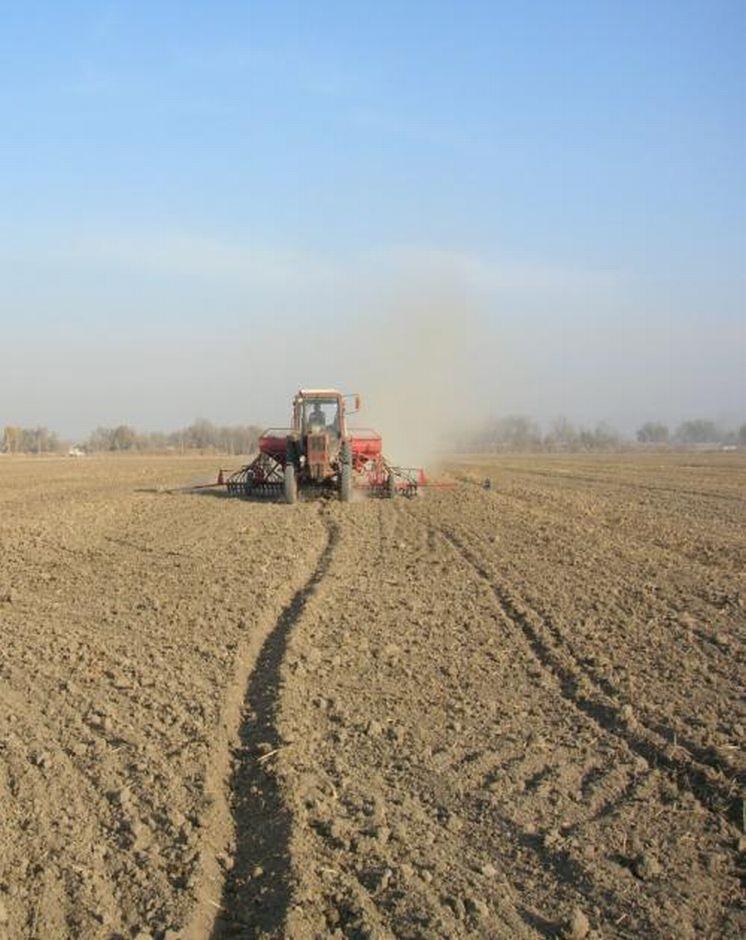
Using minimum tillage the field is cultivated at a depth of 10-12 cm by a tractor with a disker and simultaneously harrowed immediately after the harvest. Minimum tillage creates an even and loose field cover without inner capillaries through which the moisture can quickly evaporate. The productive moisture reserve at this sowing depth is 30% higher in comparison to soil preparation by usual ploughing, and therefore increasing seed germination in the field. An additional advantage of minimum tillage is lower CO2 emissions from soil in comparison with mouldboard ploughing. Through applying minimum tillage, the activity of subterranean micro fauna (earthworm, predatory beetles) improves.. Furthermore, there is no need to even the soil, which reduces the tillage number and allows for greater conservation of fuel and lubricant, as well as reducing labour costs. The ridge sowing technology is applied in CIS countries (Kazakhstan, Kyrgyzstan, Azerbaijan, Tajikistan.) in the production of wheat and other cereals. Kyrgyzstan first applied this technology with the support of the SIDA project “Support to seed development industry in Kyrgyzstan”. Further dissemination of this method was supported by the Seed Growers’ Association of Kyrgyzstan. This technology was utilized in Kyrgyzstan through the use of the Turkish seeder СBP-2,8, which forms ridges, sows and simultaneously cuts furrows to irrigate between the ridges. The ridge sowing technology creates optimal conditions for agricultural crops and provides effective furrow irrigation. This prevents excessive use of irrigation water (saving 25-30%) and irrigation erosion, which happens in the case of using flooding methods on the crop fields using common corn planters. In addition, it prevents the flooding of useful soil micro fauna, as well as saves time. Prior to irrigation or after irrigation, a tractor or agricultural machine can easily go along the irrigation furrows to spray plants with herbicides and pesticides. Ridge sowing of cereals can be implemented almost on all types of grey-brownish, grey, red, yellow soil types with middle and light mechanical composition. In addition to cereals, ridge sowing can be used for growing vegetables and legumes (including potato), as well as industrial and oil crops (sugar beet, rape, soya bean, sesame)
Depending on natural climatic conditions and biological peculiarities of the cultivated varieties, width between the ridges is about 60-70cm. 2-3 rows of seeds can be sown on the ridges with a row spacing of 15cm. Over the course of 3 years, 10 ha of land were sown by using this technology, and the wheat grain yield was not reduced in comparison to the conventional cultivation method using a corn planter. While sowing cereals with such a seeder, it is recommended to cultivate well-bushing varieties. The ridge seeder decreases the seeding rate to a minimum. The seeding rate of cereals is 100-150kg/ha instead of 200-250kg/ha when using the usual sowing method with a classical corn planter and provides additional yield of winter grain wheat up to 5 -8,3 centner/ha. Practice is documented in the frame of CACILM.
Purpose of the Technology: Eliminate soil compaction; reduce evaporation of moisture and СО2 from soil; create optimal conditions for soil micro fauna; increase yield and reduce fuel consumption costs while tilling soil
Establishment / maintenance activities and inputs: The essential element of this technology is that a farmer or farmers’ organization owns a disk tiller, which costs about 1000 USD
Natural / human environment: Minimum tillage is applied on grey-brownish soils; with a humus content of 3- 6%. “MIS” JSC is comprised of approximately 50 farmers. Over 100 ex-farmers of the “MIS” JSC received their land shares and organized the peasants’ farms (PF). All these farmers communicate with each other and exchange experiences. Therefore, both “MIS” JSC members and other farmers apply minimum tillage
Photos of the Technology
- 📍 Kant Rayon, Chui Oblast
- 📷 Asanaliev A.J.
- 📍 Kant Rayon , Chui Oblast
- 📷 Asanaliev A.J.