
Production and application of biohumus
Type: Technologies
Creation: 2012-05-02 10:19 Updated: 2019-05-09 12:30
Compilers: Abdybek Asanaliev
Reviewers: Fabian Ottiger, Alexandra Gavilano
Country/ region/ locations where the Technology has been applied and which are covered by this assessment
- Country: Kyrgyzstan
- Region/ State/ Province: Sokuluk rayon, Chuy oblast
- Further specification of location (e.g. municipality, town, etc.), if relevant: Kyrgyz Republic
- Map: View Map
Description of the SLM Technology
Short description of the Technology
By letting Californian red worms processing fresh manure filled into a trench, biohumus is produced to improve soil fertility in kitchen gardens.
Detailed description of the Technology
Since the 1990ies, farmers from Borulu village have not been applying fertilizers in kitchen gardens due to their high costs. As a result, the soil fertility has decreased. Facing this problem Kalmurat Koshaliev decided to produce biohumus by himself.
For manure processing, a trench with 3 m length, 1,2 m width and 1,5 m depth was prepared. The trench was fenced with a mesh to protect worms from poultry. In May the trench was filled with fresh manure and 5 kg of worms were released on top of it. These worms feed on manure and process it. In the hot season the mass of manure should be moist, and therefore it is watered once a week (60-70% moisture needed). Within 20-25 days the worms process the fresh manure. Manure obtains a dark colour and becomes crumbly. Biohumus is then separated from worms by using a metal mesh. Separated worms are placed into a corner of the trench and fresh manure is filled in again. After 20-25 days the same work is repeated, until the weather becomes colder. With the onset of the cold, the surface of the trench is covered with straw and leaves (30 cm) in order to prevent freezing of the biohumus. In spring the cycle is repeated. Once there are too many worms in the trench, a part of them can be separated and another biohumus producing trench can be established. The produced biohumus is used as an organic fertilizer for potatoes, carrots and tomatoes. Application norms are 2.5-5 tons of biohumus per ha.
Purpose of the Technology: As a result of the regular application of biohumus soil fertility has significantly improved.
Establishment / maintenance activities and inputs: The technology was realized after a workshop on "Sustainable use of natural resources by implementation of SWC technologies" organized by "CAMP Alatoo". During this workshop, participants from Tosh-Bulak, Chetindi and Borulu villages developed the project using the CAMP Alatoo's collection of SWC technologies. Kalmurat Koshaliev and his team developed a project on biohumus production. The group made a certain labour and financial contribution to the implementation of the technology, whereas CAMP Alatoo covered the rest of the cost. The group bought Californian worm and cement. Maintenance costs are borne by the households.
Natural / human environment: Borulu village is located 1600-1630 m a.s.l. on the northern slope of the gorge Sokuluk. Kitchen garden plots are at the foot of the mountains. Mountains are covered with shrub-juniper forest. Animal husbandry is considered as the main activity. Livestock is grazed in close-to-village and intensive pastures. The village also has far away pastures located up in Suusamyr valley. Close-to-village pastures are in use 12 months a year. In winter, animals are fed with hay and concentrated feed. In the kitchen gardens, potatoes, carrots and garlics are planted. From 1 ha of land fertilized with biohumus up to 350-400 kg potatoes can be produced. Soil becomes rich and allows obtaining a good yield.
Photos of the Technology
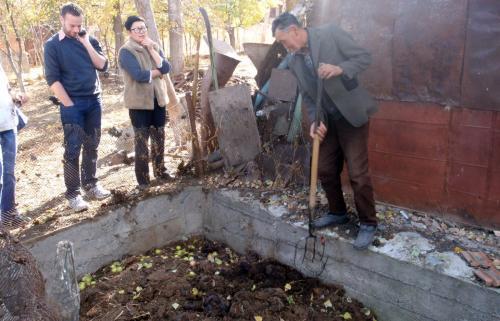
- 📍 Borulu village Sokuluk rayon, Chuy oblast
- 📷 Asanaliev A. J.
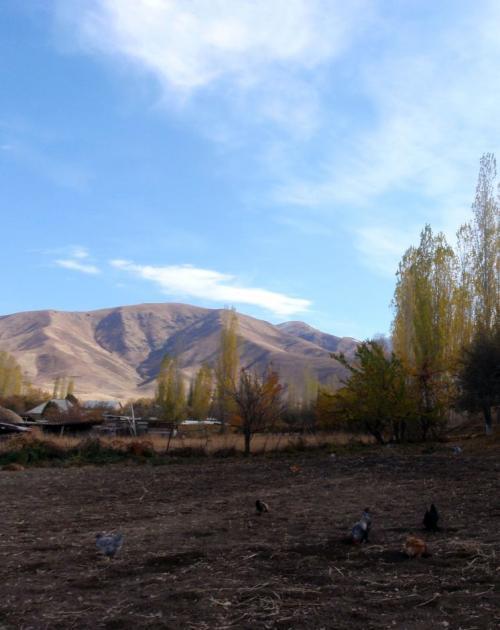
- 📍 Borulu village Sokuluk rayon, Chuy oblast
- 📷 Asanaliev A. J.