
Natural Vegetative Strips (NVS)
Type: Technologies
Creation: 2011-03-30 14:50 Updated: 2019-06-13 12:07
Compilers: Philippine Overview of Conservation Approaches and Technologies
Reviewers: Mathias Gurtner, Deborah Niggli, Alexandra Gavilano
Country/ region/ locations where the Technology has been applied and which are covered by this assessment
- Country: Philippines
- Region/ State/ Province: Misamis Oriental
- Further specification of location (e.g. municipality, town, etc.), if relevant: Bukidnon
- Map: View Map
Description of the SLM Technology
Short description of the Technology
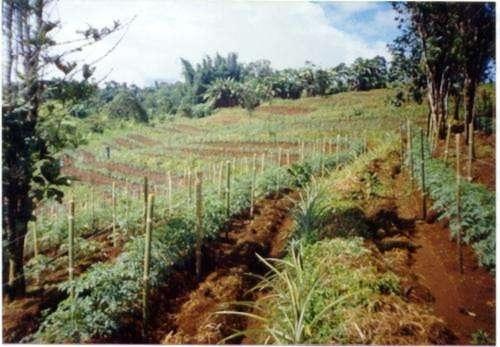
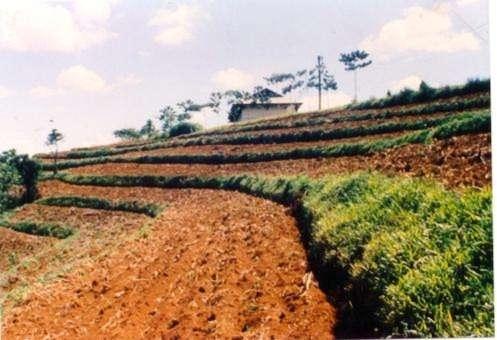
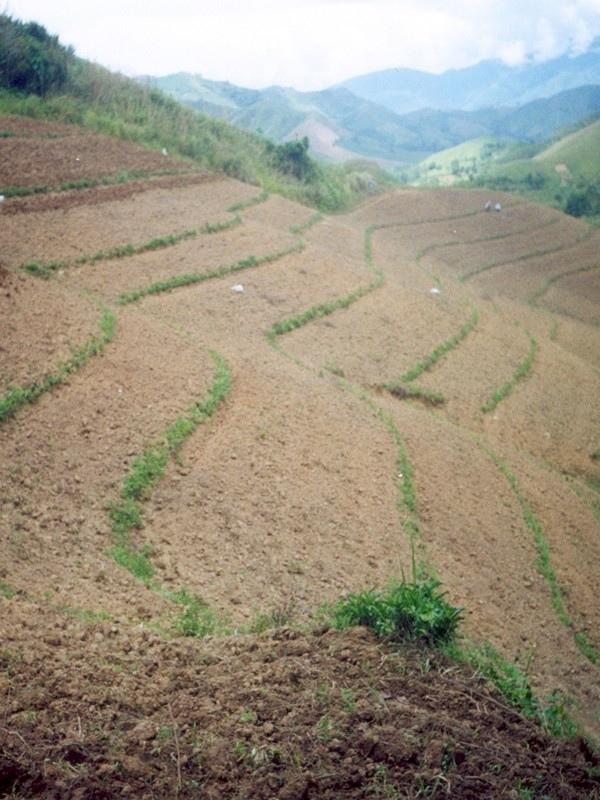
Within individual cropland plots, strips of land are marked out on the contour and left unploughed in order to form permanent, cross-slope barriers of naturally established grasses and herbs.
Detailed description of the Technology
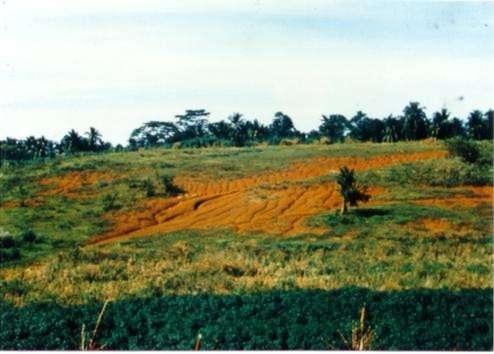
Natural vegetative strips (NVS) are narrow live barriers comprising naturally occurring grasses and herbs. Contour lines are laid out with an A-frame or through the ‘cow's back method’ (a cow is used to walk across the slope: it tends to follow the contour and this is confirmed when its back is seen to be level). The contours are then pegged to serve as an initial guide to ploughing. The 0.3-0.5 m wide strips are left unploughed to allow vegetation to establish. Runoff flowing down the slope during intense rain is slowed, and infiltrates when it reaches the vegetative strips. Eroded soil collects on and above the strips and natural terraces form over time. This levelling is assisted by ploughing along the contour between the NVS - through ‘tillage erosion’ - which also moves soil downslope.
The vegetation on the established NVS needs to be cut back to a height of 5-10 cm: once before planting a crop, and once or twice during the cropping period. The cut material can be incorporated during land preparation, applied to the cropping area as mulch, or used as fodder. This depends on whether the farmer has livestock or not, on personal preference, and on the time of cutting. If the grass is applied as mulch or incorporated, the technology can be considered to be an agronomic, as well as a vegetative, measure.
NVS constitutes a low-cost technique because no planting material is required and only minimal labour is necessary for establishment and maintenance. Some farmers had already practiced the technology for several years before the intervention of the ICRAF (The World Agroforestry Centre) in 1993. ICRAF came to realise that farmers here preferred NVS to the recommended ‘contour barrier hedgerows’ of multipurpose trees- which land users viewed as being too labour intensive. When farmers became organised into ‘Landcare’ groups, NVS began to gain wide acceptance.
Land users appreciate the technique because it effectively controls soil erosion and prevents loss (through surface runoff) of fertilizers applied to the crop. As an option, some farmers plant fruit and timber trees, bananas or pineapples on or above the NVS. This may be during establishment of the contour lines, or later. The trees and other cash perennials provide an additional source of income, at the cost of some shading of the adjacent annual crops.
Photos of the Technology
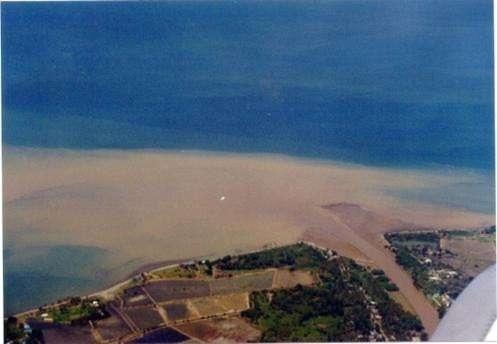
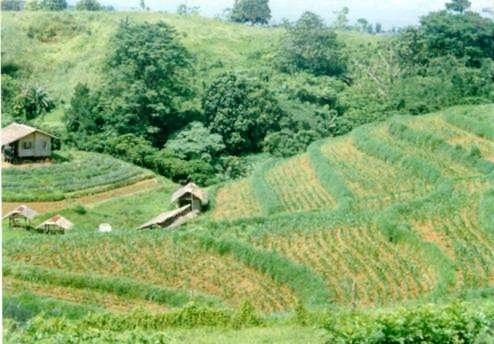
- 📍 Claveria, Misamis Oriental
- 📷 Jose D. Rondal (Quezon City, Philippines)
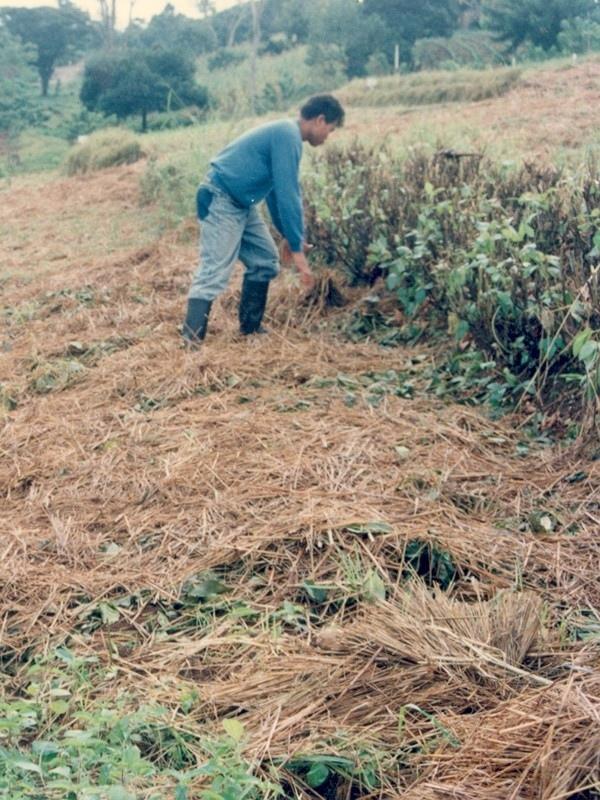
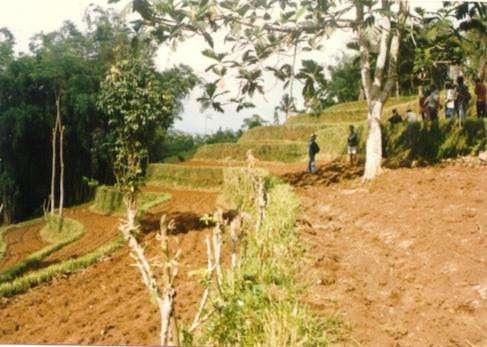
- 📍 Claveria, Misamis Oriental
- 📷 Jose D. Rondal (Quezon City, Philippines)
- 📷 Jose D. Rondal (Quezon City, Philippines)
- 📍 Claveria, Misamis Oriental
- 📷 Jose D. Rondal (Quezon City, Philippines)
- 📍 Claveria, Misamis Oriental
- 📷 Jose D. Rondal (Quezon City, Philippines)
- 📷 Bony de la Cruz