Usage of Gher boundary for cropping
Type: Technologies
Creation: 2013-09-06 17:33 Updated: 2017-05-28 16:24
Compilers: Jalal Uddin Md. Shoaib
Reviewers: David Streiff
Country/ region/ locations where the Technology has been applied and which are covered by this assessment
- Country: Bangladesh
- Region/ State/ Province: Bangladesh Southern region
- Further specification of location (e.g. municipality, town, etc.), if relevant: Khulna
- Map: View Map
Description of the SLM Technology
Short description of the Technology
Gher (shrimp cultivation) boundary usage for multiple cropping.
Detailed description of the Technology
Gher is a local word used for shrimp cultivation plot. The boundaries of these ghers are nowadays raised and maintained to grow vegetables, fruits and also some tree species. In this case the boundary of the plot is raised at least 3 feet with grest width 1 feet plus depending on the height of the boundary (Bund/dyke). Within the gher the land is used for both sweet water prawn (Golda) or saline water prawn (Bagda) with other different types of fishes (locally called Sada Mach) if suitable depending on the salinity of water. Some of the gher lands are used for transplanted Aman with shrimp/fishes.
Farmers dug a ditch along the boundary or in any corner of the field or at the center of the plot to preserve water and fishes during the dry season. In some of the cases the farmers used shallow tube well water to sustain the fishes. In non-to slightly saline areas they used it even for boro (winter rice).
Purpose of the Technology: The purpose of this technology is a boundary which is used for various types of crops, including year round vegetables and land for rice and fishes including shrimps.
Establishment / maintenance activities and inputs: The boundary is constructed above flood level (2-3 feet), the width is approx. 2-3 feet, the ditches are 2-3 feet deep along the boundary or at the corner or at the center.
To grow vegetables farmers used nylon nets for creeping supported by the bamboo or Dhaincha or strings.
Top soils kept on top of the bunds to avoid relatively less fertile soil on the bunds.
Main inputs are seeds of vegetables, nets, bamboo, strings, fingerlings of fish etc.
Natural / human environment: The salinity of the soils from the bunds is washed away by rainwater, which facilitates vegetable production: Rain water desolves salt and moves to the bottom of the bund, and soil becomes non-saline or slightly saline where vegetable could be grown.
Photos of the Technology
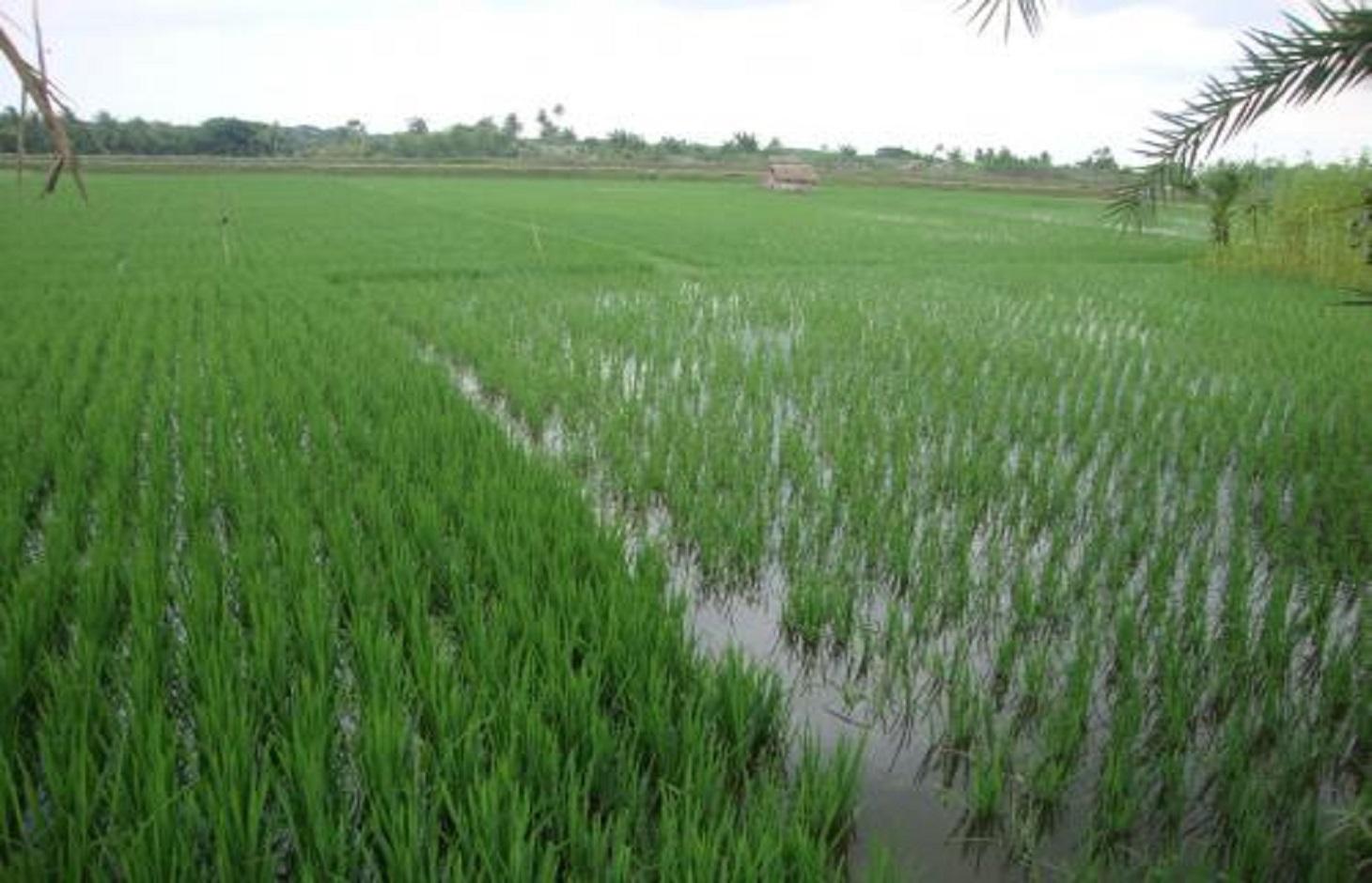
- 📷 Shoaib JU
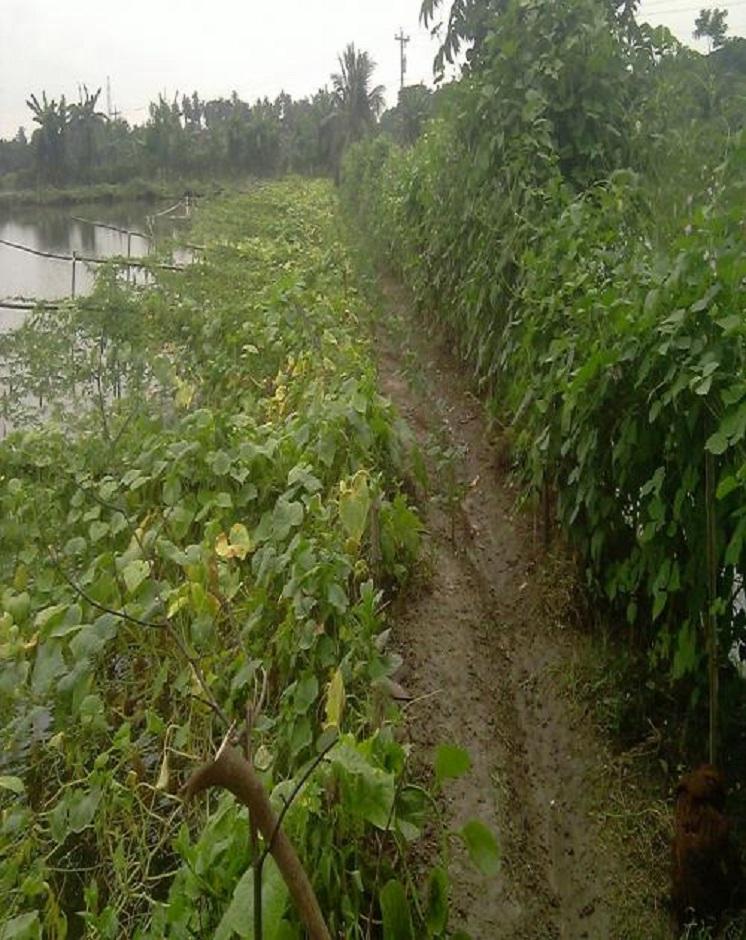
- 📷 Shoaib JU
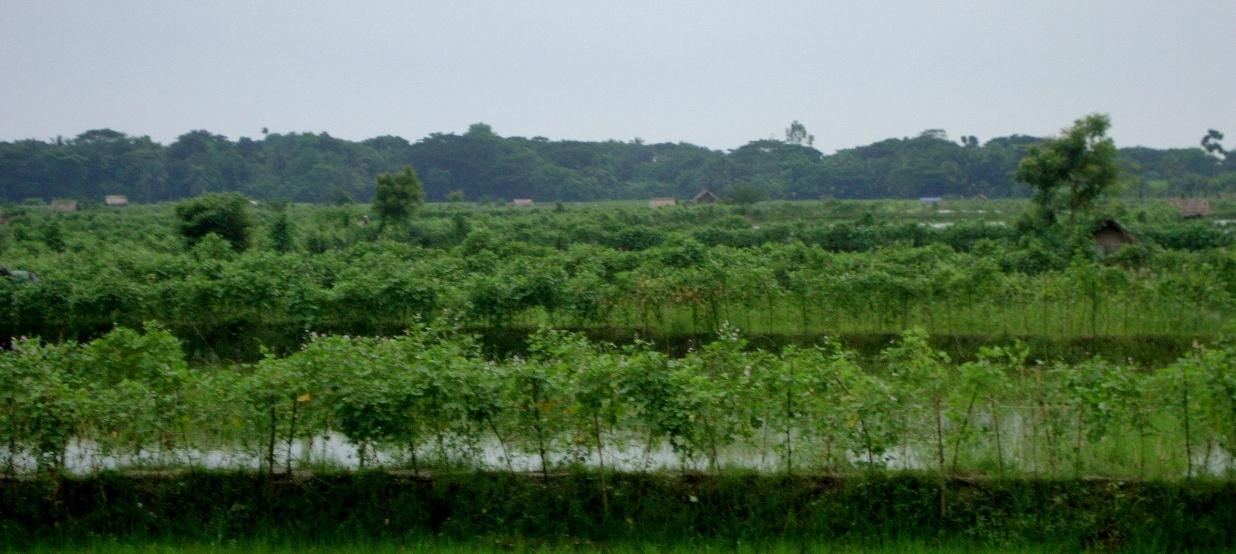
- 📍 Dumuria, Khulna
- 🗓 2013-06-09
- 📷 ShoaibJU (Former CSO, SRDI, Bangladesh)