Irrigation using shortened furrows and regulated use of mineral fertilizers
Type: Technologies
Creation: 2014-02-05 08:38 Updated: 2025-08-12 20:40
Compilers: Oyture Anarbekov
Reviewers: Alexandra Gavilano, Rima Mekdaschi Studer
Country/ region/ locations where the Technology has been applied and which are covered by this assessment
- Country: Uzbekistan
- Region/ State/ Province: Uzbekistan
- Further specification of location (e.g. municipality, town, etc.), if relevant: Andijan and Fergana Region
- Map: View Map
Description of the SLM Technology
Short description of the Technology
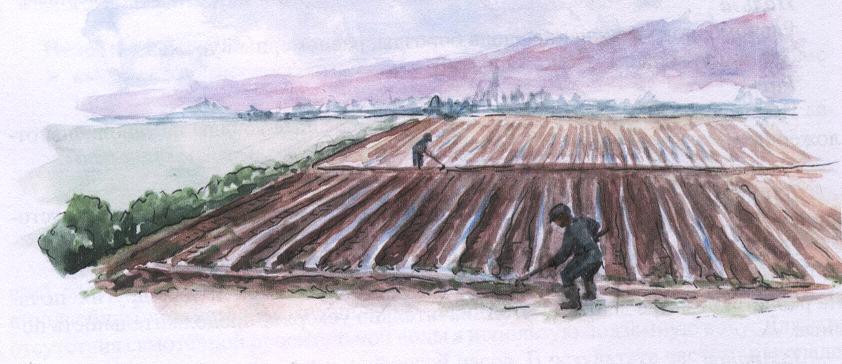
A resource-saving irrigation technology for row crops using shortened furrows, which enables significant savings of irrigation water and improves the efficiency of mineral fertilizer use on irrigated land.
Detailed description of the Technology
This technology is a simplest and low-cost method of irrigating row crops with regulated use of mineral fertilizers. It improves water and land use efficiency and is recommended for almost all row crops. Its distinctive features include:
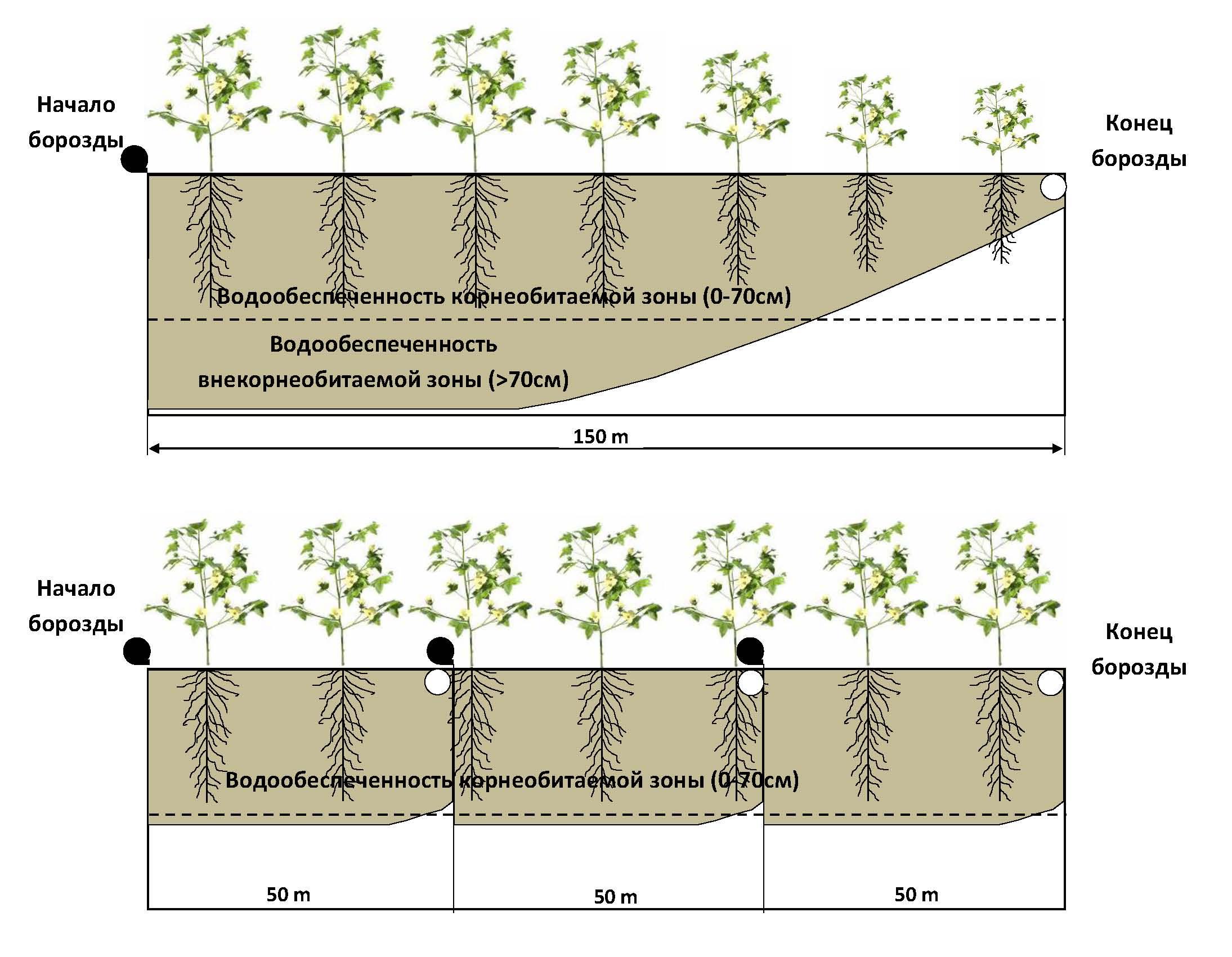
a) Shortened irrigation furrows – the length of furrows in this method depends on the leveling of the irrigated plot and the soil’s infiltration properties. On sandy loam soils (high infiltration), furrow length should not exceed 50 m; on light loamy soils – no more than 60 m; on medium loamy and heavier soils – no more than 70–80 m.
b) Timely and regulated water supply in line with the needs of the cultivated crop.
c) Uniform infiltration of irrigation water along the entire length of the shortened furrow.
d) Even soil moisture distribution across the irrigated plot, targeting only the root zone.
e) Efficient use of mineral fertilizers, preventing their leaching beyond the main root zone.
f) Uniform plant growth and development across the entire field within a shorter time frame.
g) Contribution to environmental protection and improvement of ecological conditions in irrigated agriculture.
This method is especially suitable for light, medium, and heavy loams, but can also be applied to other soil types. For gently sloping fields, the recommended technology shortens irrigation time without requiring adjustment of the supplied water volume. It is strongly recommended for row crops throughout areas where furrow irrigation is practiced in the arid and semi-arid regions of Central Asia.
Purpose of the technology: to ensure efficient use of irrigation water for conserving water resources, increasing the productivity of irrigated land, and improving the livelihoods of rural populations in arid zones.
Main activities and investments:
The proposed method is low-cost. Any additional costs such as the construction of auxiliary (interception) canals (“ok-aryks”) as in this case the irrigated furrow length does not exceed 50–70 m do not exceed 2,000–7,000 UZS (USD 1–3) per ha. Full application of mineral fertilizers to meet the planned yield level costs farmers USD 100–300 per ha. Optimization of crop nutrition is achieved through strict compliance with recommendations on the timing and rates of fertilizer application for the specific crop (the necessary fertilizers are purchased by the farmer).
Natural and social context:
The technology is intended for arable land located in semi-arid or arid zones. Recommended agronomic practices include cultivating gently sloping, well-leveled fields (without abrupt changes in relief) with moderate slopes, typically on light or medium loam soils where row crops with a shallow (30–70 cm) root zone are grown.
The technology is recommended for wide-scale adoption in agricultural production as a cost-effective and efficient approach under long-term irrigated land leases. While recommended for broad implementation, it is currently practiced mainly by experienced specialists.
Photos of the Technology