
Mulching with water hyacinth (Eichhornia crassipes) after the monsoon floods.
Type: Technologies
Creation: 2014-10-16 14:52 Updated: 2019-09-02 09:00
Compilers: Christoph Kaufmann
Reviewers: Deborah Niggli, Alexandra Gavilano
Country/ region/ locations where the Technology has been applied and which are covered by this assessment
- Country: Cambodia
- Region/ State/ Province: Kampong Chhnang
- Further specification of location (e.g. municipality, town, etc.), if relevant: Kampong Os
Description of the SLM Technology
Short description of the Technology
Water hyacinth (Eichhornia crassipes) is collected during the monsoon floods, attached to poles on the flooded fields, chopped when the water recedes and used as mulch to plant different crops.
Detailed description of the Technology
This mulching technique is used at the riverside of the Tonle Sap River. The area is flooded during the late rainy season (September to November), and alluvial mud is deposed on the fields, which enhances the soil fertility. The deposition of sediments depends on the extent of the yearly flood, and is threatened by the construction of hydropower dams on the upper Mekong River (Thomas et al. 2012:49), as well as climate change (floods tend to be smaller or more extreme). During the dry season (approximately from January to June, depending on precipitation patterns) the land dries and due to high temperatures and very low precipitations, crops can be harmed.
At first, the farmer gathers the water hyacinth with his boat during the wet season. He surrounds them with a net and pulls them to his fields, where he prepares fences with bamboo poles and iron wires. He fills the fenced area with the water hyacinth. Once the water recedes, he sprays glyphosate on the water hyacinths and chops them by using a hand tractor. He plants his first crop, watermelon, as soon as the soil is dry enough (start of dry season). The crop residues of the watermelon are left on the fields, and he can plant a crop of corn and a crop of cucumber before the next flood enters.
The analyzed area is flat (slope < 2%), tropic (dry and wet season), and the soils are mostly loamy. The groundwater table is rather high with 1-2 m during the dry season (November to May). The area is flooded during and after the wet season (August-September to November). The floods bring sludge and thus nutrients to the fields.
Due to climate change, the rainfalls are more erratic, temperatures rise and droughts are more recurrent. Chili is the cash crop predominantly grown in the flooded area, with floating rice as second crop.
Agricultural activity in this region is confronted with high migration rates (garment industry, cities, or other countries). This is detrimental for the farmers, since there is less labour force available. Also, the presented technology requires a rather high initial investment (especially when a tractor is bought) and an increase of physically strenuous labour. Therefore, the interviewed land user stated that most farmers are reluctant to do high investments on their farm. This is aggravated due to the fact that taking up credits might increase the dependency of the farmer.
Photos of the Technology
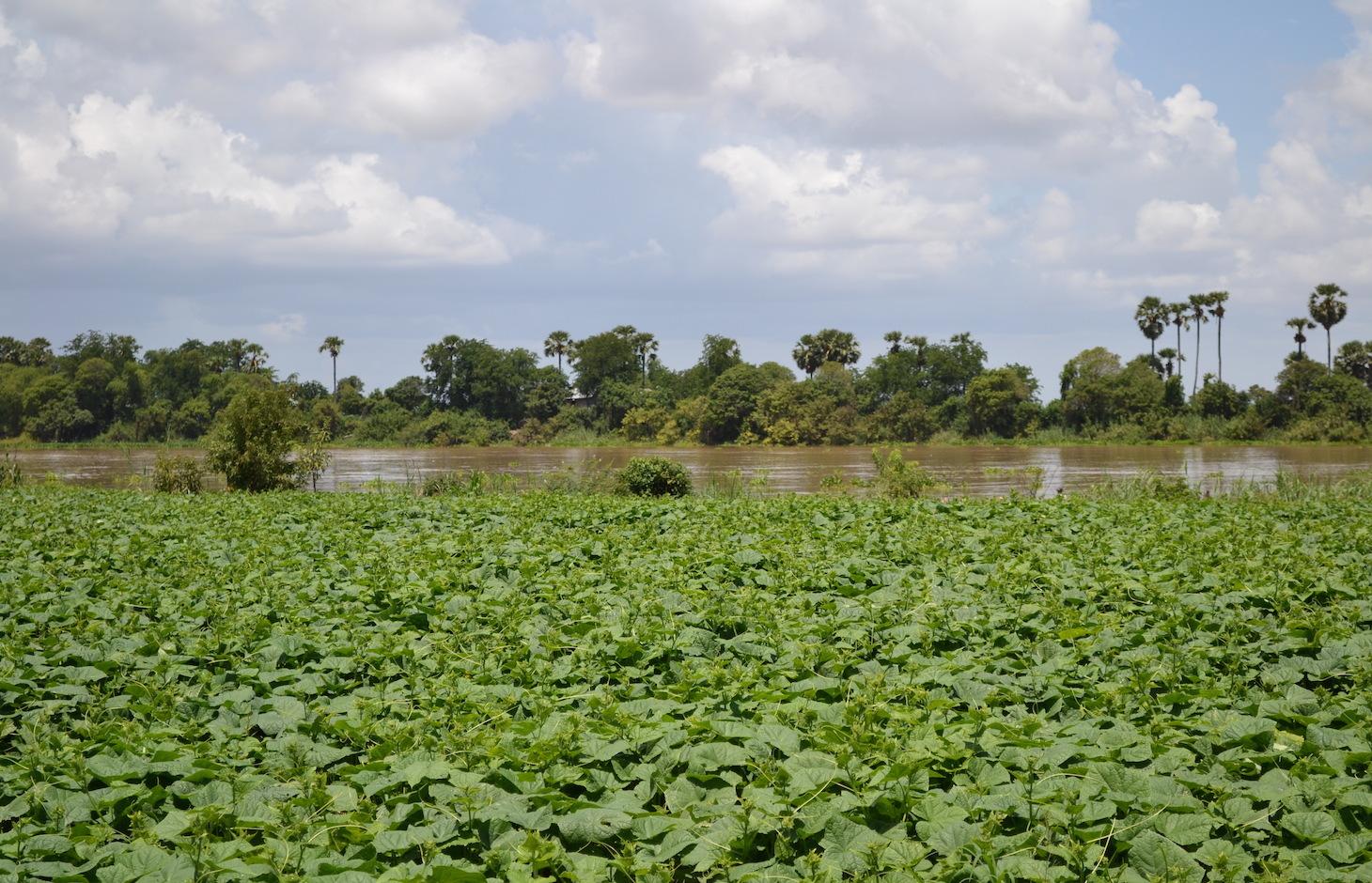
- 📍 Kampong Os, Kampong Chhnang
- 📷 Christoph Kaufmann (Centre for Development and Environment CDE)

- 📍 Kampong Os, Kampong Chhnang
- 📷 Christoph Kaufmann (Centre for Development and Environment CDE)