No-till garlic cultivation
Type: Technologies
Creation: 2015-08-06 10:07 Updated: 2019-06-05 12:49
Compilers: Shreedip Sigdel
Reviewers: David Streiff, Alexandra Gavilano
Country/ region/ locations where the Technology has been applied and which are covered by this assessment
- Country: Nepal
- Further specification of location (e.g. municipality, town, etc.), if relevant: Kailali district
Description of the SLM Technology
Short description of the Technology
No-till is a farming system in which the seeds are planted directly into untilled soil which still contains the previous crop residues. No-till cultivation of garlic is practiced in the tropical lowland districts of western Nepal where garlic is sown directly into the soil after the paddy is harvested.
Detailed description of the Technology
No-till* methods minimize soil disturbance and allow crop residues or stubble to remain on the ground instead of being removed or dug into the soil. As practised in the western Terai of Nepal, the seedbed is prepared by leaving a 3–5 cm thick layer of rice paddy crop residue on the soil surface after the paddy harvest. Garlic seed is planted directly into the soil soon after the paddy is harvested at a spacing of approximately 15 cm and the entire field is then covered with a 10 cm (or more) layer of hay. The seeds germinate with the help of the ambient moisture. The frequency and timing of irrigation depends on need, but since there has been no tillage and the ground is covered with mulch, much of the ambient moisture is retained in the soil. The mature garlic is harvested in February–March. This technology is gaining in popularity because farmers can directly see the economic benefit of not having to till the soil.
Purpose of the Technology: No-till methods are important from the standpoint of environmental farming for a number of reasons. The fact that the soil is not tilled after the paddy is harvested and remains covered with crop residues leads to efficient erosion control (up to 90%) and increased biological activity in and on the soil. The technology helps to conserve moisture in the soil, to improve the infiltration of water (up to 60%), and to reduce soil compaction, and overall, it requires less energy for cultivation (Derpsch et al. 2010). Increasing soil organic matter also helps to sequester carbon and contributes to reducing agricultural greenhouse gas emissions; ultimately, it supports increased production and resilience to climate change. In addition to keeping carbon in the soil, in a recent study, no-till farming was found to reduce nitrous oxide (N2O) emissions by 40–70%, depending on the rotation.
Establishment / maintenance activities and inputs: * No-till in this context means the soil is not tilled after the paddy is harvested and before the garlic seeds are planted. After the garlic is harvested, the soil is tilled before the next crop is planted. No-till is a form of conservation tillage, which refers to methods that leave at least 30% of crop residues in place.
Photos of the Technology
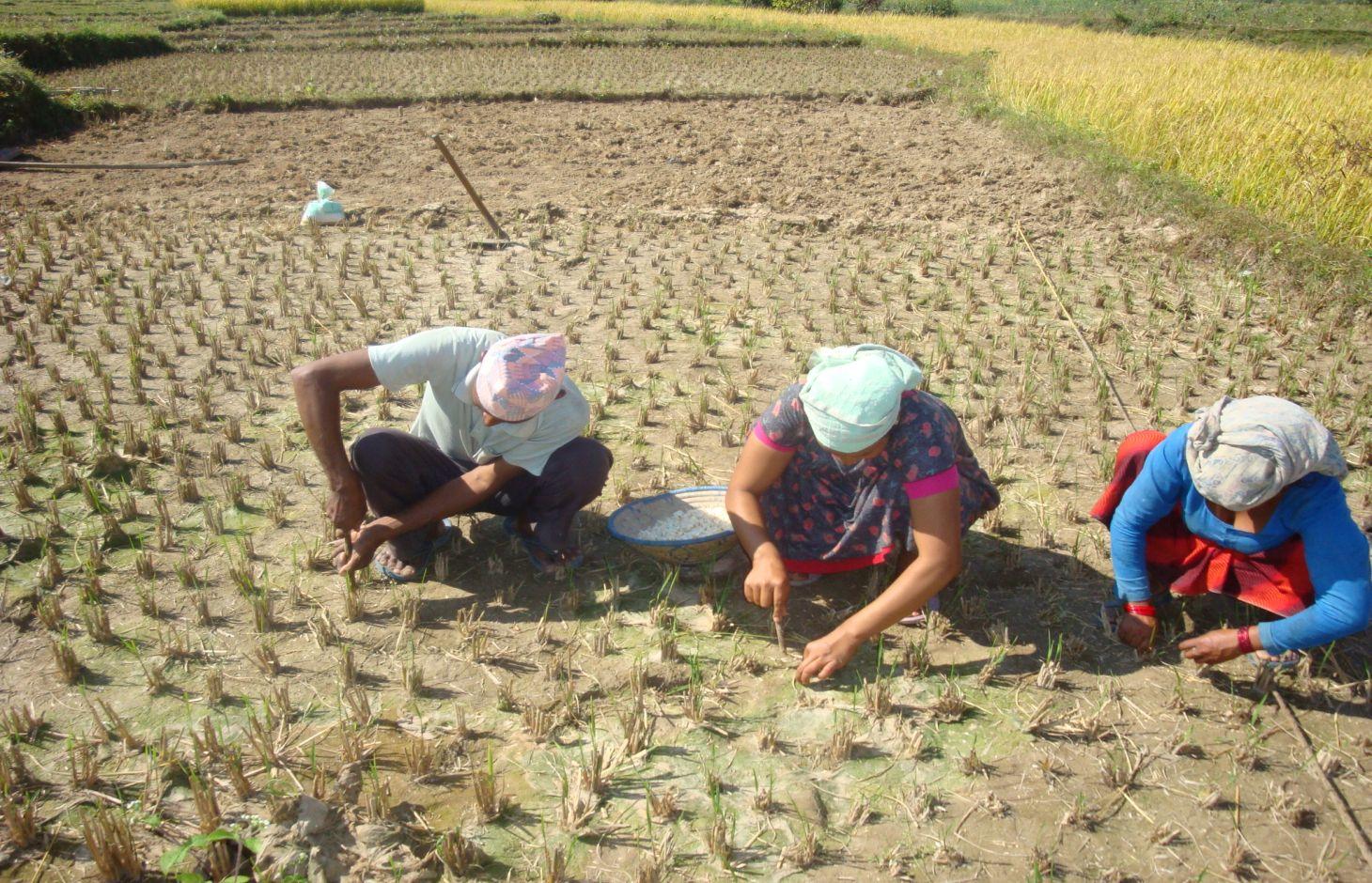
- 📍 Gadariya VDC, Kailali District, Nepal
- 📷 (Krishan Lamsal)
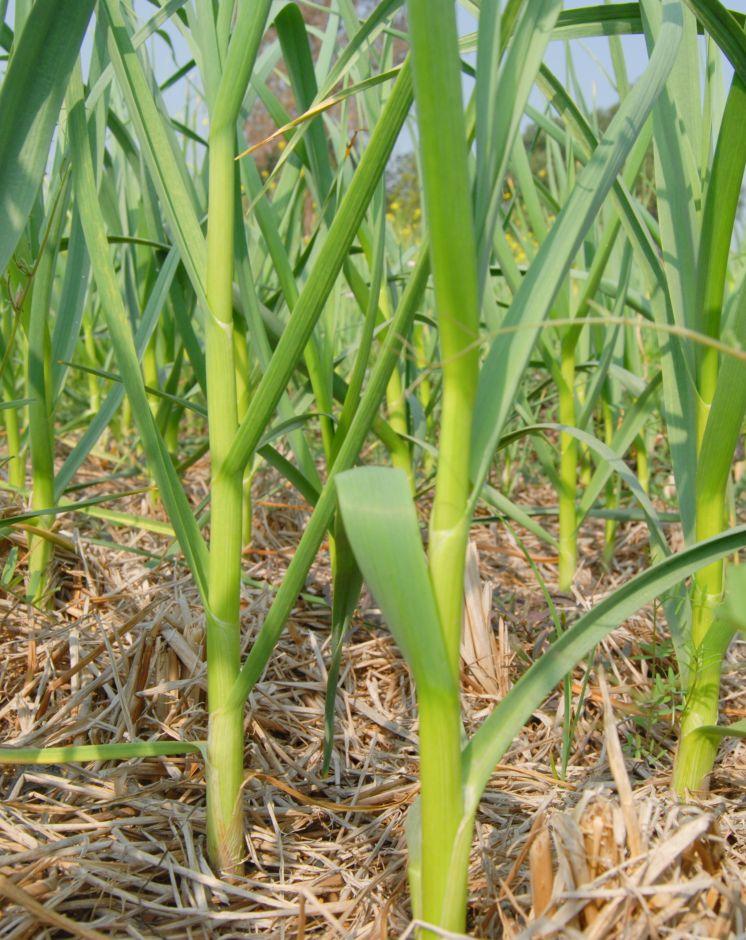
- 📷 Krishna Lamsal