
Rainwater Cellars
Type: Technologies
Creation: 2010-10-13 11:43 Updated: 2019-03-14 11:20
Compilers: Anna Schuler
Reviewers: Deborah Niggli, Alexandra Gavilano
Country/ region/ locations where the Technology has been applied and which are covered by this assessment
- Country: China
- Region/ State/ Province: Gansu Province
- Further specification of location (e.g. municipality, town, etc.), if relevant: Anding District, Dingxi City
Description of the SLM Technology
Short description of the Technology
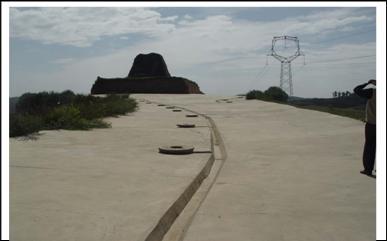
The use of courtyard, roof, road surface, slope, etc. as catchments to collect rainwater for underground water storage for future supply of cropland irrigation as well as drinking water for humans and livestock.
Detailed description of the Technology
The demonstration site is located in mid Gansu, semi-arid gully area of the Loess Plateau, where either surface or groundwater is in great shortage. The annual precipitation is around 380mm with 60% concentrated in July, August and September in storm form. Due to scarce vegetation and serious soil erosion. The agricultural farming is rainfed, but the timing of precipitation and water demand of crops do not coincide, so that the rainwater utilization is extremely low. Low productivity of land and shortage of water for mankind and animal leads to poverty. Since 1980s the government has organized local people in mid Gansu to explore the utilization of water cellars to achieve coincided precipitation, i.e. collecting rainwater to solve water shortage and develop dryland crop cultivation.
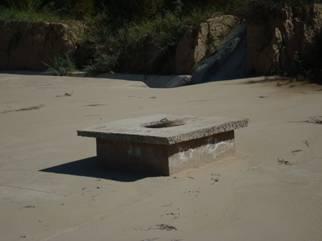
Water cellars are used mainly for the interception of rainwater to supply water for humans and livestock as well as for the irrigation of crops. The cellar is comprised of the cellar body and an ancillary facility, including catchment area, delivery facility (ditch, silt tank, stain interception grate, inlet pipe, cellar opening and irrigation equipment). In general, water cellars are designed to 20-30m3 in capacity. The catchment should be chosen at hillside, road surface, courtyard, roofing, greenhouse roof, etc. For the location selection, considerations should be given to site landform and geological conditions and not proximity to ditch or trench banks, large tree stumps but close to farmland to maximize the possibility of self-flowing irrigation. In consideration of drinking water safety, the cellar should be built far from livestock sheds and toilets to prevent contamination. The silt tank is 2-3m wide, 1m deep and 2-3m away from the cellar opening, and higher than water cellar inlet. The dirt interception grate should be installed 0.5m higher than the base of the silt tank pond and upstream of the inlet. The platform of the water cellar should be 0.3-0.5m high above ground. In Anding District, the concrete cement sphere type water cellar is more often adopted, with the cellar vault/wall of 10cm and base of 20cm thick. At the demonstration site, the inner wall used to be lined with red puddle. Now concrete cement is used for the base and lined with cement and mortar. The water for irrigation does not need special treatment, but drinking water does. Irrigation is done by pumping for watering by ditches flowing to the farmland, hole watering or drip irrigation.
Since mid 1990s, the water cellar has expanded gradually. The 1-2-1 rainwater collection project (each household has 1 catchment, 2 water cellars and 1 patch of courtyard cashcrop forest) has played a significant role in the technology dissemination and poverty alleviation. Since 2000, water cellar function has been further extended toward multifunction for livestock raising, farmland/forest land irrigation and so forth, and greater economic and social benefits are captured by its combination with greenhouse development. Plastic film greenhouse roof was used as the catchment and two water cellars (30 cubic meters capacity for each) were set for each greenhouse. In combination with other technologies of mulched ditch irrigation or drip irrigation, water resource utilization has been tremendously increased. The technology has thereby triggered industrial restructuring as outstanding pilot sites for high benefit agricultural development.
Photos of the Technology
- 📷 Wang Yaolin
- 📷 Chen Zhengbin