Small level bench terraces
Type: Technologies
Creation: 2011-03-06 13:53 Updated: 2019-08-07 09:39
Compilers: Samran Sombatpanit
Reviewers: Fabian Ottiger, Alexandra Gavilano
Country/ region/ locations where the Technology has been applied and which are covered by this assessment
- Country: Thailand
- Region/ State/ Province: ChiangMai
- Further specification of location (e.g. municipality, town, etc.), if relevant: Amphur Mae Fa Luang
- Map: View Map
Description of the SLM Technology
Short description of the Technology
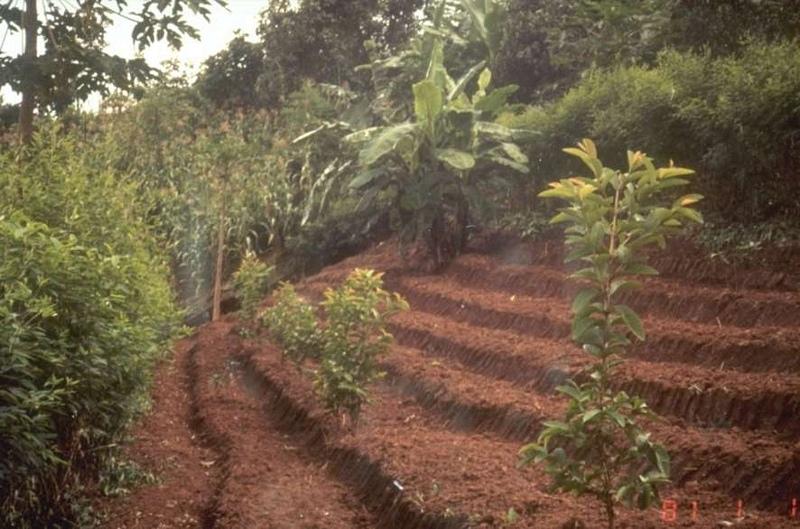
Terraces with narrow beds, used for growing tea, coffee, and horticultural crops on hillsides cleared from forests.
Detailed description of the Technology
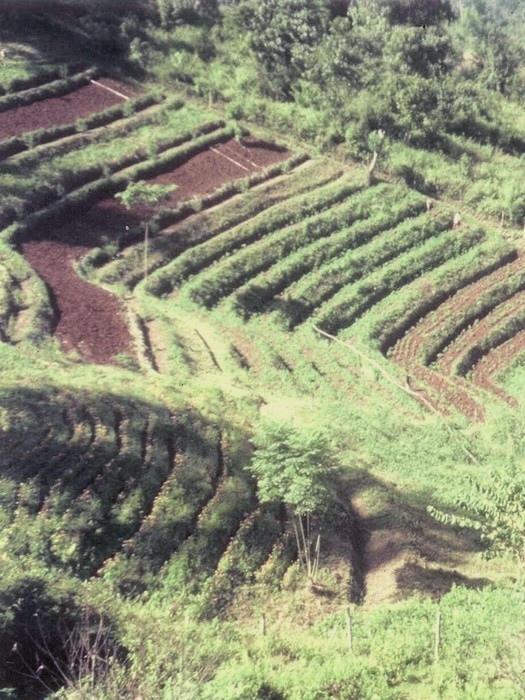
The terraces described in this case study from northern Thailand are found on hilly slopes with deep soils. The climate is humid and tropical, with 1,700-2,000 mm of rainfall annually. The main aim of the terraces is to facilitate cultivation of tea or coffee on sloping land: erosion control is secondary. Coffee and tea, as well as flowers and vegetables, are good alternatives to opium poppies - which it is government policy to eradicate.
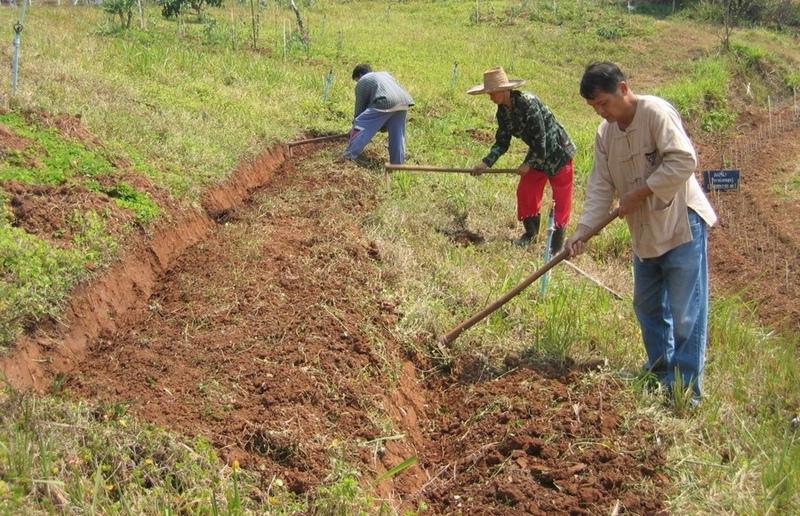
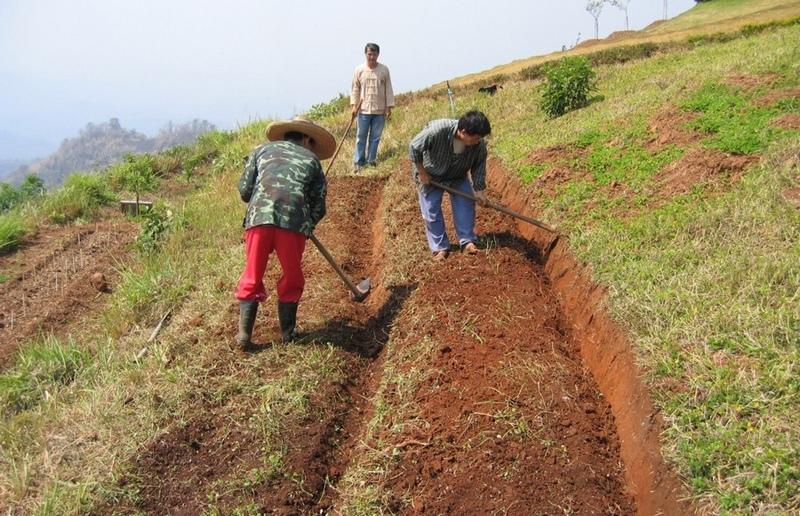
Purpose of the Technology: After clearing natural and secondary forests by slash and burn, terraces are aligned by eye - and constructed by hoe. The width of the bed is 1.0-1.5 m depending on slope, though there are no specific technical guidelines. The length of each terrace can be up to 25 m. Down the slope, after every 3-4 terraces, there are lateral drainage channels, approximately 20-30 cm wide and 10 cm deep. Situated at the foot of a riser, each channel has a gradient of 0.5% or less. Excess water - some of which cascades over the terrace risers, with some draining through the soil - is discharged through these channels, generally to natural waterways. The risers are steep, with a slope of above 100%, and without a defined lip.
Establishment / maintenance activities and inputs: Natural grass cover develops on the risers: this is cut back by hand hoe or machete, or completely removed. The grass is often burned. After harvest (of annual crops), the land is left until immediately before the next rainy season. The terraces at this stage are covered by weeds and grasses. Land is then tilled by hoe. The weeds and grasses are removed and heaped in piles outside the cropped area. They are not composted or used for mulching - and here an opportunity is missed. Where soil fertility is a problem, chemical fertilizers are used. Maintenance includes building up/repairing of risers and levelling of terrace beds as required.
Natural / human environment: The technology was pioneered, and continues to be practiced, by refugee immigrants from China looking for new areas to start farming. These immigrants first came in the 1950s, and cultivated simply through slash and burn techniques. During the 1970s they visited relatives in Taiwan and brought back the idea of small terraces. Originally they settled illegally, but eventually they were given official permission to stay. However, official title deeds to their land have not yet been allocated.
Photos of the Technology
- 📷 Samran Sombatpanit
- 📷 Samran Sombatpanit
- 📍 Mae Fa Luang District, Chiang Rai Province
- 🗓 2000-08-06
- 📷 Samran Sombatpanit (Bangkok, Thailand)
- 📍 Chiang Rai Province
- 📷 Samran Sombatpanit (Bangkok, Thailand)