
Daily and seasonal rotation on grassland
Type: Technologies
Creation: 2011-03-07 18:59 Updated: 2019-08-04 18:35
Compilers: Christian Wirz
Reviewers: David Streiff, Alexandra Gavilano
Country/ region/ locations where the Technology has been applied and which are covered by this assessment
- Country: Tajikistan
- Region/ State/ Province: Region of Republican Subordination
- Further specification of location (e.g. municipality, town, etc.), if relevant: Faizabad
- Map: View Map
Description of the SLM Technology
Short description of the Technology
Extensive grazing of sheep and goats by the means of a precise rotational scheme
Detailed description of the Technology
Half-year herding with 500 sheep, goats and cows (very few), with 7-8 different locations of the herder's tent. The herder visits each place twice to thrice per grazing season and stays in one place for one week to maximally one month (during the Ramadan period, due to limited forces). The area is grazed from the higher zone (around 2000m) to the lower zone (around 1600m) twice per season, in a sort of circle. Every day the herder starts in another direction from his tent and leads the animals to the pastures, once in the morning and once in the evening. He passes a stream once (autumn) to twice (summer) a day.
Purpose of the Technology: The grass should not get dusty and dirty, explaining why the herder daily changes the pastures, only revisiting the same places every two to three days.
Establishment / maintenance activities and inputs: After accompanying his father as a child and a kind of an apprenticeship (of one year) later on, M. is considered by the villagers as a good herder and they give him their animals for herding. But M. applies for land on the forest department only after working as a guardian and as a tractor driver for 20 years. For the herding profession observing the animals precisely is necessary, in order not to lose any of them. And the maintenance of the pastures is guaranteed by the strict rotational scheme.
Natural / human environment: The pasture-area is in a generally well-conserved state. Moderate to high values of fractional vegetation cover can be observed and only few signs of recent erosion processes (through water) are visible. The area is characterised by steep slopes where still signs of past tree-planting during the USSR period are visible by some trees, many little platforms made for tree-planting and a few terraced areas. Eventhough, many trees have been grazed and do not stand anymore. Besides steep areas there are small, quite flat areas (where the herder installs his tents), that used to be cultivated (wheat) till 1966. These areas generally have low cover-values and signs of rill-erosion, which the herder attributes to the past tilling activity. However, it might also be the trampling and sitting of the animals (staying near the herder's tent at noon-time and during the night) causing this erosion. Nutrient management is provided for by the dung of the animals which is not collected, contrarily to the pastures near the villages.
Photos of the Technology
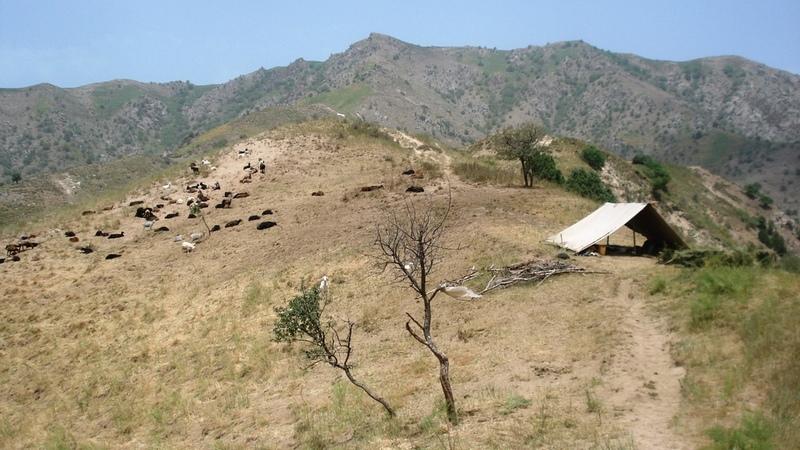
- 📍 Above Karsang, Faizabad / Tajikistan
- 📷 Christian Wirz (Switzerland)
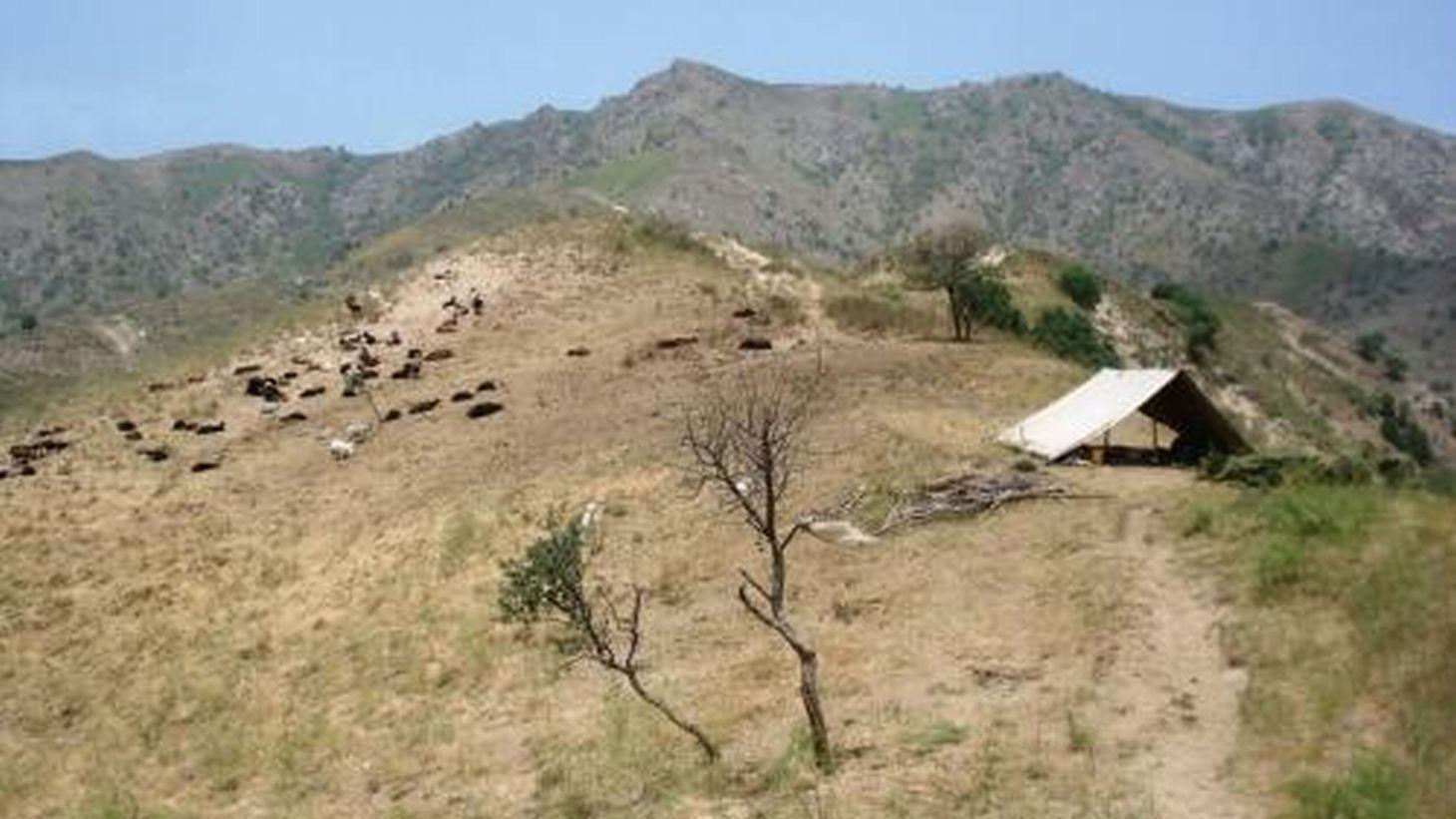
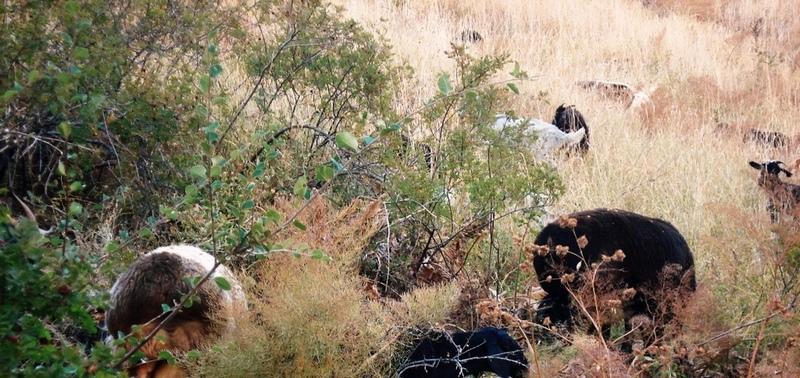
- 📍 Above Karsang, Faizabad / Tajikistan
- 📷 Christian Wirz (Switzerland)
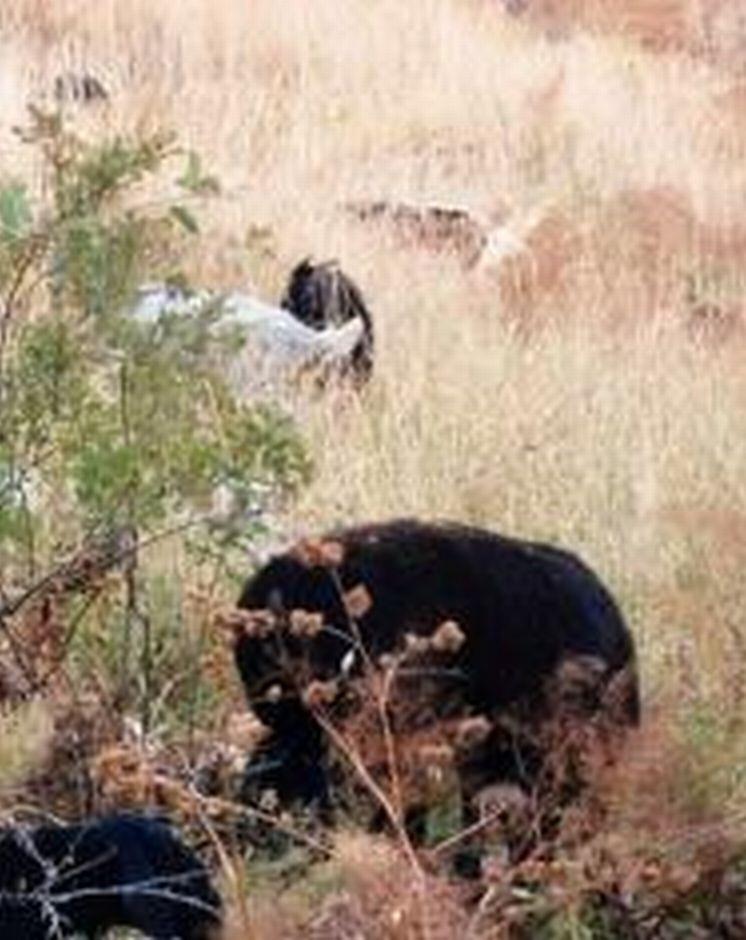
- 📍 Above Karsang, Faizabad / Tajikistan
- 📷 Christian Wirz (Switzerland)