
Stone Wall Bench Terraces
Type: Technologies
Creation: 2011-03-10 15:24 Updated: 2019-08-02 16:58
Compilers: Michael Zoebisch
Reviewers: Fabian Ottiger, Alexandra Gavilano
Country/ region/ locations where the Technology has been applied and which are covered by this assessment
- Country: Syrian Arab Republic
- Region/ State/ Province: Idleb Province, Ariha District
- Further specification of location (e.g. municipality, town, etc.), if relevant: Tal Lata Village
- Map: View Map
Description of the SLM Technology
Short description of the Technology
Ancient level bench terraces with stone walls, built to stabilise slopes, retain moisture, and create a suitable environment for horticulture.
Detailed description of the Technology
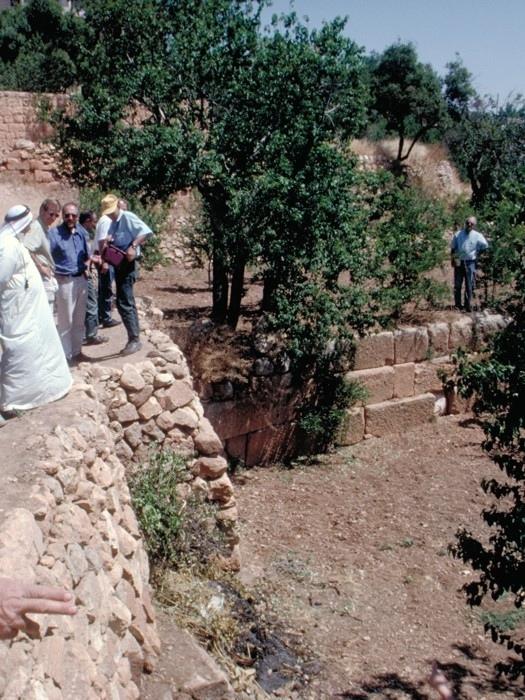
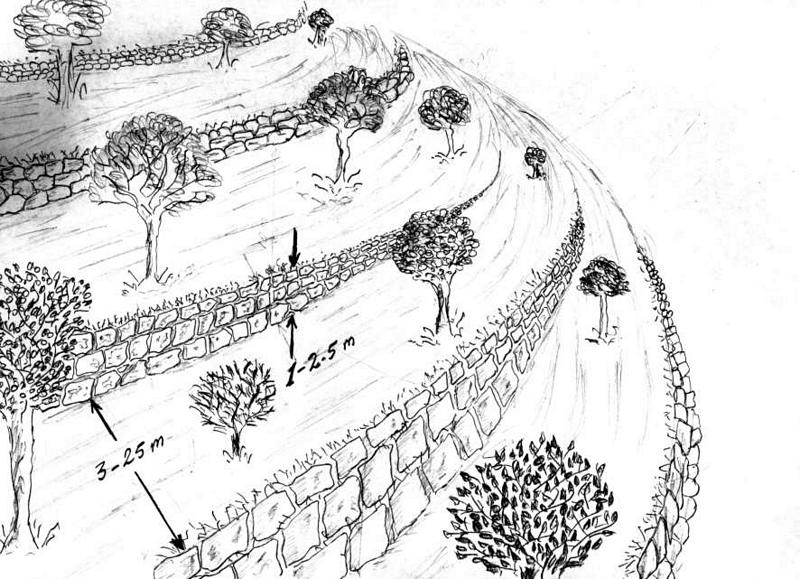
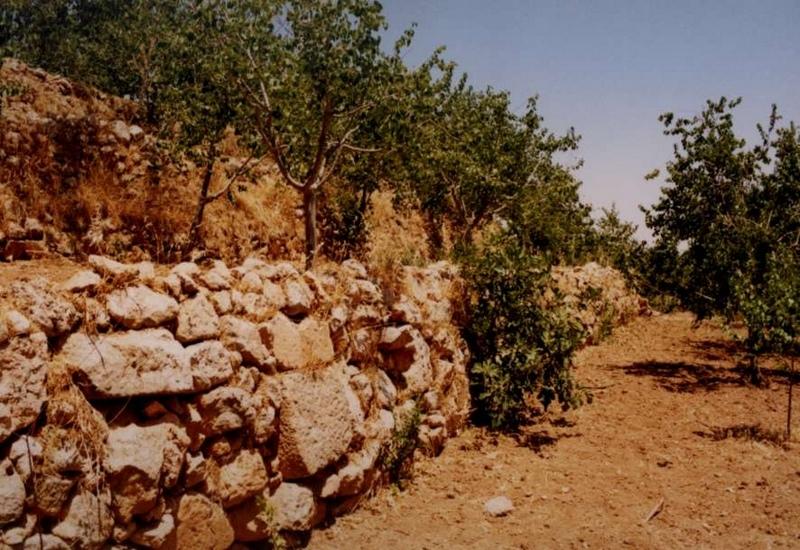
Stone wall bench terraces in the hill ranges of western Syria comprise an ancient indigenous technology, introduced by the Romans and Byzantines about 2,000 years ago. Some new terraces are, however, still being built. The walls are constructed with limestone, largely found on site. The terraces are located in steep terrain (usually on slopes more than 25%) under low (and erratic) rainfall regimes of between 250 and 500 mm per annum. The terrace walls are 1-2.5 m high and the level beds 3-25 m wide, depending on slope.
Deep soil profiles (more than 2 m) have developed on steep slopes, where original soil depth was only shallow to medium. The terraces are very efficient in preventing soil erosion and in the retention of rainfall. They support trees and annual crops where they could not otherwise be grown.
These terraces are usually found near settlements. Construction is very labour intensive, considering how little land is effectively protected from erosion and brought into cultivation. High labour investment makes the construction process slow and retards further extension of the technology. However, if soundly constructed, maintenance requirements are low. Underlining this point, a large number of very ancient terraces can still be found intact, supporting a productive crop. Sometimes localised collapse of a terrace occurs due to concentrated runoff. In that case, the terrace in question may need to be rebuilt. To prevent such breaches, it is important to allow for discharge of excess runoff along drainage lines.
Currently, most terraces are used to grow fruit trees. These include olives, cherries, almonds, plums, pomegranates, apricots, and peaches. Husbandry practices are normally carried out by hand. Where space permits, however, draft animals are used for tillage. The curves of the terraces and access to the steep slopes make it very difficult/impossible to use tractors. Animal power is more versatile in this irregular landscape, but it is more expensive than tractor power, due to shortage of fodder.
Photos of the Technology
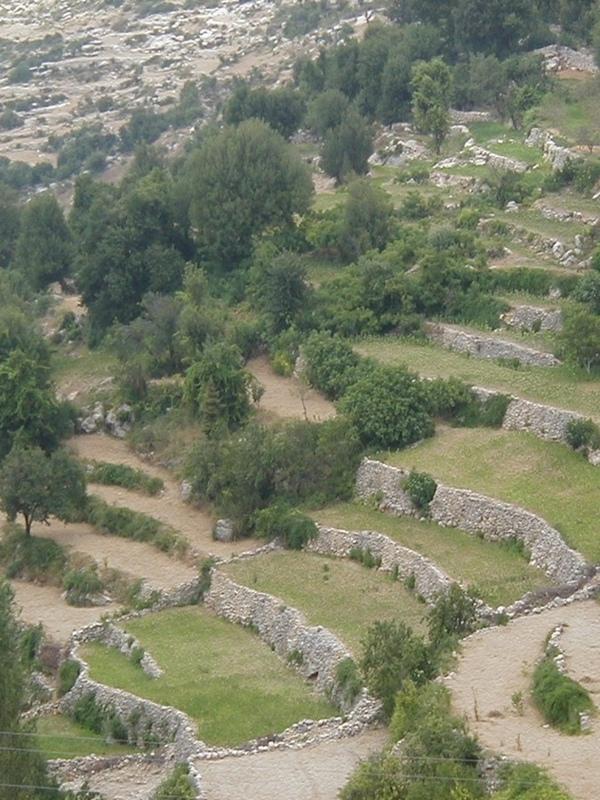
- 📍 Tal Lata
- 📷 Hanspeter Liniger
- 📷 Michael Zöbisch