
Rainfed paddy rice terraces
Type: Technologies
Creation: 2011-03-16 13:07 Updated: 2019-06-13 17:17
Compilers: Philippine Overview of Conservation Approaches and Technologies
Reviewers: Deborah Niggli, Alexandra Gavilano
Country/ region/ locations where the Technology has been applied and which are covered by this assessment
- Country: Philippines
- Region/ State/ Province: Cordillera Region
- Further specification of location (e.g. municipality, town, etc.), if relevant: Cordillera Region
- Map: View Map
Description of the SLM Technology
Short description of the Technology
Terraces supporting rainfed paddy rice on steep mountain slopes: these have been in existence for more than a thousand years.
Detailed description of the Technology
Terraced paddy rice on steep mountain slopes is the main method of rice cultivation in Cordillera Administrative Region (CAR) of the Philippines. This is a traditional technology: most of the terraces are at least a thousand years old. The terraces were constructed manually on steep hill slopes (30-60%) with small portions located in narrow valley bottoms. Farmers generally own one hectare or less of terraced land, and cultivation is intensive. The terraces (‘paddies’) curve along the contour, and are narrow, ranging from one to five meters in width, depending on the slope. The height of the riser is between one and two meters. Water supply for the rice crop depends on rainfall, and only one rice crop is grown per year.
The terraces impound rainwater - average rainfall is around 2,000 mm - and thus prevent soil erosion. Soil fertility is largely maintained because the impounded water and a zero rate of erosion preserve organic matter levels. Some nutrient loss occurs however with each harvest. The terraces are multi-functional: in addition to their agricultural use, they assist in environmental protection through flood mitigation, and they contribute to biodiversity. Furthermore they have become a tourist attraction.
Land preparation is mainly manual. Farmers puddle the soil with their bare feet. Excess water is drained to the terrace below by a small opening in the lip on top of the riser. Maintenance consists basically of repairing breached bunds/risers. Every planting season, a few centimetres of soil is added. To strengthen the bunds, some farmers plant grasses, which may be cut and carried for animal fodder: napier grass (Pennisetum purpureum) is an example. It is important not to disturb the soil of the bund, as this may encourage breaching.
The area where the technology is practiced is mostly between 2,000 and 2,500 m. Because of the cool climate caused by the high elevation, crop maturity takes longer than in the lowlands. In some cases, vegetables such as cabbages and sweet potatoes are grown after the rice is harvested. The farmers, indigenous to the area, have a distinct culture that is different to lowland rice farmers. Rituals connected with farming are widely practiced. There is an added economic benefit from tourism, as people from all over the Philippines - and beyond - travel there for the spectacular views and mild climate.
Photos of the Technology
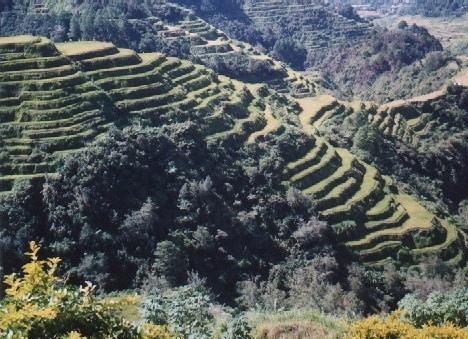
- 📍 Ifugao
- 🗓 2002-10-11
- 📷 Jose D. Rondal (Quezon City, Philippines)
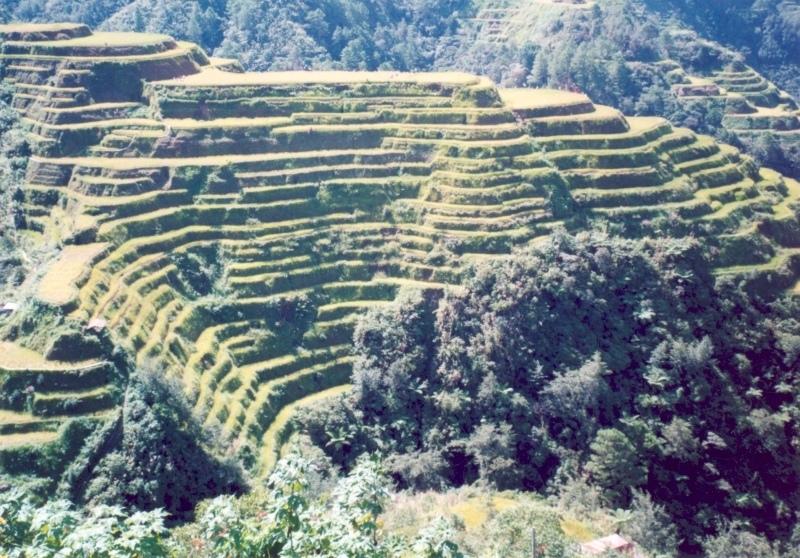
- 📷 Jose D. Rondal (Quezon City, Philippines)
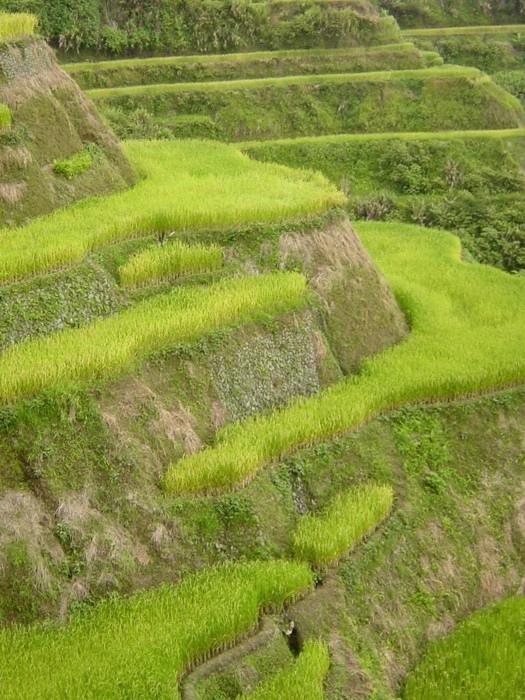
- 📷 William Critchley
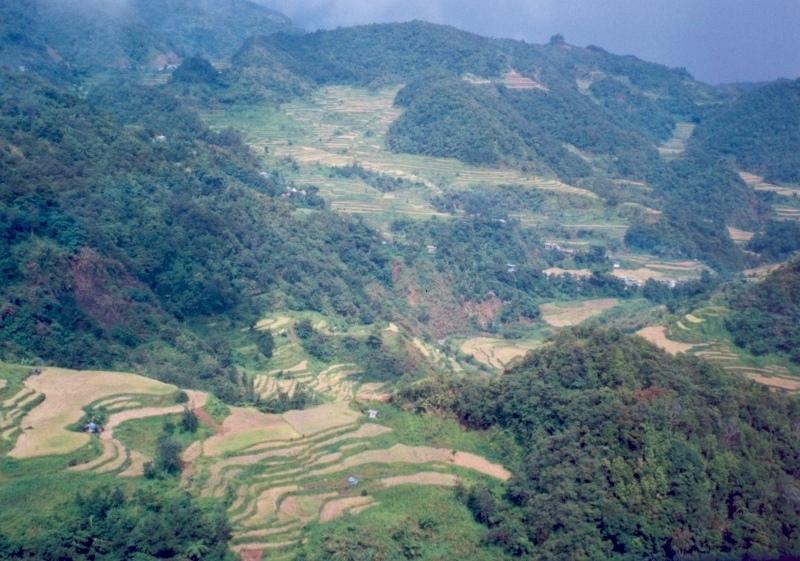
- 📍 Cordillera Region
- 📷 Jose D. Rondal (Quezon City, Philippines)