
Wind forest strips for land protection against wind erosion on sandy soils
Type: Technologies
Creation: 2011-04-09 12:20 Updated: 2021-11-02 15:46
Compilers: Aslam Qadamov
Reviewers: Alexandra Gavilano, David Streiff, Joana Eichenberger
Country/ region/ locations where the Technology has been applied and which are covered by this assessment
- Country: Tajikistan
- Region/ State/ Province: GBAO
- Further specification of location (e.g. municipality, town, etc.), if relevant: Ishkashim
- Map: View Map
Description of the SLM Technology
Short description of the Technology
Establishment of an 8-row shelterbelt consisting of different varieties of willow, poplar and sea-buckthorn to protect irrigated cropland with poor quality soil in the high Pamir region from wind erosion.
Detailed description of the Technology
The 24m wide shelterbelt consists of eight rows of trees. Three plots, 50m wide and 350m long were left in-between the trees to intercrop with lucerne and other perennial herbs. Thus, the total area which includes the shelterbelts, meadows and irrigation ditches makes up nearly 10 ha. The shelterbelt was established perpendicular to the direction of the strong winds. Past trials have shown that under the harsh climatic conditions of the Pamir region, shelterbelts in sandy and pebbly areas should include at least eight rows of trees and shrubs.
Purpose of the Technology: The purpose of this technology was to intercrop the shelterbelts with lucerne in order to help protect crops from wind erosion.
Establishment / maintenance activities and inputs: Shelterbelts were planted by hand, not using any machinery. Trees and shrubs were planted in accordance with their physiological characteristics and their tolerance to deflation. The eight rows were planted in the following order: 1st row: sea-buckthorn, 2nd: Shugnan willows, 3rd: Thuran willows, 4th: Pamir poplars, 5th: Bolle's poplars, 6th: Wilhelm’s willows, 7th: Shugnan willows and 8th: Sea Buckthorn. The distance between trees in each row was 4m. Willows and poplars were planted as cuttings, around 1.5–3m in length cut off at the point at which the diameter of the base was around 6cm. Sea buckthorn was planted as seeds at a depth of 4-6cm. Horizontal planting, which increases the growth by 25%, was used instead of vertical planting. The trees were planted between late March and early April. Furrow irrigation ditches were dug before the actual planting of the trees. The irrigation ditches were 0.3m deep and 0.5m wide. The plot was then watered before the actual planting of the trees and the Lucerne, to increase the soil moisture and improve the subsequent growth of the trees. Further watering of the area was carried out every 4-7 days depending on the weather conditions and levels of moisture in the soil. These willow and poplar trees can be pruned 5-6 years after the initial planting. At this stage the branches will be 1-3 m long and can be used by the local population.
Natural / human environment: The plot is located in an arid zone which has sandy and pebbly soil with low fertility. Initially this area was covered by Tugai forest and used as grazing land as well as for timber production. However, as a result of deforestation, the land in this area has become highly unstable and poses a threat to the irrigated lands upslope. 80% of the soil consists of stones and sand. Vegetation cover is mainly composed of sagebrush deserts. These shelterbelts were established during Soviet times and when the civil war broke out after independence, many of the poplar trees were cut down by the local population for construction- and firewood. Therefore only parts of the original shelterbelts are still in place today.
Photos of the Technology
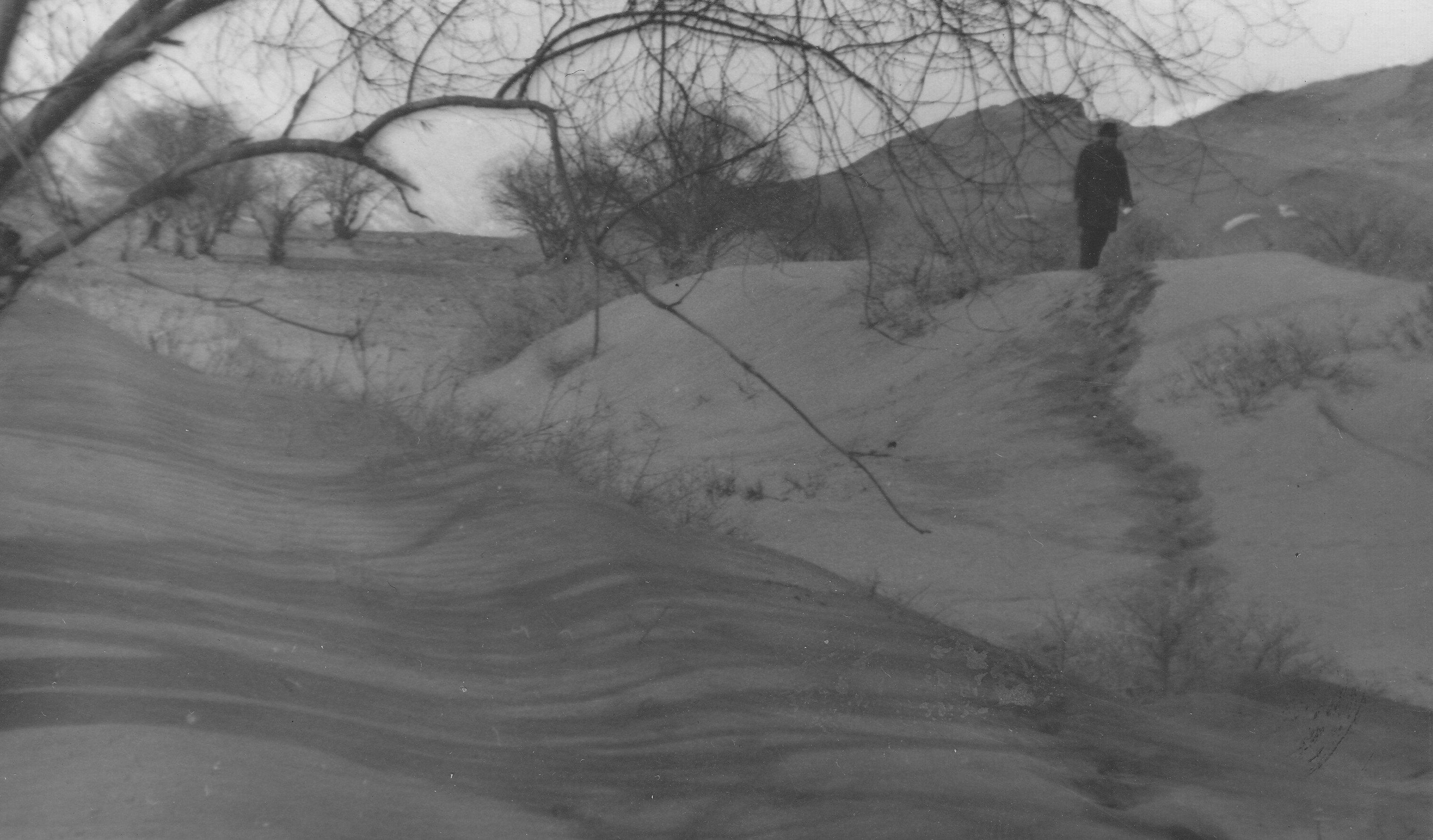
- 📍 Namadgut village, Ishkashim
- 🗓 1960-04-04
- 📷 Kosumbekov Anoyatbek (Forestry department of GBAO)
- 📍 Namadgut village, Ishkashim
- 🗓 1960-04-04
- 📷 Kosumbekov Anoyatbek (Forestry department of GBAO)
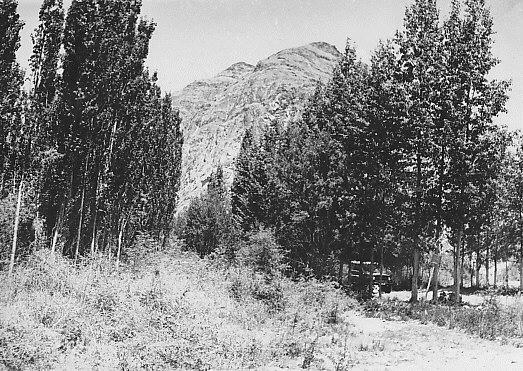
- 📍 GBAO, Ishkashim
- 📷 Kosumbekov A (FOrestry department of GBAO)
- 📍 GBAO, Ishkashim
- 📷 Kosumbekov A (Forestry department of GBAO)