
Plastic-lined conservation pond to store irrigation water
Type: Technologies
Creation: 2011-06-07 11:24 Updated: 2019-09-05 12:35
Compilers: Madhav Dhakal
Reviewers: David Streiff, Alexandra Gavilano
Country/ region/ locations where the Technology has been applied and which are covered by this assessment
- Country: Nepal
- Further specification of location (e.g. municipality, town, etc.), if relevant: Kavrepalanchowk district/ Lamdihi, Patalekhet, Chiuribot, villages of Jhikhu Khola watershed
- Map: View Map
Description of the SLM Technology
Short description of the Technology
A plastic-lined dugout pond to store runoff and household wastewater for irrigation purposes during dry periods
Detailed description of the Technology
Water harvesting technology is very useful in areas where there is limited rainfall for long periods of the year. These dry periods severely limit the growing of crops across Nepal’s middle mountains especially on steep slopes where conventional irrigation can be difficult to arrange. Plastic-lined conservation ponds store water for irrigation more efficiently than the traditional earthen ponds which lose much water to seepage.
The ponds are dug out and the earthen walls lined with high density polyethylene (HDPE) sheet or SILPAULIN (multi-layered, cross laminated, UV stabilised) heavy duty plastic sheeting. The size of the pond will vary depending on the area available and the soil characteristics. The PARDYP project tested and demonstrated plastic-lined ponds with a capacity of 8,000-10,000 litres. These ponds were about 3m long, 2m wide and 1.5m deep and were located at shady sites to minimise evaporation losses. The conservation ponds tested and demonstrated by the PARDYP project were used for irrigating high value off-season horticultural crops (vegetables, fruit, and spices). These crops were irrigated with drip irrigation and micro sprinklers (see sheets QT NEP6 and QT NEP21). The ponds were fed from rainwater, upland springs and taps, and household wastewater. The ponds were established during the dry season in three days. They were prepared by selecting a suitable site with a sufficient catchment; mapping out the area and depth of the pond; digging out the soil; removing protruding stones and roots; and compacting and smoothing the sides and bottom of the pond. Then the sides and bottom of the pond were lined with sieved soil followed by plastic sheet, which was anchored by stones and soil.
The main maintenance activity is to prevent livestock and people from entering the pond to avoid damaging the sheet. The pond should not be allowed to dry up as this would let rats damage the sheet. The sediment that accumulates in the pond should be removed once a year carefully by hand only as the use of agricultural tools could puncture the sheet.
Photos of the Technology
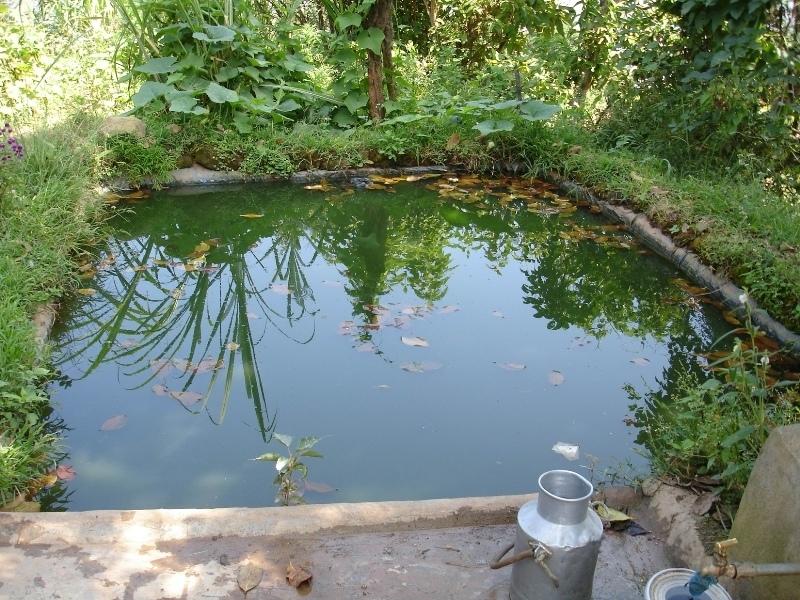
- 📍 Patalekhet, Kavrepalanchowk district
- 📷 K.M. Sthapit