
Low cost drip irrigation
Type: Technologies
Creation: 2011-06-07 18:22 Updated: 2019-06-03 15:56
Compilers: Madhav Dhakal
Reviewers: David Streiff, Alexandra Gavilano
Country/ region/ locations where the Technology has been applied and which are covered by this assessment
- Country: Nepal
- Region/ State/ Province: Bagmati zone
- Further specification of location (e.g. municipality, town, etc.), if relevant: Kavepalanchowk/Jhikhu Khola watershed
- Map: View Map
Description of the SLM Technology
Short description of the Technology
An irrigation system which allows the slow and precise delivery of water to crops
Detailed description of the Technology
Drip irrigation is a very water-efficient irrigation system. Water is dripped to individual plant root zones at low rates (2.25 l/hr) from emitters embedded in small diameter plastic pipes.
Farmers in the Jhikhu Khola watershed, Nepal, suffer from a shortage of water for irrigation between the end of one monsoon (June to September) and the next pre-monsoon period (May). This seriously limits agricultural production and leads to much land being left fallow after the monsoon crops have been harvested. Only a small area is planted with winter crops. The sources of irrigation water (such as rivers, and streams) are limited and the amount of water they provide is inadequate for cropping. Most of the sources remain dry outside the monsoon. Farmers expend considerable time and labour gathering what water they can to irrigate their crops. Low cost drip irrigation (LCDI) has been introduced in the watershed as a cost effective way of making the best use of the limited available water.
The cropping pattern of this area sees pre-monsoon vegetables established in February and March and winter vegetables in September and October. The low cost drip irrigation sets are installed while the fields are being prepared by ploughing, levelling, and ridging. Lateral pipes (12m long) are laid along the ridges which lie 1.5m apart. A wooden platform with storage tank is installed and connected to the lateral pipes. After the lateral pipes are laid out, planting holes are dug along the ridges spaced to coincide with the drip holes. These holes are usually set every 0.6 or 1.2m along the pipes depending on the crop. Farmyard manure and chemical fertiliser is placed in each pit and mixed well with the soil. Next, vegetable seedlings are planted in each hole and daily drip watering begins. Bitter gourd is the most commonly grown crop followed by cauliflower. Irrigation water is generally applied either in the morning or the evening. If needed, stakes are placed next to each plant a week later to allow the plants to climb. The climber crops like bitter gourd are netted one month after planting to provide more space for fruiting. Harvesting starts in mid-May and continues until September. Farmers maintain the system by repairing leaks in the pipe joints and by unblocking blocked drip holes.
Photos of the Technology
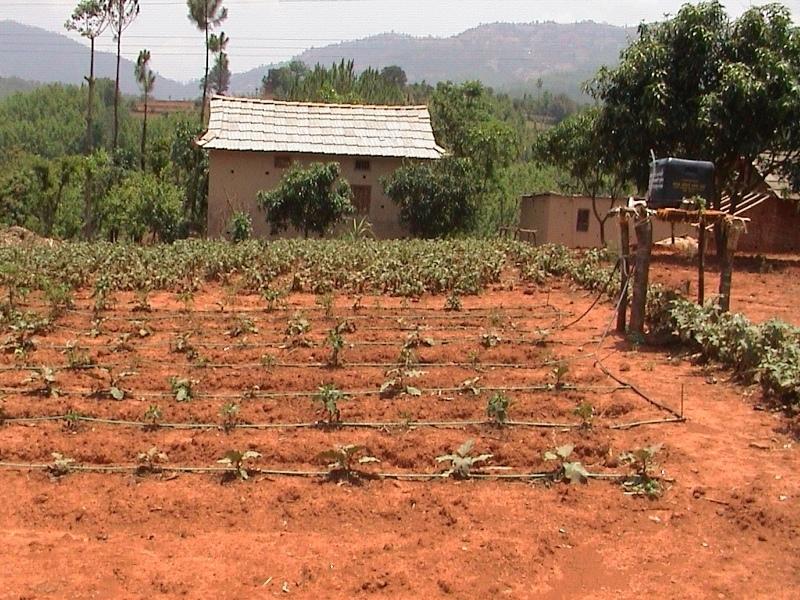
- 📍 Tamaghat horticultural farm, Kabhrepalanchowk
- 📷 PARDYP