
Rotational grazing supported by additional water points
Type: Technologies
Creation: 2010-12-27 10:26 Updated: 2021-11-02 15:42
Compilers: Sa'dy Odinashoev
Reviewers: Deborah Niggli, David Streiff, Alexandra Gavilano, Joana Eichenberger
Country/ region/ locations where the Technology has been applied and which are covered by this assessment
- Country: Tajikistan
- Region/ State/ Province: Tajikistan, Khatlon
- Further specification of location (e.g. municipality, town, etc.), if relevant: Muminabad
- Map: View Map
Description of the SLM Technology
Short description of the Technology
After the end of the Soviet era, an increased number of livestock with less grazing land available, has led to the deterioration of the pastures, including overgrazing, reduction of plant diversity, poor livestock health and soil erosion. To tackle the problem, Caritas Switzerland together with livestock committees at village level introduced rotational grazing supported by extra water points and rest places.
Detailed description of the Technology
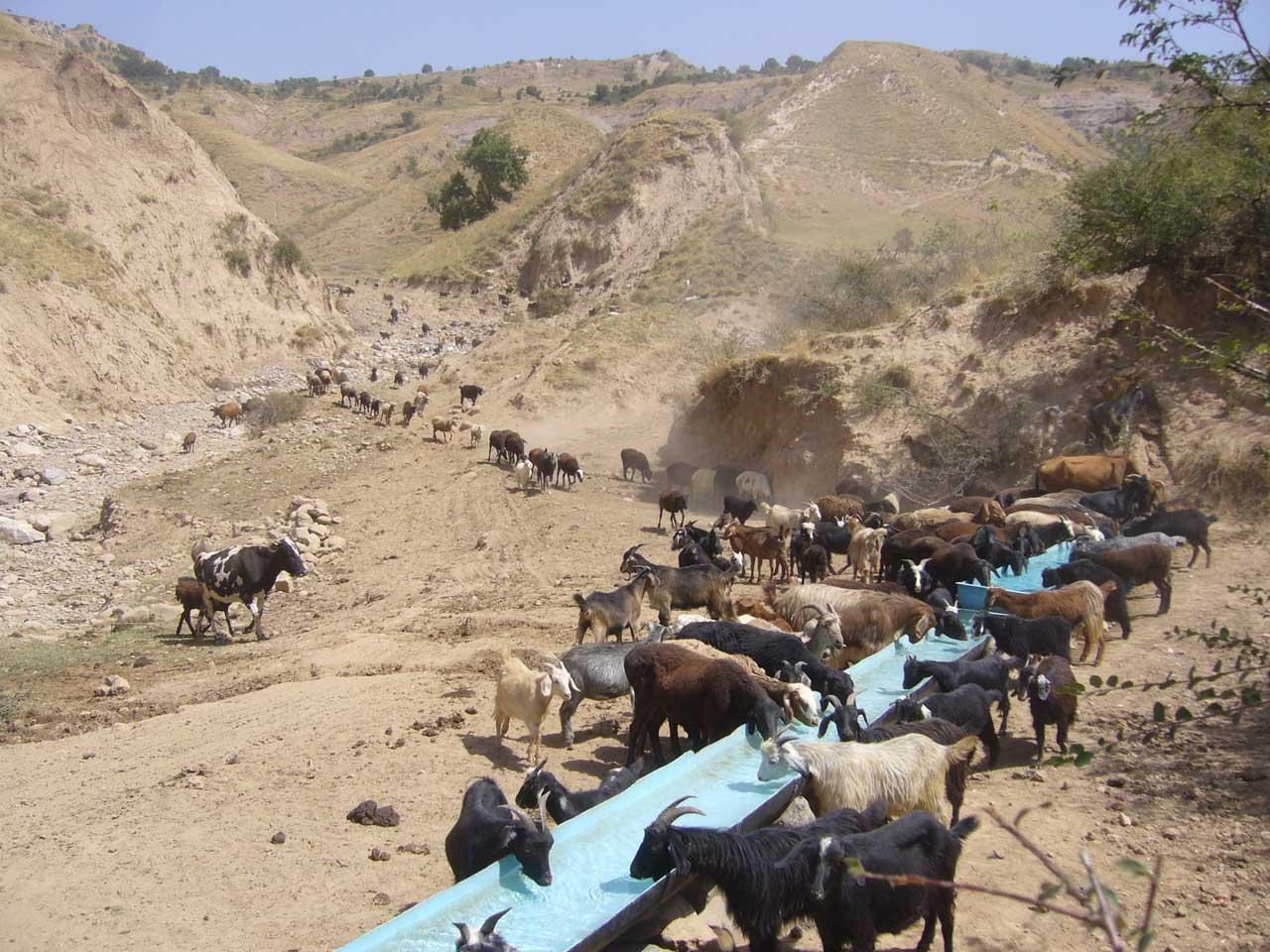
When in 2009 the project started in the two watersheds of Fayzabad and Gesh in Muminabad district, the communities had identified insufficient livestock water points in the pastures, and poor pasture management as top priorities concerning natural resource management in the watersheds. At that time, one of the biggest problems for livestock and herders was the difficult access to water when grazing the daily pastures above the villages. At lunch time, herds had to walk long distances (4-5 kilometers) and actually had to come back to the villages for drinking water. Climbing twice a day to the pasture costs the cattle a lot of energy leading to a yearly loss of up to 40-50 kg, according to a Caritas Switzerland study. One initial measure to improve the condition of the livestock was therefore to establish water points in the pastures. At first, water sources that supply water throughout the year were identified.
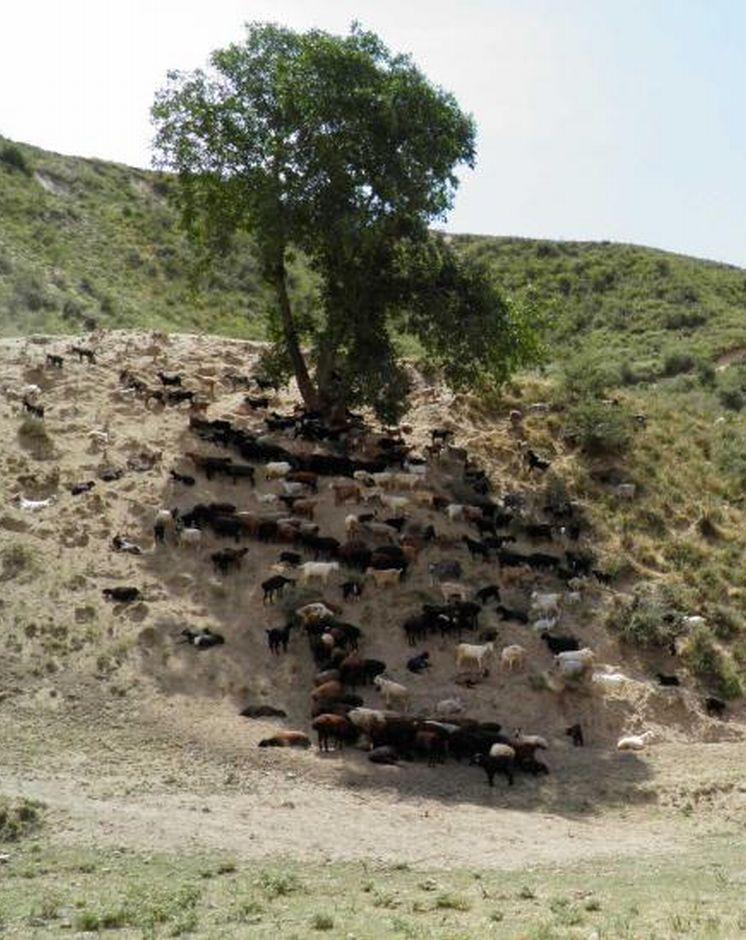
Purpose of the Technology: The water is now collected in a cement catchment, from where it is channelled through pipes to the drinking water points for animals. In some cases water tanks are placed above water points, to collect water and to distribute it to the water points. Additionally, rest places were found for the livestock, where they can have a rest in the shade after drinking water on hot summer days.
In conjunction to the establishment of water points, a rotational grazing scheme was introduced. The pasture land in the watershed was divided into ten parts and in each plot the animals were allowed to graze for five to eight days, assuring longer growing times for grass on specific pastures and thus increasing the quantity of grass and the quality of the pastures.
Establishment / maintenance activities and inputs: Livestock committees, consisting of five people, were organised. They took the lead in developing appropriate grazing schemes and discussing the location of the water points with the villagers. They are in charge of further maintenance of the water points, and the daily organisation of the rotational grazing. One of the five committee members is the shepherd. Every morning he accompanies the herd and checks the water points and the rest places. Once a month he collects one Somoni from each family to cover costs arising from this method of pasture management in the watershed.
Natural / human environment: The technology is implemented on pasture land where animal drinking water is readily available only in spring, and during the rest of the year the distances to water sources are long. Daily pastures in stony terrain with steep slopes and pastures situated higher up are difficult to reach. The livestock grazing on common grazing land are controlled by the head shepherd with the task of coordinating the different helpers and having overall responsibility for herding the livestock.
Photos of the Technology
- 📍 Muminabad, Muminabad, Khatlon, Tajikistan
- 📷 Sady Odinashoev (Muminabad, Tajikistan)
- 📍 Muminabad, Khatlon, Tajikistan
- 📷 Sady Odinashoev (Muminabad, Tajikistan)
- 📍 Muminabad, Khatlon, Tajikistan
- 📷 Viviane Bigler (University of Bern)