
Pasture rotation in the desert areas of Uzbekistan (CACILM)
Type: Technologies
Creation: 2011-12-15 11:03 Updated: 2019-08-22 10:40
Compilers: Rustam Ibragimov
Reviewers: Deborah Niggli, Alexandra Gavilano
Country/ region/ locations where the Technology has been applied and which are covered by this assessment
- Country: Uzbekistan
- Region/ State/ Province: Uzbekistan / Bukhara oblast
- Further specification of location (e.g. municipality, town, etc.), if relevant: Romitan district
- Map: View Map
Description of the SLM Technology
Short description of the Technology
Improvement of a livestock grazing scheme ensuring the restoration of pasture vegetation and observance of appropriate pasture loading.
Detailed description of the Technology
As a result of the existing regulations in the pasture-based livestock production sector of Uzbekistan, pasture lands are provided for perpetual use to shirkat farms (large agricultural cooperative) or for long-term use to large farming enterprises. The population is using shirkat pastures for the grazing of private livestock, whose population sometimes exceeds shirkat livestock numbers. Pastures are used without a management plan. Animals are grazing all year round on the same pastures leading to degradation. Trampling occurs on the paths leading the pastures. The proposed technology was developed and introduced within the framework of the UNDP/GEF and Government of Uzbekistan project “Achieving ecosystem stability on degraded lands in Karakalpakstan and Kyzylkum desert” in 2007-2009. Based on traditional methods and approaches to pasture use, this technology enables pasture usage and revenue generation for the local communities without negative impacts on the natural resources (in the frame of CACILM).
The purpose of this technology is to prevent further pasture degradation, loss of biodiversity and to create prerequisites for regeneration of vegetation and pasture improvement.
National experts of the project, based on consultations with local community, developed the sustainable pasture use plan. For that purpose, a pasture assessment was performed for each stakeholder (flocks of the shirkat, farming enterprises and dekhkan households). The pasture assessment determined the type, forage value and pasture capacity, followed by the calculation of the forage balance (ratio of required to available pasture forage). A pasture users’ commission is monitoring pasture vegetation and productivity in order to fine-tune the plan. Based on that, livestock population is corrected each season to ensure safe pasture loading and prevent overgrazing.
Two watering wells were assigned to an 800 head-strong sheep flock. The 7859 hectare area (based on 5 km usage radius) around each well was split diametrically in two sectors (I and II), and each sector was split in turn into 3 rotation areas of 1308 hectares each, to be grazed sequentially. Based on the current pasture productivity of 1,65 centners/ha, each area can be used for 30 days, i.e. the first sector of the pasture provides 90 days, the entire spring period, of forage for 800 head of sheep. In summer, the flock is driven into sector 2, and in the autumn to the second watering well, where rotation-based grazing is also organized on two sectors split into rotation areas for sequential grazing of sheep: sector one during the autumn and sector two during the winter. Rotation-based grazing ensures that separate pasture sectors are put to fallow in a planned manner, giving the plants an opportunity to grow and restore their vitality.
This technology is proposed for the desert zone with relatively homogeneous vegetation and low productivity. Currently, the population of the desert zone (Kyzyl Ravat village) is mainly engaged in livestock production which is the main source of income.
Photos of the Technology
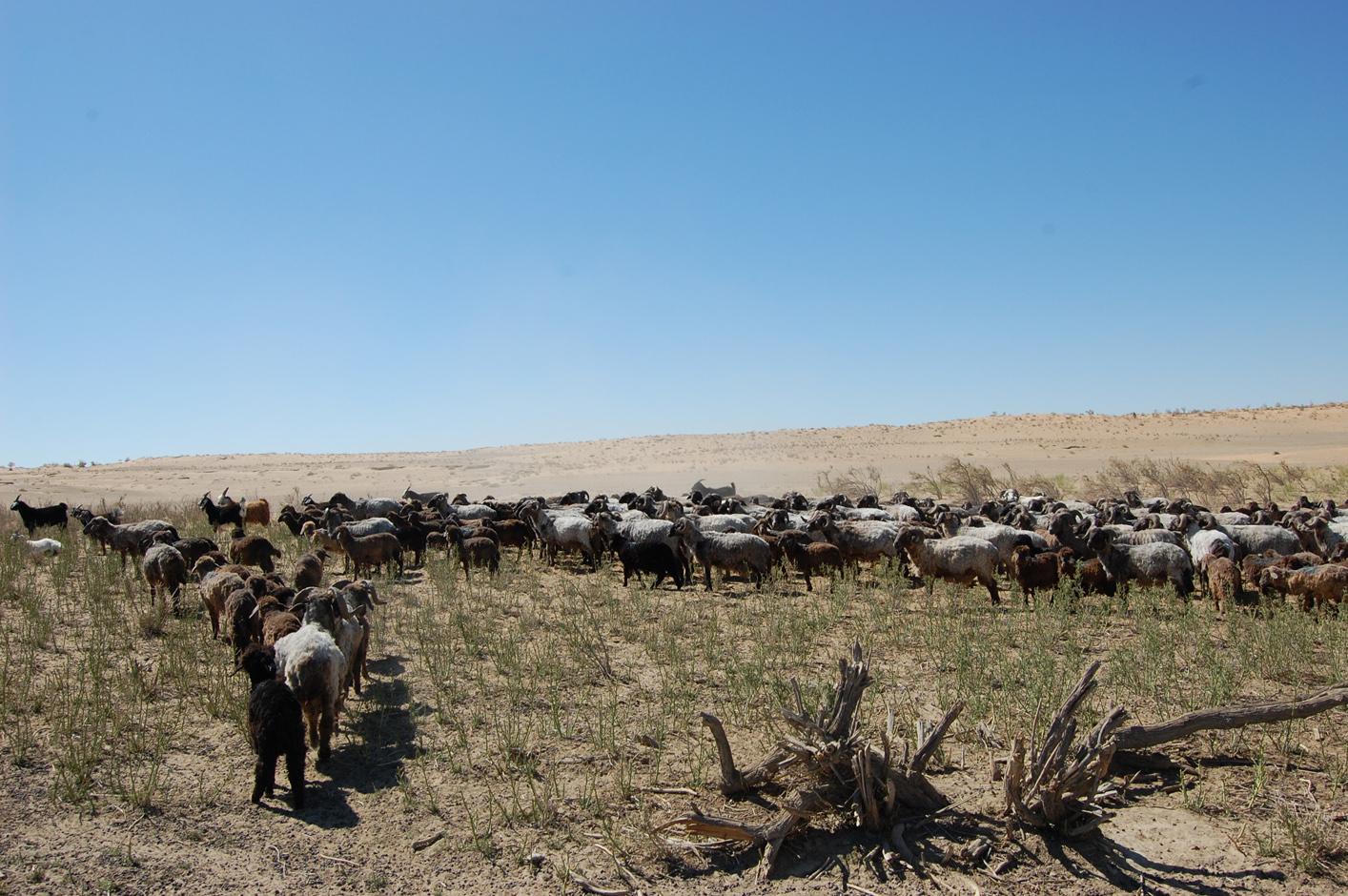
- 📍 п. Кызыл-Рават, Ромитанский район/ Бухарская область
- 📷 У. Назаркулов (Ташкент, 100113, Чиланзар 8, ул. Катартал 21)

- 📍 п. Кызыл-Рават, Ромитанский район/ Бухарская область
- 📷 У. Назаркулов (Ташкент, 100113, Чиланзар 8, ул. Катартал 21)
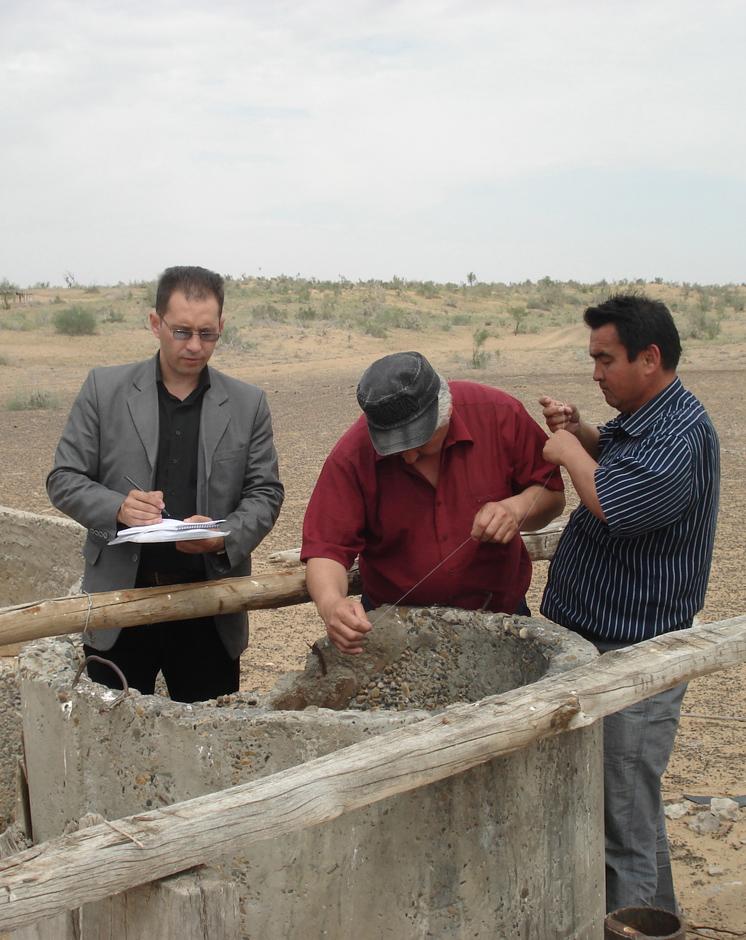
- 📍 п. Кызыл-Рават, Ромитанский район/ Бухарская область
- 📷 У. Назаркулов (Ташкент, 100113, Чиланзар 8, ул. Катартал 21)