
Afforestation for rehabilitation of degraded irrigated croplands (CACILM)
Type: Technologies
Creation: 2011-12-19 11:16 Updated: 2019-11-25 20:16
Compilers: Rustam Ibragimov
Reviewers: Alexandra Gavilano, David Streiff, Rima Mekdaschi Studer
Country/ region/ locations where the Technology has been applied and which are covered by this assessment
- Country: Uzbekistan
- Region/ State/ Province: Uzbekistan / Korezm oblast
- Further specification of location (e.g. municipality, town, etc.), if relevant: Yangibazar district
- Map: View Map
Description of the SLM Technology
Short description of the Technology
A plantation of salinity-tolerant tree species, mostly having nitrogen fixing and high biodrainage capability, is created in a plot of arable land, out of use due to high salinity and water logging in order to restore productive functions of the land.
Detailed description of the Technology
Uzbekistan has many places where growing of staple crops in degraded (marginal) arable land is unprofitable, and even detrimental. Planting multi-purpose tree species in such lands can facilitate soil fertility restoration and the re-initiation of agricultural production. Abandoned land starts producing financial benefits by providing the population with wood for fuel and construction, medicines, edible fruits, foliar forage and other products. The effective selection of tree species can improve ecological services such as the reduction of water logging through transpiration (biodrainage); reduction of soil salinity, increase of soil nitrogen availability through nitrogen fixing and organic matter from leaf litter. In the long run, the plots of land may again be returned into the category of arable land (rotational agroforestry) or continue being used for forest plantations (in the frame of CACILM).
Purpose of the Technology: To increase the productivity of agricultural lands, rehabilitate agroecosystems and improve rural livelihoods through introduction of tree plantations on agricultural land
Establishment / maintenance activities and inputs: The most important component for the creation of tree plantations in marginal land is the selection of multi-purpose tree species with a variety of criteria, the main ones being salinity and drought tolerance as well as high biodrainage and nitrogen fixing capacity. Recommendations for Khorezm include three species, namely: oleaster (Elaeagnus angustifolia) a nitrogen fixing species, Turanga poplar (Populus euphratica) a fast-growing species, and Siberian elm (Ulmus pumila) a resilient species. Land preparation includes plot leveling, plowing and the leaching of salt. Seedlings of different species are planted according to a 1х1.75 m layout of unmixed rows, with species alternating every 5-7 rows. Dense planting allows for the harvesting of biomass by thinning the first years’ growth (for fuel and foliar forage). Gradually, the width between each row increases up to 3-5 meters. In the future, biomass is harvested through the sustainable trimming of tree limbs. During the first 2 years, a reduced irrigation rate is applied (10-30% less). After that, no irrigation is applied and trees are sustained by groundwater
Natural / human environment: The technology is adapted to the conditions of Khorezm oblast, Uzbekistan, an ancient irrigated oasis in the lower reaches of the Amu Darya River. The area features an extremely flat terrain with poor drainage of groundwater. Due to natural conditions and improper use of water and land resources, the land is affected by high salinity and water logging. The main occupation of the local population is the cultivation of cotton, winter wheat, vegetables, gourds and melons. Farmers, the main landowners, own the land on the basis of long-term rent. For the farmers, reclamation through agroforestry is an inexpensive and uncomplicated technology for combating land degradation, which they can introduce independently and receive economic benefits
Photos of the Technology
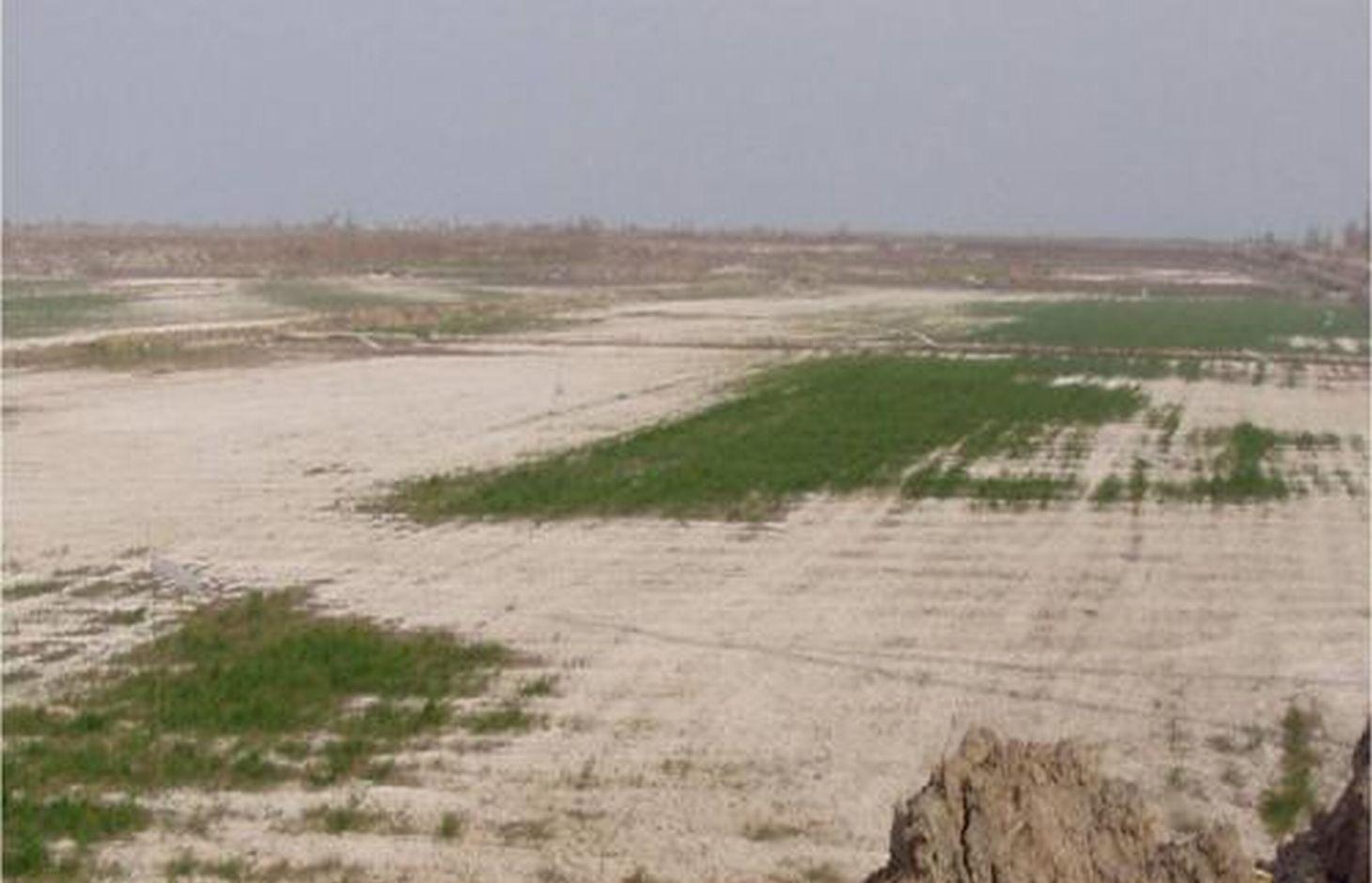
- 📍 Yangibazar, Yangibazar/Khorezm oblast
- 🗓 2003-04-03
- 📷 A. Khamzina (Walter-Flex-Str.3 D-53113 Bonn, Germany, e-mail: asia_khamzina@uni-bonn.de)
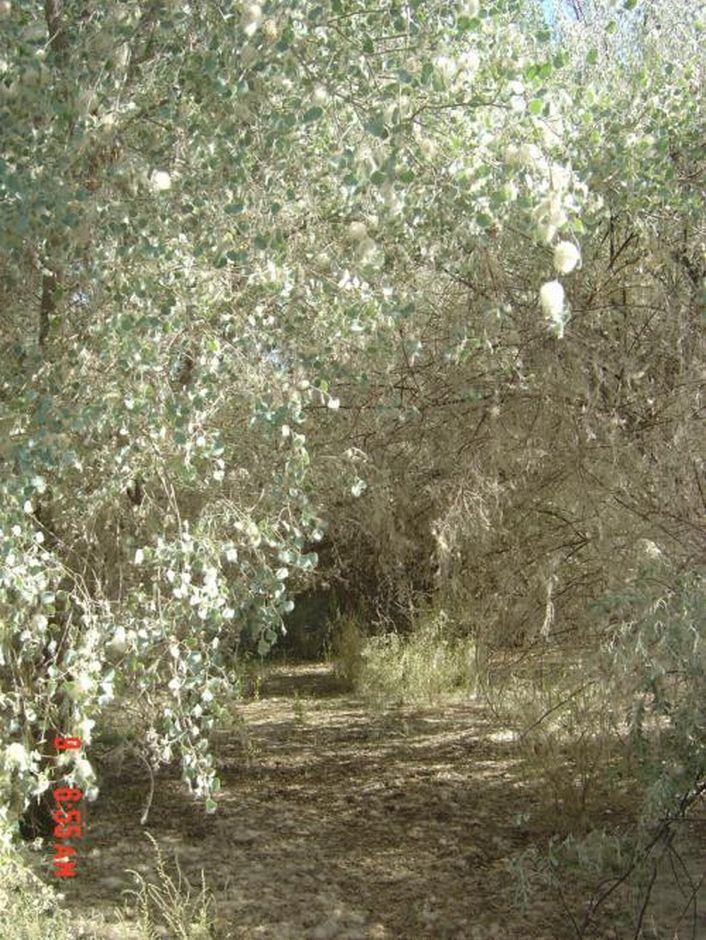
- 📍 Yangibazar, Yangibazar/Khorezm oblast
- 🗓 2011-09-09
- 📷 A. Khamzina (Walter-Flex-Str.3 D-53113 Bonn, Germany, e-mail: asia_khamzina@uni-bonn.de)