
Degraded communal pasture Chukurak
Type: Technologies
Creation: 2012-07-31 06:29 Updated: 2019-08-05 10:23
Compilers: Malgorzata Conder
Reviewers: Fabian Ottiger, Alexandra Gavilano
Country/ region/ locations where the Technology has been applied and which are covered by this assessment
- Country: Tajikistan
- Region/ State/ Province: Khatlon, Tajikistan
- Further specification of location (e.g. municipality, town, etc.), if relevant: Muminabad
- Map: View Map
Description of the SLM Technology
Short description of the Technology
Degraded communal pastureland without grazing management and sufficient waterpoints
Detailed description of the Technology
A communal pastureland of 150 -200 hectares is located at the foothill and the riverbank. Around 60 households let their livestock of totally 100 cows and some 400 sheep and goats graze there. The livestock is divided into three groups. Each group is meant to graze at different places in the pastureland. As there is no water point higher up in the pasture area, livestock graze near the village where a water point is installed. Due to this the riverbed, which is already poor in vegetation, is totally overgrazed. Every family is looking after a herd for a day every two month.
Purpose of the Technology: The aim is to install more water points higher up in the pastureland to decrease pressure on soil and vegetation cover by improving rotation within the pastureland. The whole land is overgrazed and livestock numbers are increasing, which is why controlled pasture management could be expected to decrease the degradation process. Nevertheless, more vegetation would be available for feeding livestock and the journey to the next water point shortened thus saving the heard’s energy. As nobody feels responsible for the pasture, nobody is responsible for pasture. No controlled grazing or rotation plan exists at Jamoat level. The farmers do not organise which parts have been grazed and could be grazed next. The livestock owners pay very small rent so they do not value the pastureland and no money is available to implement projects (like installing water points).
Establishment / maintenance activities and inputs: Each of the 60 households is paying 10-12 Somoni per year for grazing their cattle on the communal grazing land. Rent is paid per household not per amount of livestock. The total amount of pasture fees collect in Chukurak village is 600-700 Somoni per year. Neither establishment costs, nor investment or maintenance activities are done.
Natural / human environment: Pastureland extends from the village in the valley, to the foothills. Half of the grazing area is on the riverbed and fan with very poor vegetation cover. The foothills show a high percentage of overgrazed, trampled, eroded area. Except for the water point near the village, no water and shady points exist for resting livestock. Three small water sources existed before, two of them where covered by the floods in spring of the current year. The other source produces a negligible amount of drinking water. 60 households graze their livestock, which totals 100 cows and 400 small livestock. Every household is responsible to graze the herd one day every two month. Except that, no management exists between the families and Jamoat.
Photos of the Technology
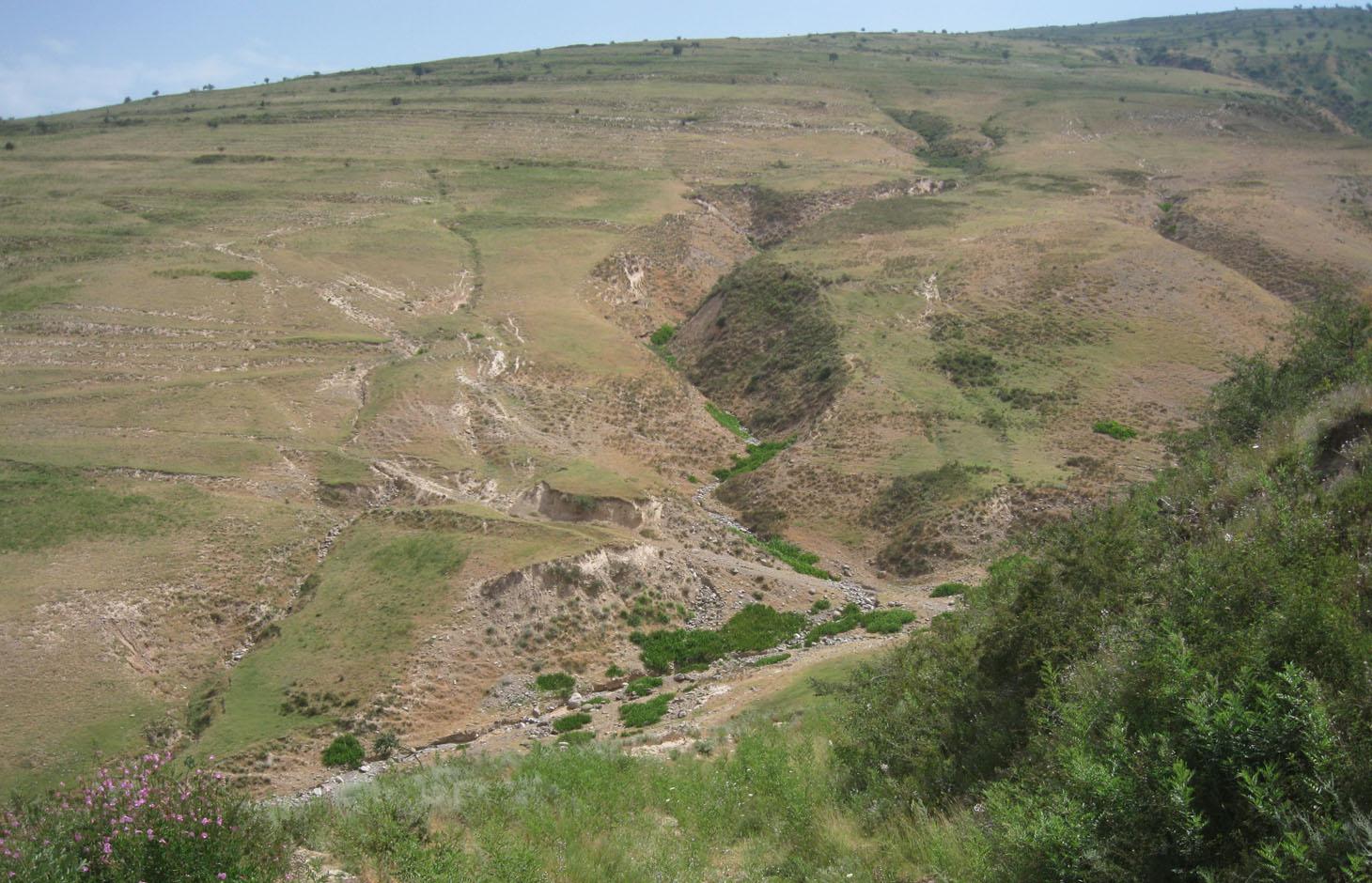
- 📍 Above Sarmaydon village, Chukurak Watershed, Khatlon, Tajikistan
- 📷 Conder Malgorzata
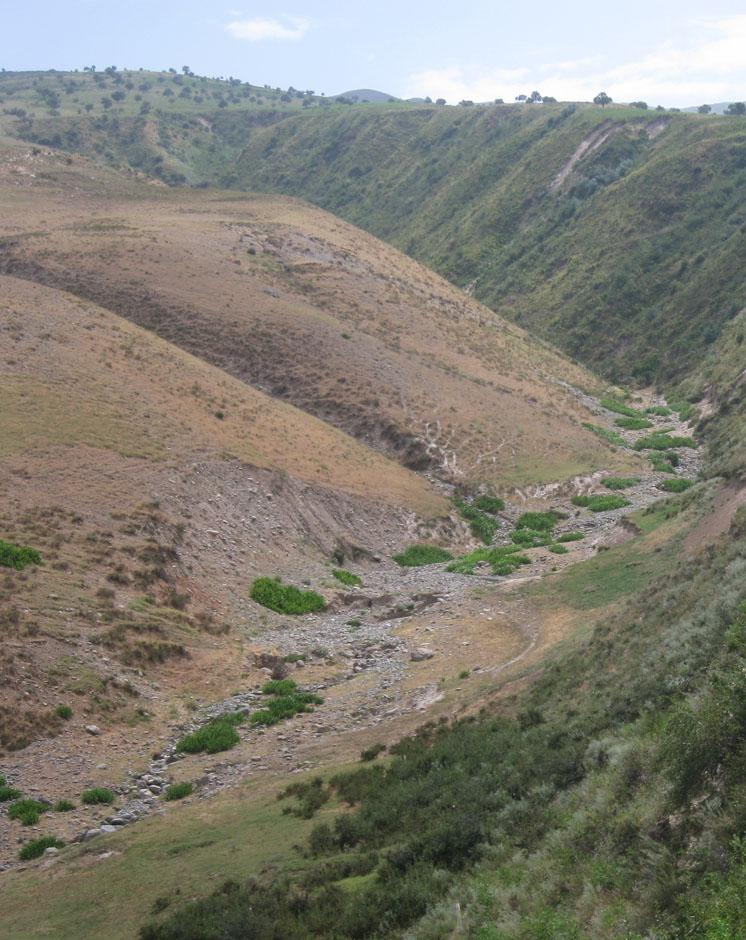
- 📍 Above Sarmaydon village, Chukurak watershed, Khatlon, Tajikistan
- 📷 Conder Malgorzata