
Multipurpose use of sugar palm grown on rice field dykes.
Type: Technologies
Creation: 2014-10-17 09:32 Updated: 2019-09-02 09:12
Compilers: Stefan Graf
Reviewers: Deborah Niggli, Alexandra Gavilano
Country/ region/ locations where the Technology has been applied and which are covered by this assessment
- Country: Cambodia
- Region/ State/ Province: Kampong Chhnang
- Further specification of location (e.g. municipality, town, etc.), if relevant: Rolear Bier / Thnorng Kombot
Description of the SLM Technology
Short description of the Technology
Sugar palms growing on the dykes along the rice fields are used as source of income and have different effects on the growing of the rice, like reducing the wind speed and thus the evaporation and wind erosion.
Detailed description of the Technology
The sugar palm (Borassus flabellifer ) is the national tree of Cambodia, it is well adapted to the local natural environment and there is a long tradition to grow sugar palms. Therefore, only a negligible workload is required for both the establishment (fruits falling down from the already existing trees will grow) and the maintenance of the trees. As the sugar palm is resistant to waterlogging and floods (even in flooded areas in the floodplains), and it grows well at low pH, it is planted/grown on the rice field dykes and around the houses. The trees which are growing around the paddy fields have some positive effects on both soil and rice, as they slow down the wind and thus reduce evaporation and wind erosion. They also attract wildlife, and thus allow the establishment of other vegetation. The trees also have a purifying effect on the groundwater, and cycle the nutrients which are otherwise lost in the groundwater. The sugar palms and their products can be used in manifold ways: the leaves for wickerwork and roofs; the stems as fences, for ropes and strings; the fruits as food, fodder and to make straw palatable for cattle; the sap as fodder, to make wine, sugar, and vinegar; and the trunk as construction wood – these are only some of its uses. They reduce the risk of a complete crop failure, as their products are not subject to weather fluctuations.
After the collectivization of land during the civil war (1975-1979), the land and the trees were newly distributed to the people according to the size of the household. The ownership of the land and of the trees was not related. Until today, the trees can be growing on someone’s land, but can be sold or rented to somebody else who harvests its products.
The main reason to plant sugar palms in this area is the sap collection. In order to collect the sap, firstly bamboo ladders are tied to the sugar palm trees. In the dry season, the tapper climbs up the trees to collect the sap. The male or female inflorescence is crushed with a special tool and a piece of it sliced off. Bottles are hanged beneath the cut part, and the sap will flow into these bottles. The crushing and slicing is repeated twice a day, so the amount of collected sap can be optimized. Most of the sap is cooked on a fire and made into syrup, and if there is too much sap, it is fermented and sold as palm wine.
The fruits that fall down on the rice fields are thrown on the dykes, where they grow. The seedlings tolerate some cattle grazing, as long as only the leaves and not the bud are eaten.
The analysed area is flat (slope < 2%), with a tropical climate (dry season from November to May and wet season from June to October), and the soils are mostly sandy or loamy. The soil has a low fertility, contains little organic matter, and acidifies. The area has been deforested a long time ago, and the groundwater table is rather high (1-2 m during the dry season, on the surface during wet season). Due to climate change, farmers notice more erratic rainfalls, temperature rises and more recurrent droughts. Rice is the predominant crop grown in the area, since it serves as staple food (mix subsistence and commercial activities).
The increasing migration rate (the young generation leaves the villages to work in the cities, garment industry or abroad) results in a decrease of available labour force in the area which has detrimental effects on the agricultural activities. Furthermore, the civil war in the 1970s (Khmer Rouge) led to the loss of agricultural knowledge which different NGOs try to re-establish.
Photos of the Technology
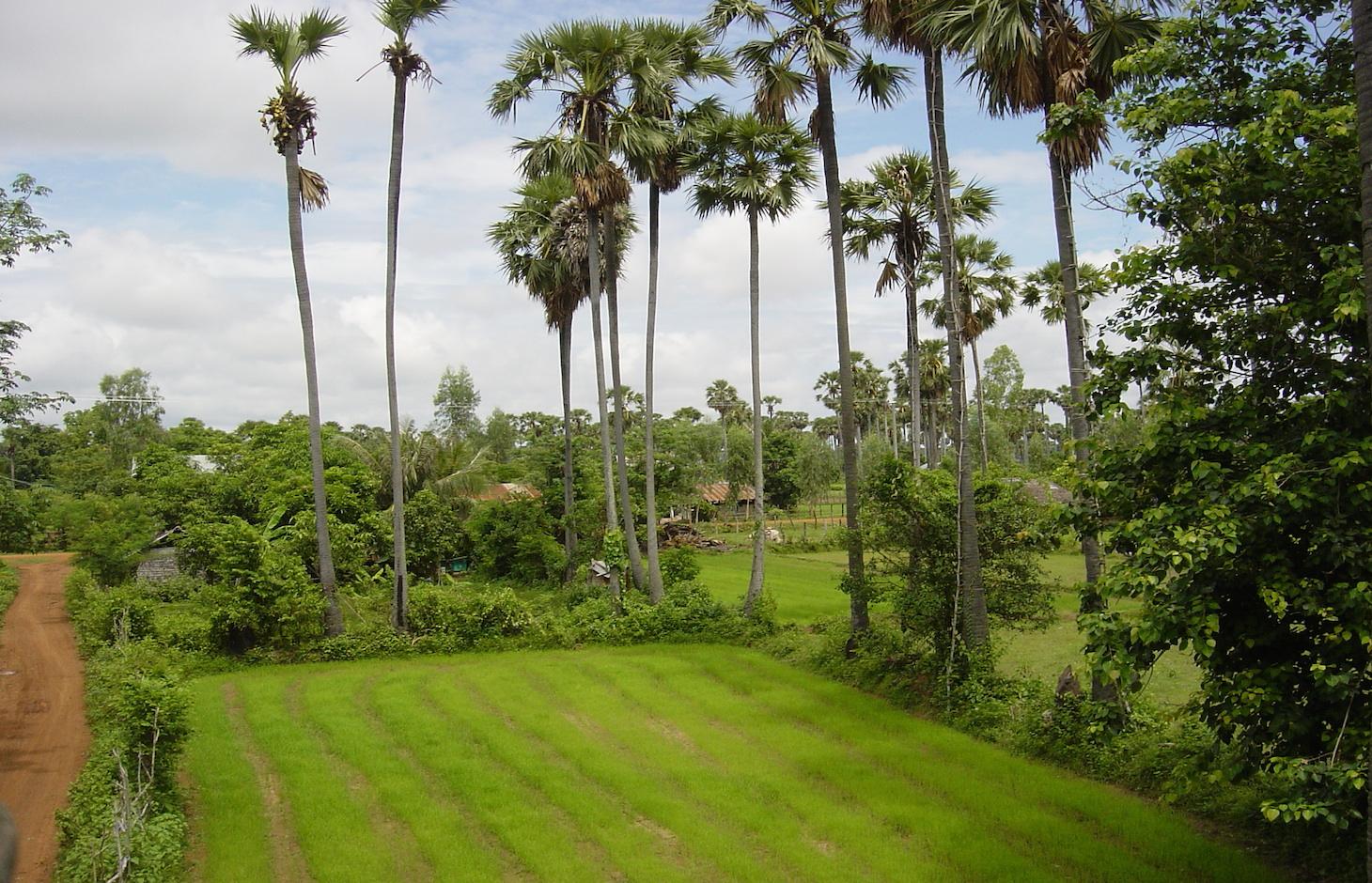
- 📍 Rolear Bier, Kampong Chhnang
- 🗓 2014-10-07
- 📷 Stefan Graf (Centre for Development and Environment CDE)
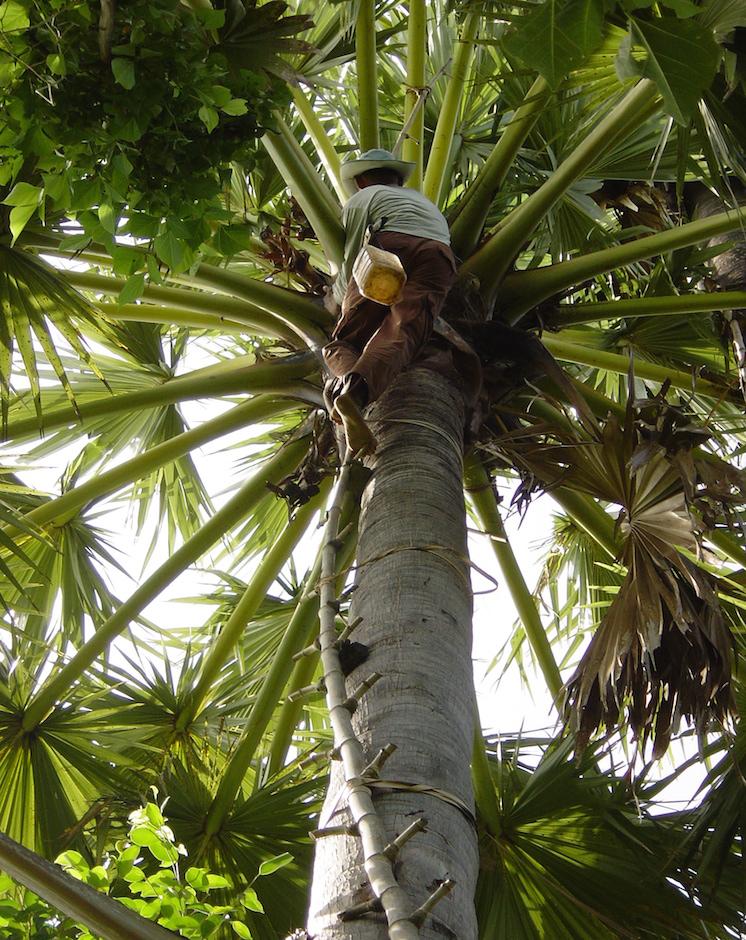
- 📍 Rolear Bier, Kampong Chhnang
- 🗓 2014-10-07
- 📷 Stefan Graf (Centre for Development and Environment)