
Biodynamic composting
Type: Technologies
Creation: 2015-08-07 07:36 Updated: 2019-06-04 13:35
Compilers: Shreedip Sigdel
Reviewers: David Streiff, Alexandra Gavilano
Country/ region/ locations where the Technology has been applied and which are covered by this assessment
- Country: Nepal
- Further specification of location (e.g. municipality, town, etc.), if relevant: Lalitpur District
Description of the SLM Technology
Short description of the Technology
A faster and more effective way to produce high quality compost in large quantities by surface composting using dry and green farm biomass piled in a heap.
Detailed description of the Technology
Biodynamic denotes a method of organic farming that emphasizes a holistic understanding of the interrelationships between soil, plants, and animals in a self-sustaining system. It excludes the use of artificial chemicals and stresses the importance of integrating farm animals, the cultivation of crops, and caring for the land. Fermented herbal and mineral preparations are used as compost additives and field sprays.
Purpose of the Technology: Biodynamic composting is an inexpensive means of producing a large amount of compost within a relatively short time compared to other methods. It is ideal for farmers who require large amounts of compost, such as for orchards; or when several households get together to produce and share compost. This type of composting also helps to store soil carbon, assists irrigation practices that keep fields alternatively moist and dry, works to decrease the number of soil pests, and reduces methane emission. This practice not only enhances agricultural production as an on-site benefit to the land users but also contributes to the off-site benefits enjoyed by downstream land users, since it helps to reduce sedimentation and increases water availability.
Establishment / maintenance activities and inputs: The biodynamic compost is prepared as a surface heap rather than in a traditional pit. The heap is built on a flat, dry site away from shade trees and other elements that would promote water logging. The farmer marks out a rectangular plot of land according to his needs and places a set of logs or PVC pipes lengthwise in the middle of the rectangle to facilitate air circulation and help aerate the pile. Alternating layers of dry and green biomass are added on top. Rock phosphate and crushed slaked lime are added to the middle layers to enhance decomposition and to supplement the mineral content. Once the layering is complete, the pile is sealed using a paste made from soil and cow dung. Over the ensuing two months, the pile is watered weekly (through holes made in the plaster layer which are then resealed) and is monitored; any cracks that appear in the external plaster are sealed. At the end of this time, the compost is tested to check if it is ready by taking samples from a few different locations in the heap. When a crushed sample smells like forest soil, it indicates that the degradation is 80% complete and that the compost is ready to use.
Photos of the Technology
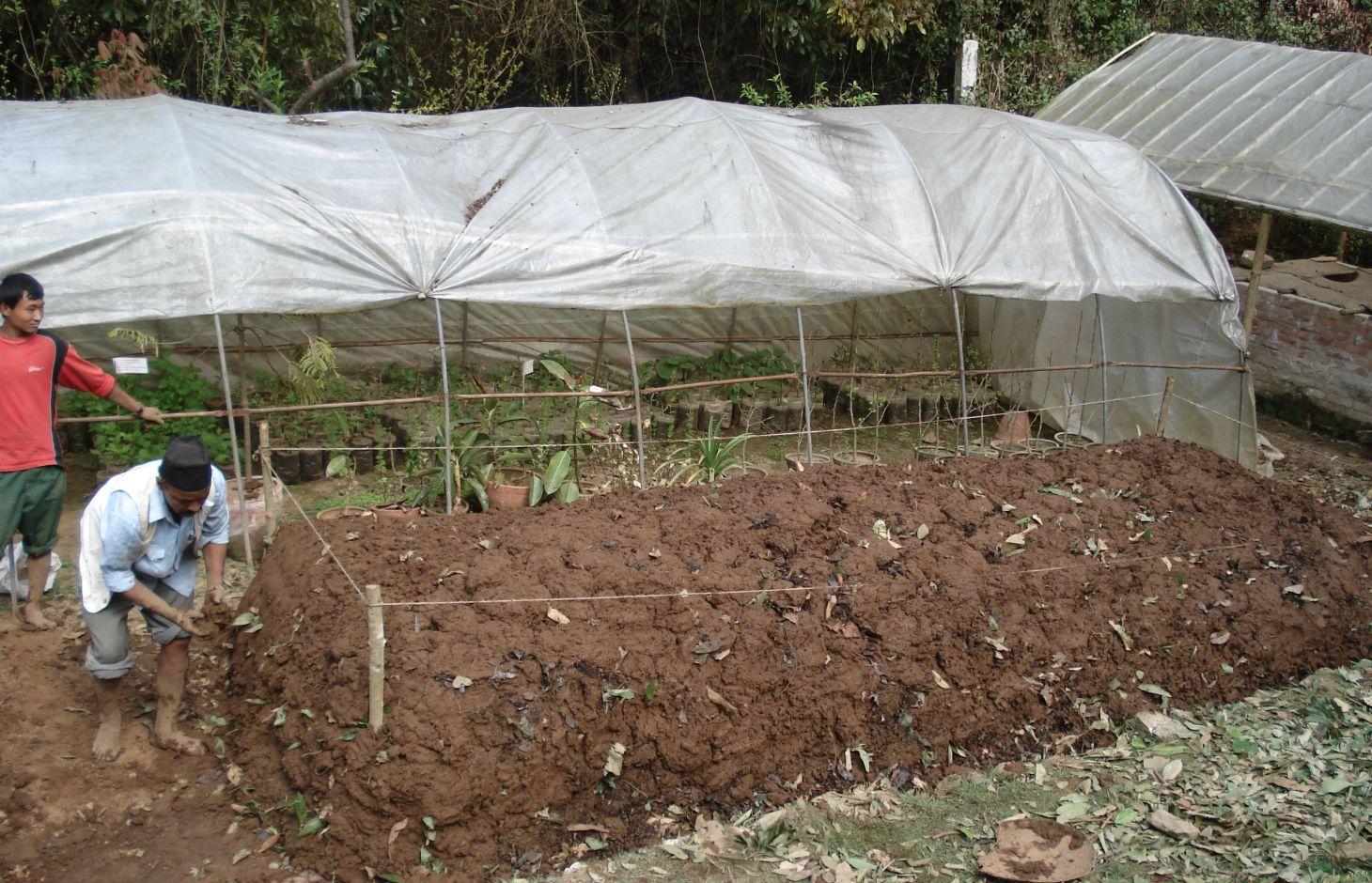
- 📍 ICIMOD Knowledge Park, Lalitpur District
- 📷 Samden L Sherpa
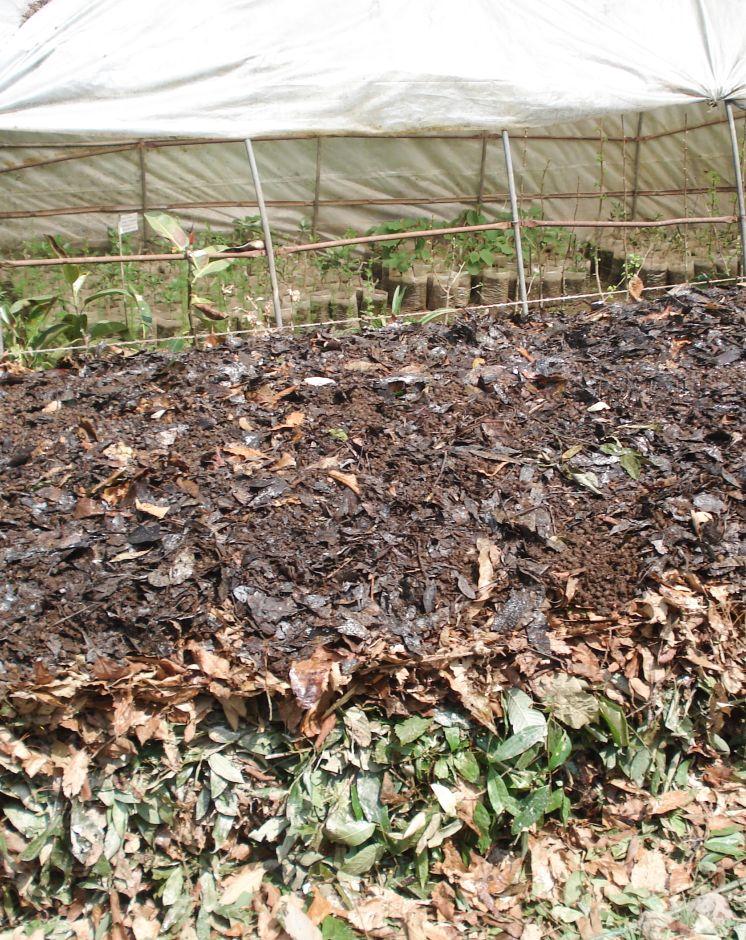
- 📷 Samden L Sherpa