
Sustainable land management using controlled gullying
Type: Technologies
Creation: 2015-08-10 10:27 Updated: 2019-06-04 15:48
Compilers: Shreedip Sigdel
Reviewers: David Streiff, Alexandra Gavilano
Country/ region/ locations where the Technology has been applied and which are covered by this assessment
- Country: Nepal
- Further specification of location (e.g. municipality, town, etc.), if relevant: Sharada Batase VDC, Kabhrepalanchok District
- Map: View Map
Description of the SLM Technology
Short description of the Technology
An indigenous technology to help control channelled water during the rainy season and conserve it during the dry season
Detailed description of the Technology
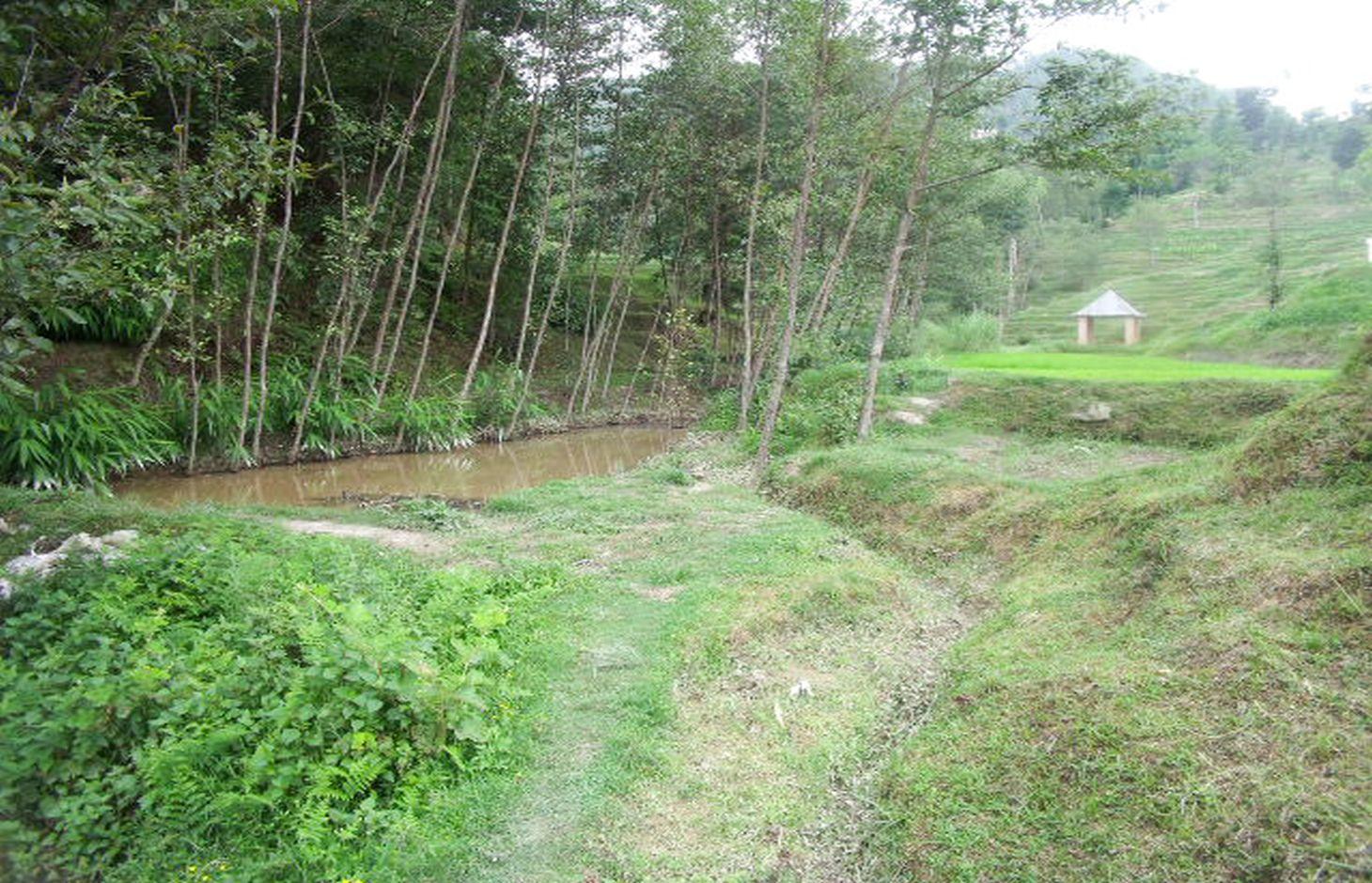
For more than two centuries, local farmers have promoted soil and water conservation by protecting the gullies which occur naturally between rice terraces; thus the land area is called ‘jagidol’ (jagi=rice, dol=gully). The small perennial streams which flow through the terraces are protected by constructing check dams and retaining walls to reduce the danger of erosion and collapse.
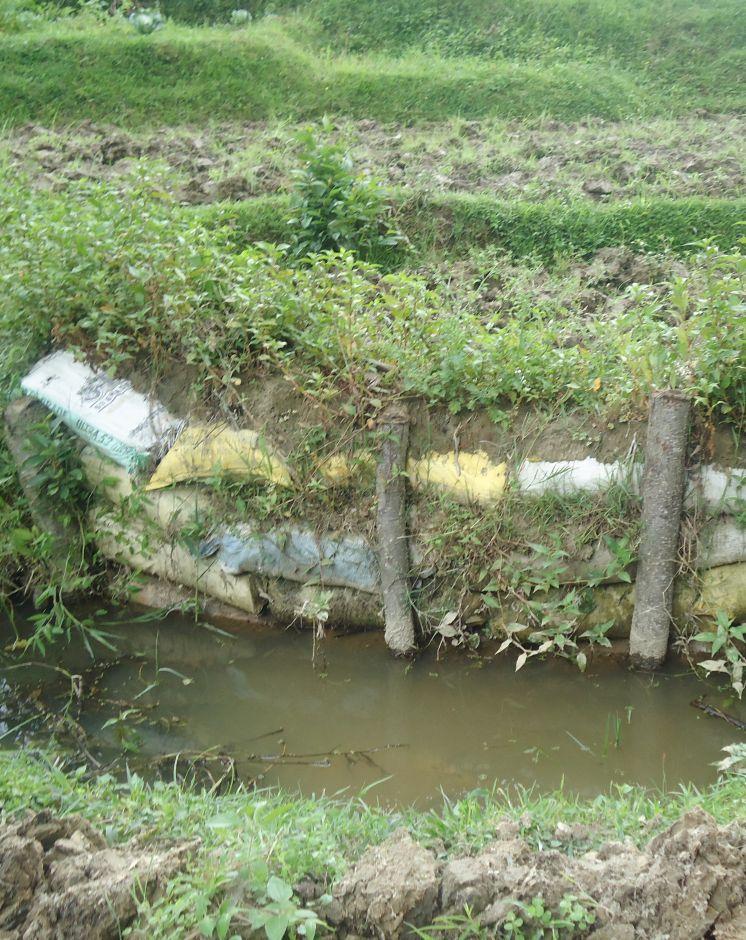
Purpose of the Technology: During the monsoon, the channels or trenches can become engorged and, since their walls are not reinforced (except for grass planted at the edges), the conduits can be easily eroded. When the erosion is severe enough, the edges of the terraces adjacent to the gullies can collapse. When many gullies collapse at once, the stability of the entire hillside is threatened with catastrophic consequences for the village situated above the planting area. Villagers have traditionally used local materials and expertise to maintain the gullies and reduce soil erosion by building retaining walls across the slope which are strengthened through plantation. The retaining walls are bio-engineered using a combination of bamboo poles, rocks, and soil-filled sacks. Bamboo poles are used for the backbone of the support structure, and rocks and soil-filled sacks are used to line the sides of the channel. Local grasses such as 'sitto' are planted on the top and, as they grow, their roots help to anchor the structure. When the channels are fortified by retaining walls and planting, they become entrenched and, over time, less maintenance is required. As a bonus, when the plants grown along the gullies mature, they provide biomass for the farm and fodder for cattle. During winter, when water is scarce, farmers modify the gully system by constructing check dams which can be used to collect water in one place. These dams are useful for irrigation during the dry season and they also help to prevent bed scouring.
Photos of the Technology
- 📷 Duncan Scott
- 📷 Sabita Aryal Khanna