
Plastic film technology
Type: Technologies
Creation: 2015-08-12 06:06 Updated: 2019-06-04 10:21
Compilers: Shreedip Sigdel
Reviewers: David Streiff, Alexandra Gavilano
Country/ region/ locations where the Technology has been applied and which are covered by this assessment
- Country: Nepal
- Further specification of location (e.g. municipality, town, etc.), if relevant: Lalitpur District
Description of the SLM Technology
Short description of the Technology
Plastic film technology, sometimes called plastic mulching, is an important breakthrough that can transform traditional agriculture into modern agriculture by helping to circumvent many of the limitations of temperature and moisture. Plastic film is used to cover the surface of the soil in order to increase the temperature, to retain moisture, and to promote the germination of seeds.
Detailed description of the Technology
Agricultural production by traditional methods is constrained by extremes in temperature and by extremes in the availability of water; freezing temperatures as well as droughts and waterlogging have long daunted farmers. When plastic film is used on the soil, the solar energy absorbed by the soil during the day is retained at night since the plastic film prevents water from evaporating. Higher night time temperatures and higher levels of moisture in the ground promote active micro-organisms, which diminish the need for fertilizer and improve the physical properties of the soil.
Purpose of the Technology: Plastic film can be used in one of two ways. In the first method, the plastic film is spread on ridges of soil, the plastic is perforated at regular intervals, and the seedlings are planted through these openings. In the other method, seeds are planted on the ridges as in the traditional method, and when the seedlings have grown to a reasonable size, the ridge is covered by a plastic film and holes are cut at the position of the seedlings to allow them to pass through the film. Depending on the condition of the film after the crops are harvested, the covered ridges can be used to grow another crop.
Establishment / maintenance activities and inputs: Experiments at ICIMOD show that the use of plastic film can, on average, double the crop yield as compared to traditional methods. Previous studies by Lu Rongsen (1994) showed that the plastic film method can increase chilli production by 74%, tomato production by 52%, and the production of garden peas by 31%.
Photos of the Technology
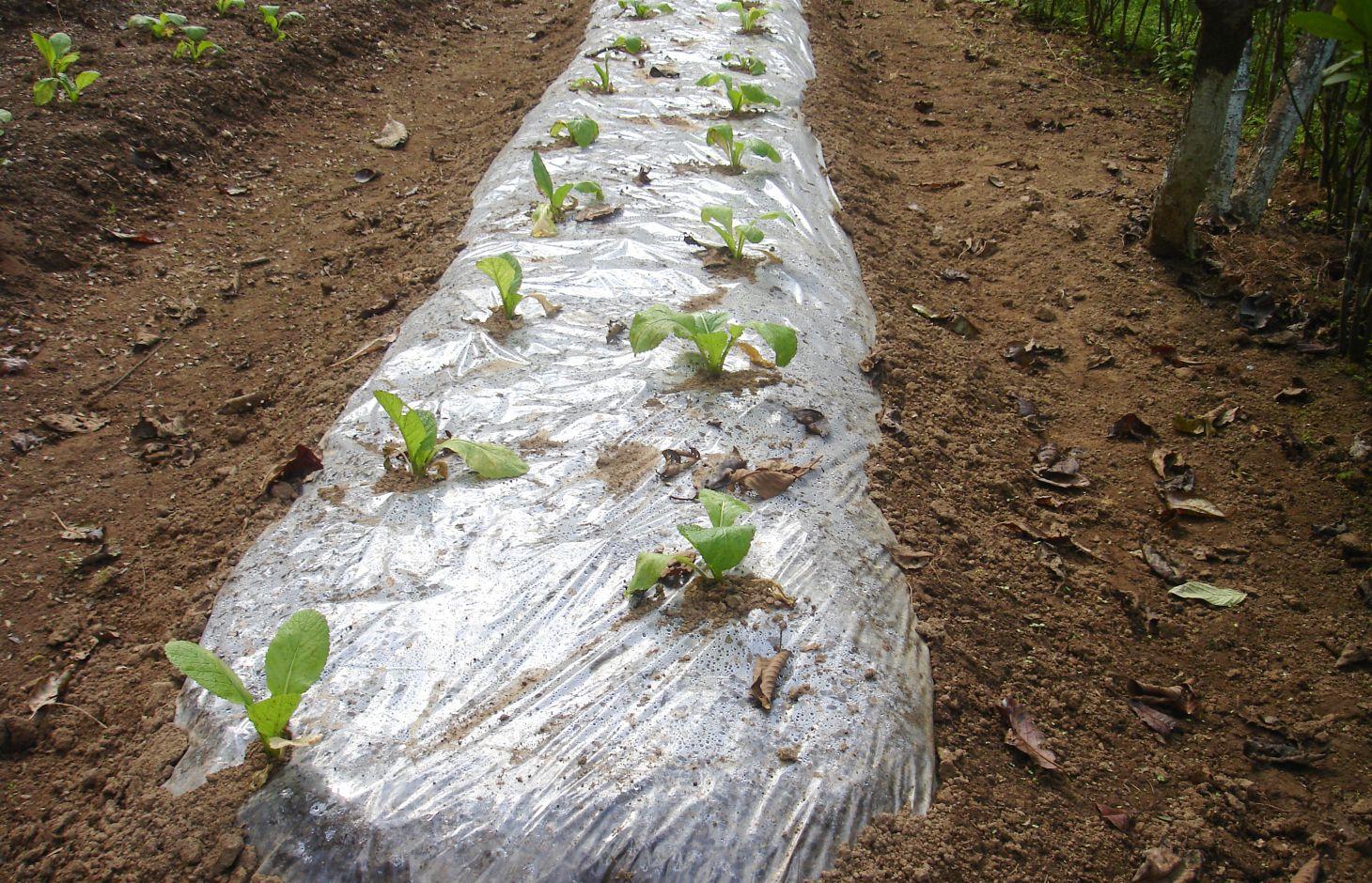
- 📷 KM Sthapit
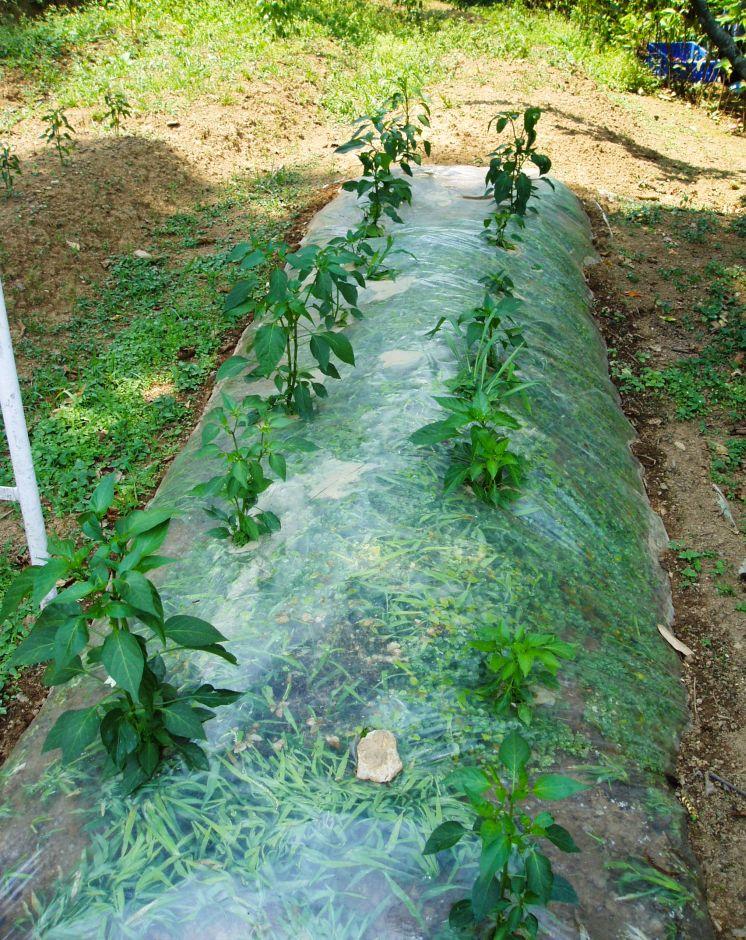
- 📷 KM sthapit