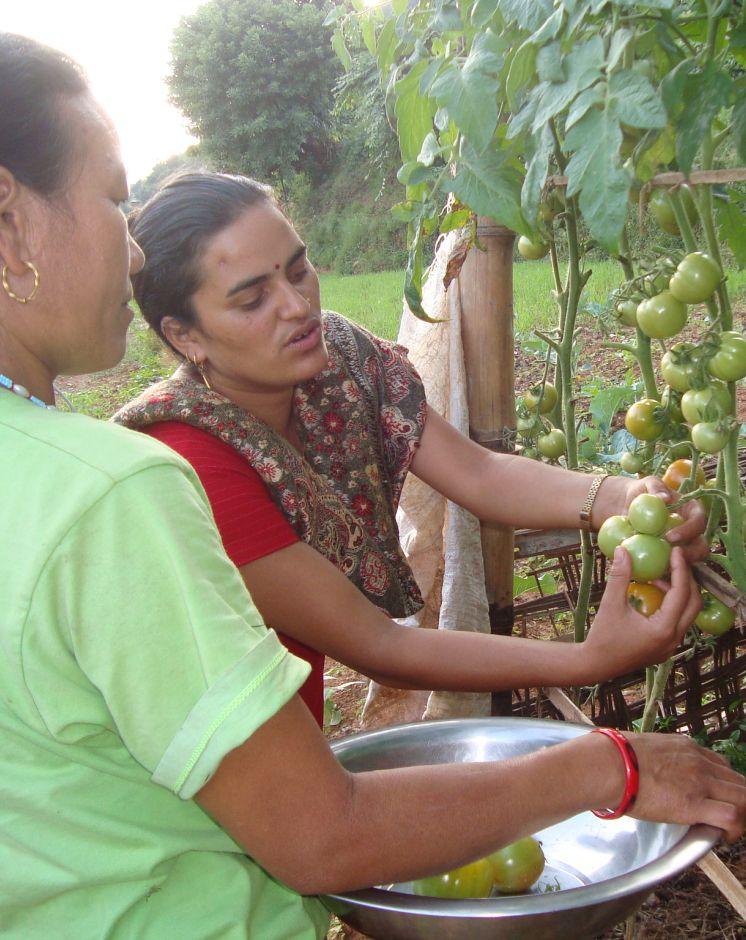
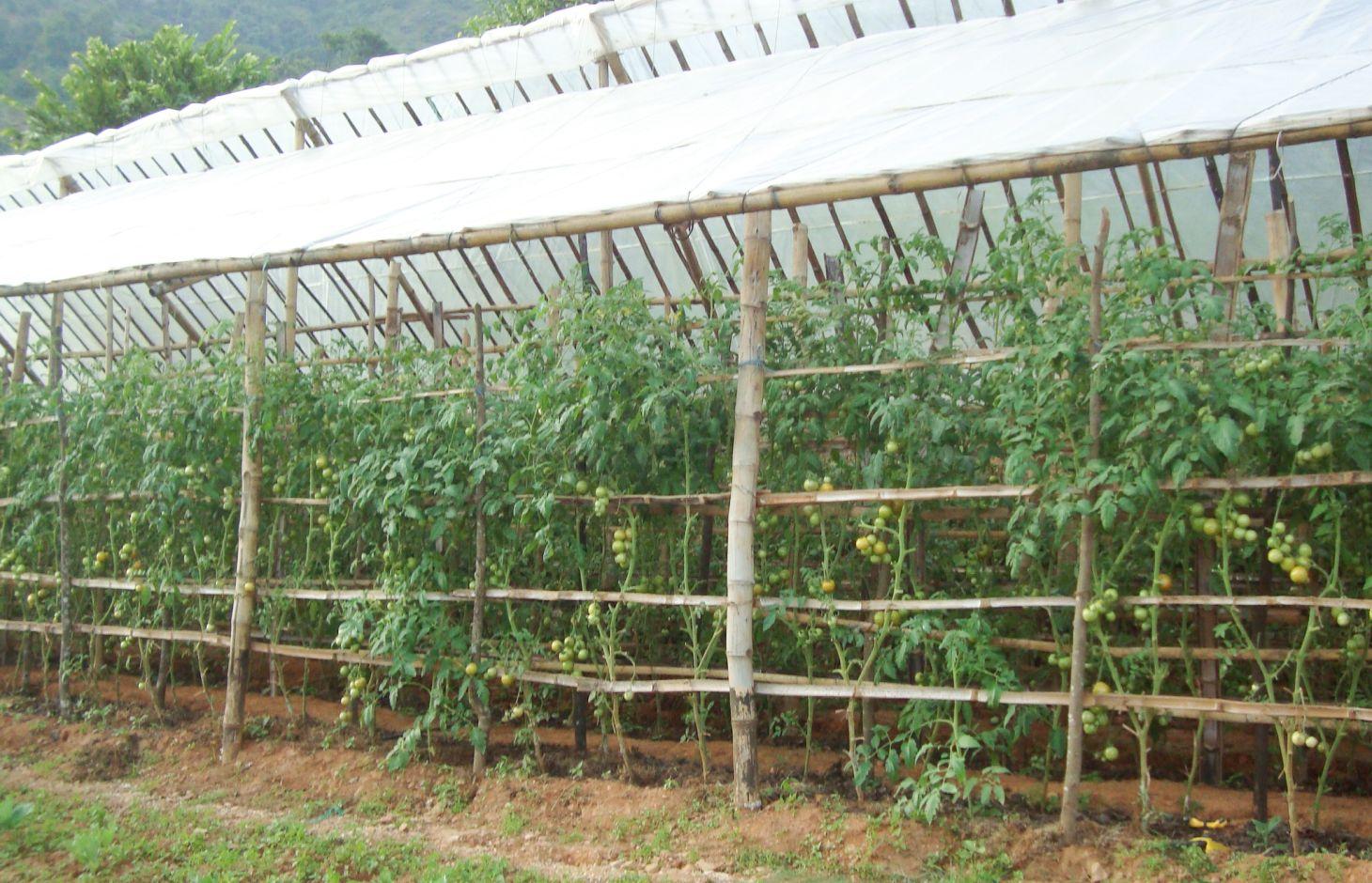
A low-cost polyhouse for tomato production in the rainy season
Type: Technologies
Creation: 2015-08-12 10:15 Updated: 2019-09-05 12:44
Compilers: Shreedip Sigdel
Reviewers: David Streiff, Alexandra Gavilano
Country/ region/ locations where the Technology has been applied and which are covered by this assessment
- Country: Nepal
- Further specification of location (e.g. municipality, town, etc.), if relevant: Mid Hills of Nepal
Description of the SLM Technology
Short description of the Technology
Smallholder farmers can use polyhouses to produce high demand vegetables, such as tomatoes, and can earn a substantial income from even a relatively small plot of land in a short time.
Detailed description of the Technology
During the wet season (June–October), the monsoon rains severely limit the type of crops that can be grown in open fields and they also restrict the production of seedlings. Low-cost polyhouses can be used to protect crops from excessive rainfall and can provide a sheltered environment for the production of better quality crops over the rainy season cropping period. For example, smallholder farmers who produce high demand vegetables such as tomatoes can earn as much as USD 350–500 from a plot of land which measures only 100 m2 in area over the short time period from June to November. This is much more than they can earn by growing any traditional crop by conventional methods. The Sustainable Soil Management Programme (SSMP) is promoting this technology in several mid-hill districts of Nepal.
Establishment / maintenance activities and inputs: Polyhouses should be situated in well-drained areas where sunshine is abundant and there is no shade throughout the cropping period. The bamboo frame can be constructed earlier in the year but the plastic roofing is not added until after one or two rainfall events. The height of the polyhouse frame varies depending on the altitude. At higher elevations, the polyhouses are lower to help trap more heat and moisture, whereas at lower elevations the polyhouses are higher to allow more air to circulate and moisture to evaporate. The preparations, which take place mid-May to early June, consist of fertilizing the soil and planting the tomato seedlings. Throughout the growing season the tomato plants are staked, trained, and pruned and a top dressing of fertilizer is added to produce a higher quality product.
Photos of the Technology
- 📷 SSMP