
Tomato Grafting
Type: Technologies
Creation: 2015-08-14 07:25 Updated: 2019-09-05 12:44
Compilers: Shreedip Sigdel
Reviewers: David Streiff, Alexandra Gavilano
Country/ region/ locations where the Technology has been applied and which are covered by this assessment
- Country: Nepal
- Further specification of location (e.g. municipality, town, etc.), if relevant: Arukharka -6, Syangja District
Description of the SLM Technology
Short description of the Technology
Cleft grafting can be used to produce plants that are resistant to a number of pests and diseases and are often higher yielding than the original. Tomato seedlings can be easily grafted onto resistant root stock of the wild eggplant (Solanum sysimbrifolium) to produce a disease-resistant and commercially viable crop.
Detailed description of the Technology
Some of Nepal's most lucrative vegetable cash crops, especially solanaceous crops such as tomato and eggplant, are particularly susceptible to attack by the root knot nematode, Meliodogyne spp, which costs Nepal's farmers millions of rupees in losses annually. In recent years, farmers found that this pest was becoming prevalent and that they could not control it permanently using either cheap or eco-friendly solutions. Researchers and development officers took up the challenge and found that grafting technology could successfully control not only the root knot nematode but also wilting disease. As a bonus, they also found that grafting can increase the yield potential of the plants and improve the overall productivity of the land.
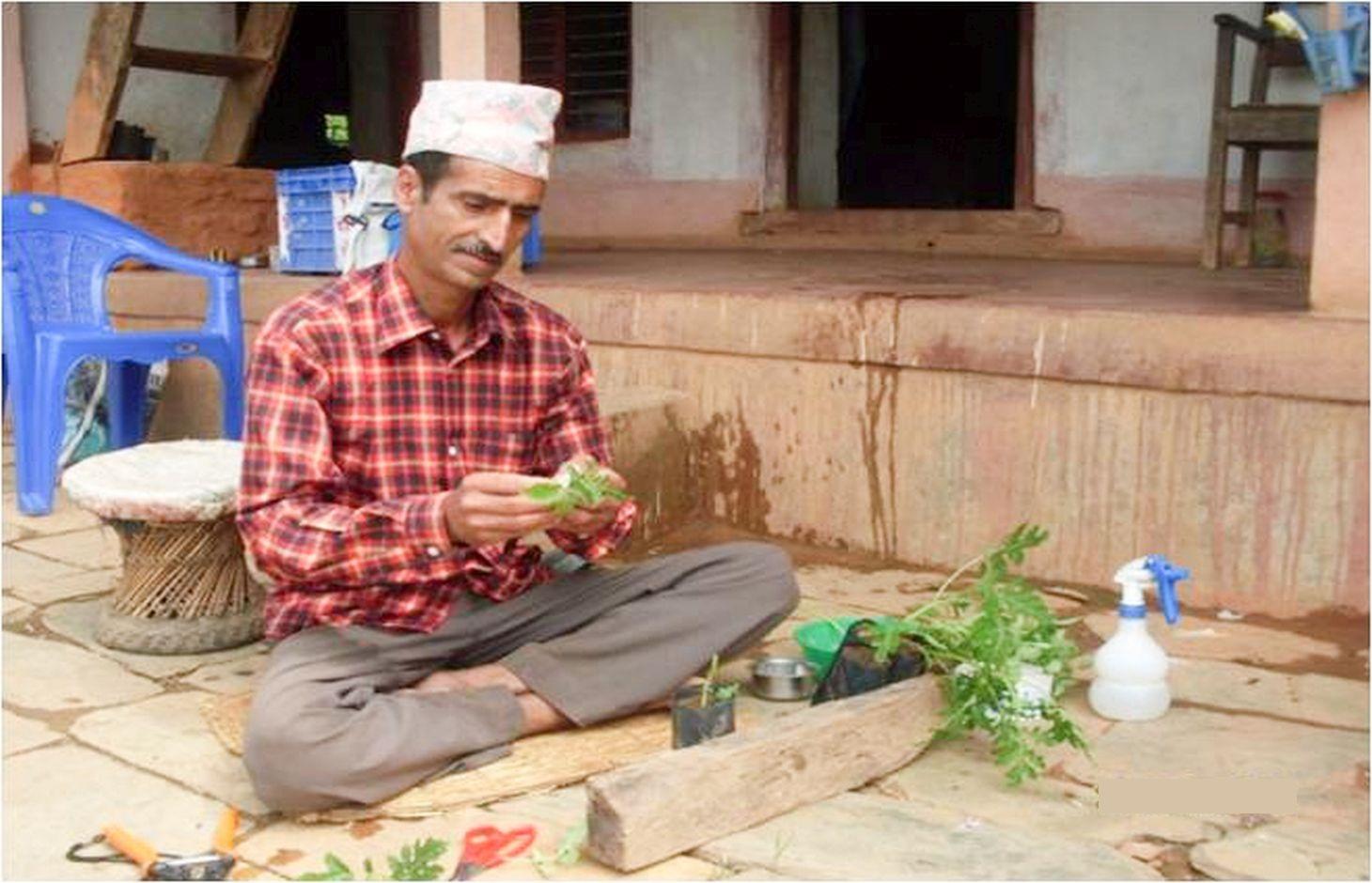
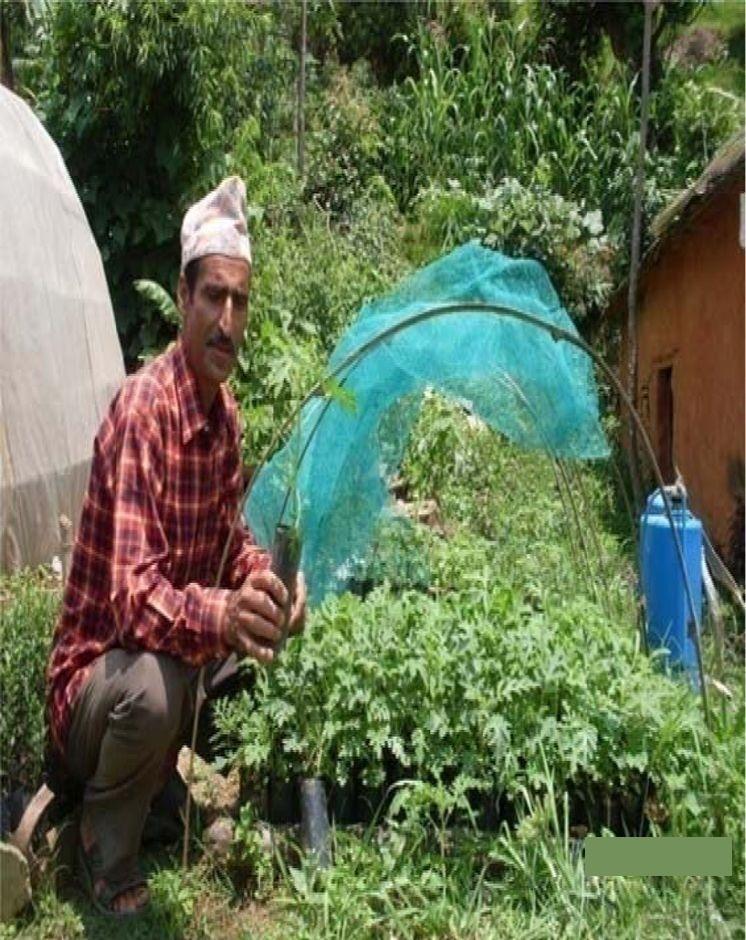
Establishment / maintenance activities and inputs: Loam and silt loam soils with a pH of 6.0–7.0 are the most suitable for this type of cultivation. Grafting technology requires two plants: the scion and the rootstock. The scion is a detached shoot or twig containing buds from the desired woody plant. The rootstock is a plant with an established healthy root system, onto which a cutting or a bud from another plant is grafted. The scion seedlings are grown in raised solarized nursery beds, where care has been taken to see that the soil has been sterilised and all soil pests have been destroyed. Robust rootstock of wild eggplant (Solanum sysimbrifolium) is appropriate for tomato propagation. The rootstock seedlings are grown in multi cell trays and transplanted when they are 20–25 cm high and have a few leaves and a pencil thick stalk. Seeds for the rootstock seedlings are sown in March/April and are ready in 6–8 weeks; scion seeds are sown in April/May and are ready for grafting in 3–4 weeks. Both scion and rootstock plants should have achieved similar stalk thicknesses at the time of grafting. Cleft grafting is carried out and the grafted seedlings kept in polypots in a closed polyhouse for 7–10 days. Then the grafted seedlings are carefully transplanted to their permanent location. The grafted plants are watered the day after they are transplanted; the extent of watering depends on how moist the soil is and on local weather conditions. The field is mulched throughout the cropping period using straw and other farm biomass materials.
Photos of the Technology
- 📷 Purusottam Gupta
- 📷 Purusottam Gupta