
Vermicomposting
Type: Technologies
Creation: 2015-08-14 10:22 Updated: 2019-05-31 13:50
Compilers: Shreedip Sigdel
Reviewers: David Streiff, Alexandra Gavilano
Country/ region/ locations where the Technology has been applied and which are covered by this assessment
- Country: Nepal
- Further specification of location (e.g. municipality, town, etc.), if relevant: Godavari, Lalitpur District
Description of the SLM Technology
Short description of the Technology
Vermicomposting or worm composting is a simple technology for converting biodegradable waste into organic manure with the help of earthworms.
Detailed description of the Technology
Earthworms are valued by farmers because, in addition to aerating the soil, they digest organic matter and produce castings that are a valuable source of humus. Vermicomposting, or worm composting is a simple technology that takes advantage of this to convert biodegradable waste into organic manure with the help of earthworms (the red worm Eisenia foetida) with no pile turning, no smell, and fast production of compost. The earthworms are bred in a mix of cow dung, soil, and agricultural residues or predecomposed leaf-litter. The whole mass is converted into casts or vermicompost, which can be used as a fertilizer on all types of plants in vegetable beds, landscaping areas, or lawns.
Purpose of the Technology: Worms are so effective at processing organic waste that they can digest almost half their own weight in debris every day. Vermicomposting is a simple composting process that takes advantage of what earthworms do naturally, but confines the worms to bins making it easier for farmers to feed them and to harvest their nutrient-rich compost. Since all worms digest organic matter, in principle, any type of worm can be used; however, not all are equally well adapted to living in bins since some worms prefer to live deep in the soil while others are better adapted to living closer to the surface. The red worm (Eisenia foetida) is ideal for vermicomposting because its natural habitat is close to the surface and it is accustomed to a diet rich in organic matter, this makes it ideally suited to digesting kitchen scraps and to living in bins.
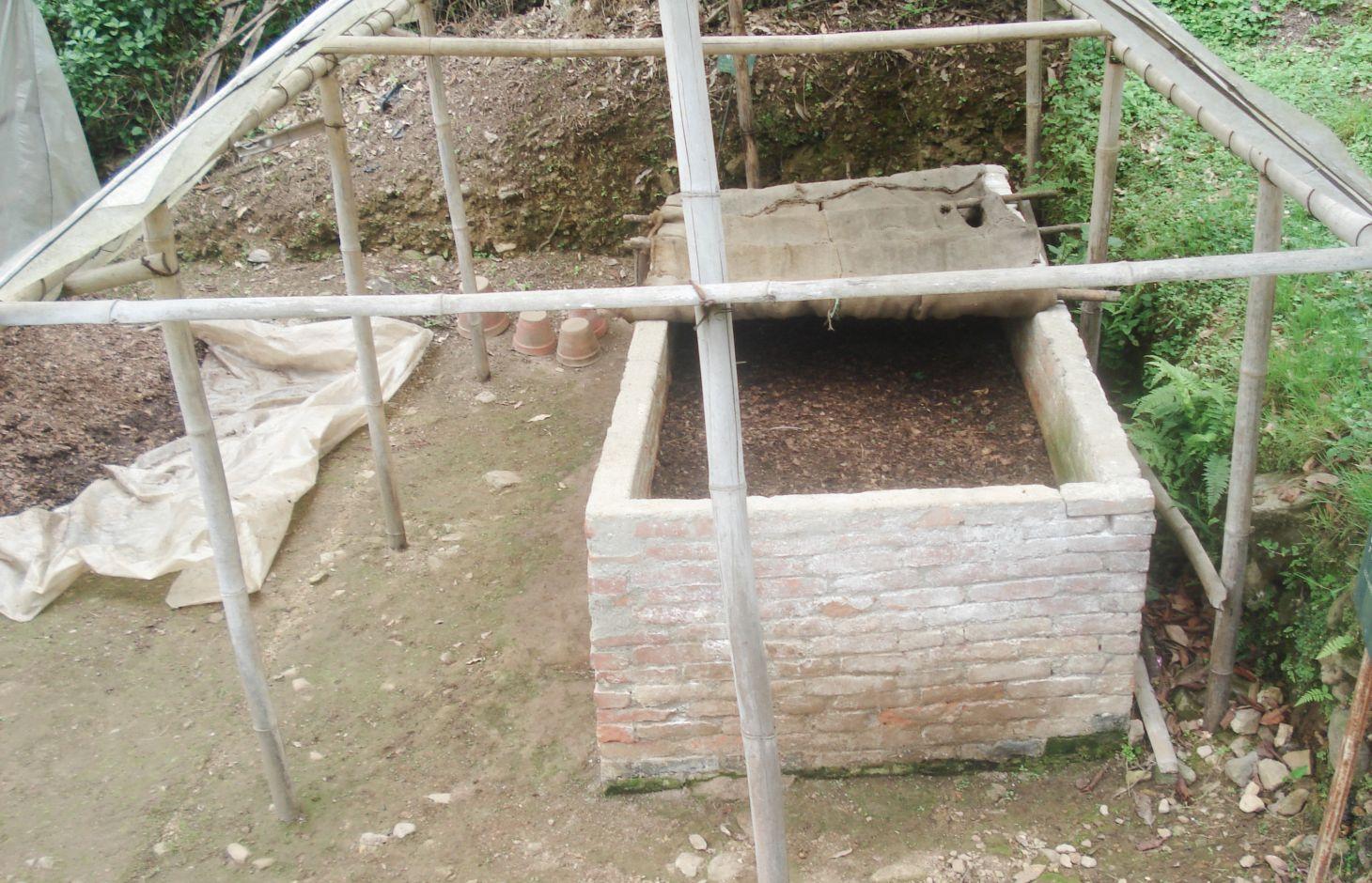
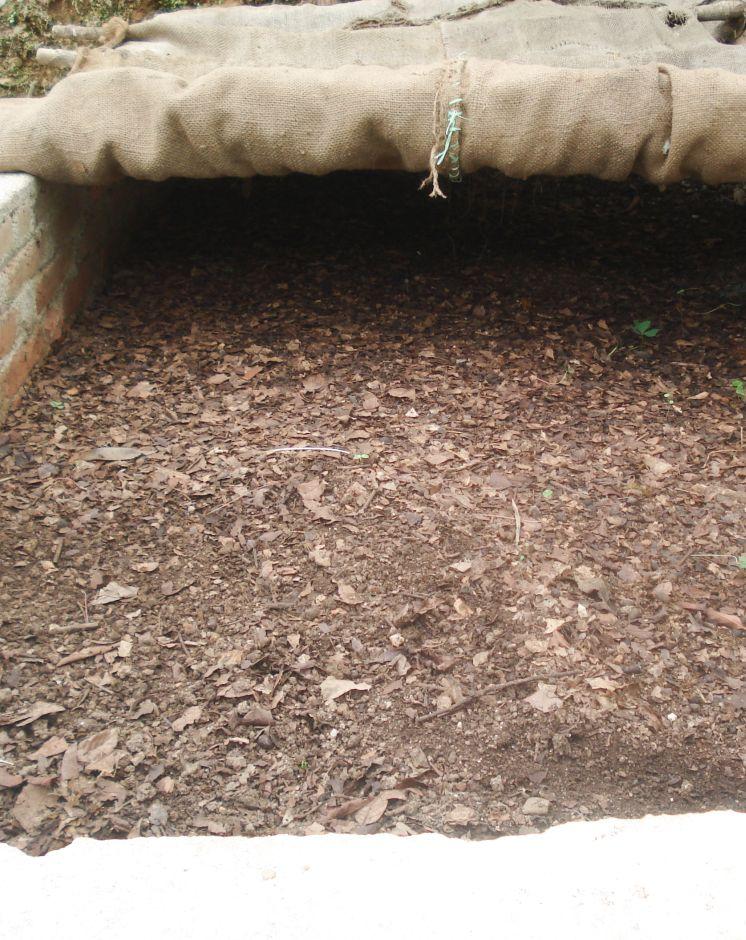
Establishment / maintenance activities and inputs: Vermicomposting can be carried out in different types of containers. There are only a few requirements for a good worm pit, the most important being good ventilation; the pit needs to have more surface area than depth (wide and shallow) and it needs to have relatively low sides. The base of the worm pit is prepared with a layer of sand then alternating layers of shredded dry cow dung and degradable dry biomass and soil are added. Under ideal conditions, 1,000 earthworms can covert 45 kg of wet biomass per week into about 25 kg of vermicompost.
Natural / human environment: Worm castings contain five times more nitrogen, seven times more phosphorous, and eleven times more potassium than ordinary soil, the main minerals needed for plant growth. The vermicompost is so rich in nutrients that it should be mixed 1:4 with soil for plants to be grown in pots and containers. Vermicompost should not be allowed to dry out before using.
Note: This type of vermicomposting is sometimes referred to as 'Pusa' vermicomposting because it was popularized in South Asia by the Rajendra Agricultural University located in Pusa, Bihar, India.
Photos of the Technology
- 📷 Samden Sherpa
- 📷 Samden Sherpa