
Agricultural terraces with dry-stone walls
Type: Technologies
Creation: 2015-10-30 23:59 Updated: 2019-03-18 15:33
Compilers: Christos Zoumides
Reviewers: Deborah Niggli, Alexandra Gavilano
Country/ region/ locations where the Technology has been applied and which are covered by this assessment
- Country: Cyprus
- Region/ State/ Province: Nicosia
- Further specification of location (e.g. municipality, town, etc.), if relevant: Northeast Pitsilia
- Map: View Map
Description of the SLM Technology
Short description of the Technology
Dry-stone terraces built to create agricultural land, minimise soil erosion and retain soil moisture on steep mountain slopes.
Detailed description of the Technology
Dry-stone terraces consist of a series of nearly levelled platforms built along contour lines at suitable intervals. These structures characterise a large part of the landscape in Cyprus, and especially in communities around Troodos Mountains where large areas have been converted to agricultural terraces. The typical terraces found in the study-area are narrow (1-3 m) to medium-base (3-6 m) bench terraces, constructed by cutting and filling in slopes between 20-40%. The terraces are supported by walls, whereby stone is the only construction material without any binding mortar.
Terracing is one of the oldest means of cultivating slopes while saving soil and water. Due to the steep terrain of Troodos Mountains, the establishment of terraces acts as sediment trap storing the washed-off soil material within the slope. In general, terraces were created to stop or reduce the degrading effect of soil erosion by intercepting and controlling the surface run-off velocity and by facilitating its slower infiltration. In such a way, the sediment that accumulates behind the terraces has created suitable land for farming. In addition, the construction of dry-stone walls serves a dual purpose: to clear the land from large rock and stones, and to enhance the stability of the bench terraces against loss of top-soil. This is a type of technology that was very much used in the past and seen today as an important cultural landscape and heritage for these communities.
The construction of dry-stone walls was usually completed by the family who owned the field. Men undertook the building while the rest of the family carried the stones; assistance was also offered by relatives and friends of the family. First, the topography, the height and shape of the terrace is evaluated. Using a fuse, the craftsman shapes a straight line which would follow while building the wall. The foundations are created by excavating a pit of ~0.3-0.5 m, depending on the type of soils and the size of the wall; fuse, pick, mattock and shovel are the typical tools used. The pit is filled with large, irregular-shaped stones.
The stones are used in their natural shape for the construction of the walls without any processing. They are separated according to their shape, size and texture. The stones usually come from the cleaning of fields which will be cultivated or from a small-scale quarrying of the mountain slope using pick and lever. Large and irregular stones are used for the foundations, and the more regular ones for the construction of walls. The smaller stones are placed in between the large stones as the linchpin, to provide better stability to the structure.
The wall follows the land inclination and is laid over the foundation. Large stones are placed on the lower courses of the wall and on the exterior side. The stones are placed by hand one over the other, while smaller stones and rubbles are put between them in order to achieve more stability and better positioning; the stones cross both vertically and horizontally in order to avoid the creation of columns which will make the structure less stable. The wall is built lengthwise following the foundations and it reclines inwards; declination from the foundations does not exceed 5%. The back side of the wall is filled-up with more irregular stones which are not suitable to be placed on the front side. The filling connects the wall with the soil and stabilises the structure, and allows the drainage of water that is collected from the terrace and is discharged through the stones of the wall.
Terrace farming of grapes, nut and fruit trees, along with natural (mainly sclerophylous) vegetation constitute the predominant land uses in this area. The total population in the eight mountain communities of Peristerona Watershed has decreased by more than 50% over the past 30 years. The depopulation of mountain communities is associated with the urbanisation trends and the high farming costs which led to the gradual reduction of agricultural activities in the area. These socio-economic attributes form the main constraining factors for soil conservation. Thus, although terraces have a particularly beneficial effect in maintaining the productive capacity of soils in these communities, the significant changes in the socio-economic structure of the agricultural population over the last decades and the high maintenance and labour required, has led farmers to gradually abandon terrace farming. Consequently, many of the mountain terraces are no longer cultivated and dry stone walls are not maintained, causing sometimes a domino effect of collapsing terraces.
Photos of the Technology
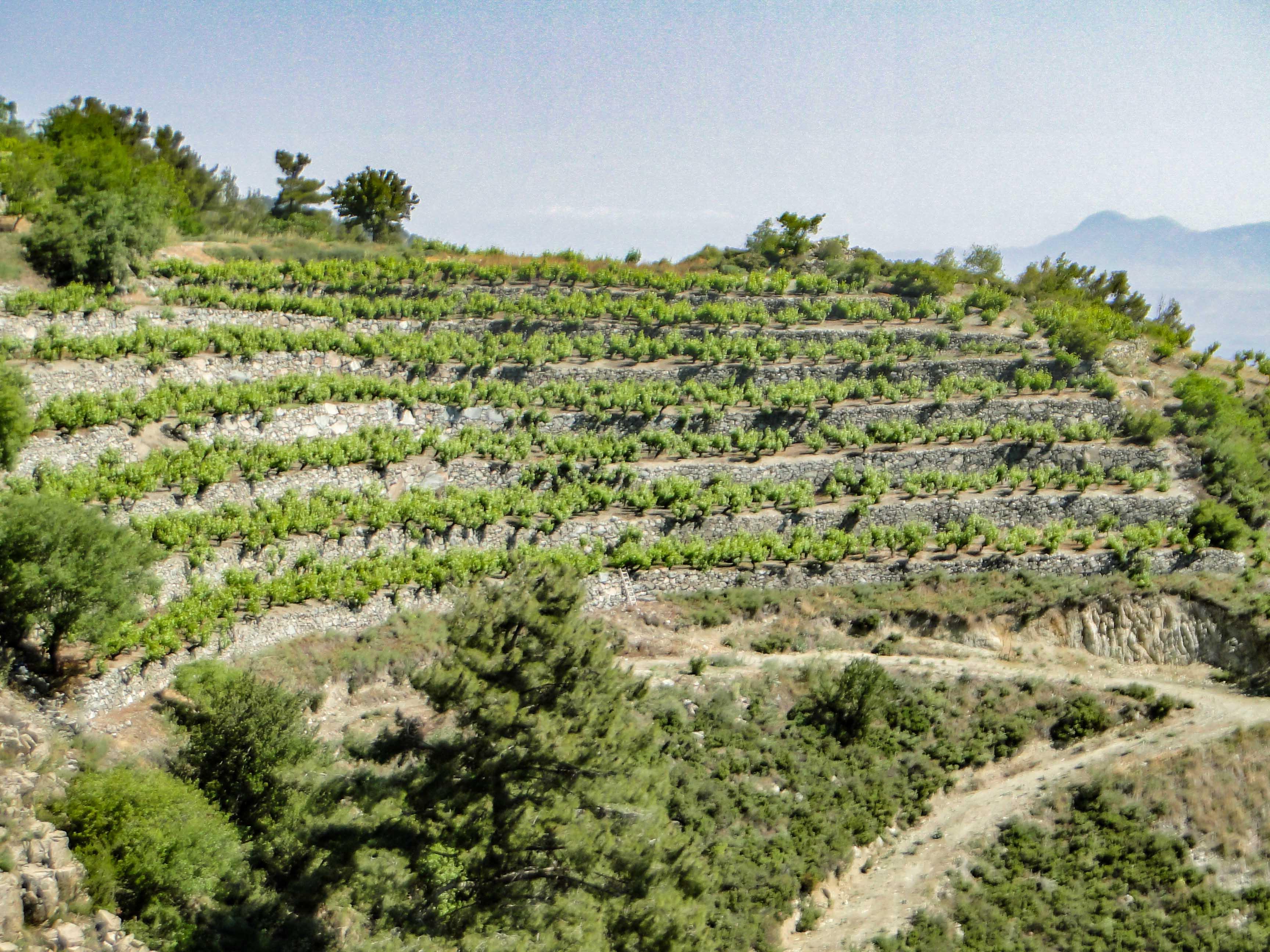
- 📍 Polystypos, Northeast Pitsilia, Nicosia
- 📷 Christos Zoumides (The Cyprus Institute, 2121 Nicosia, Cyprus)
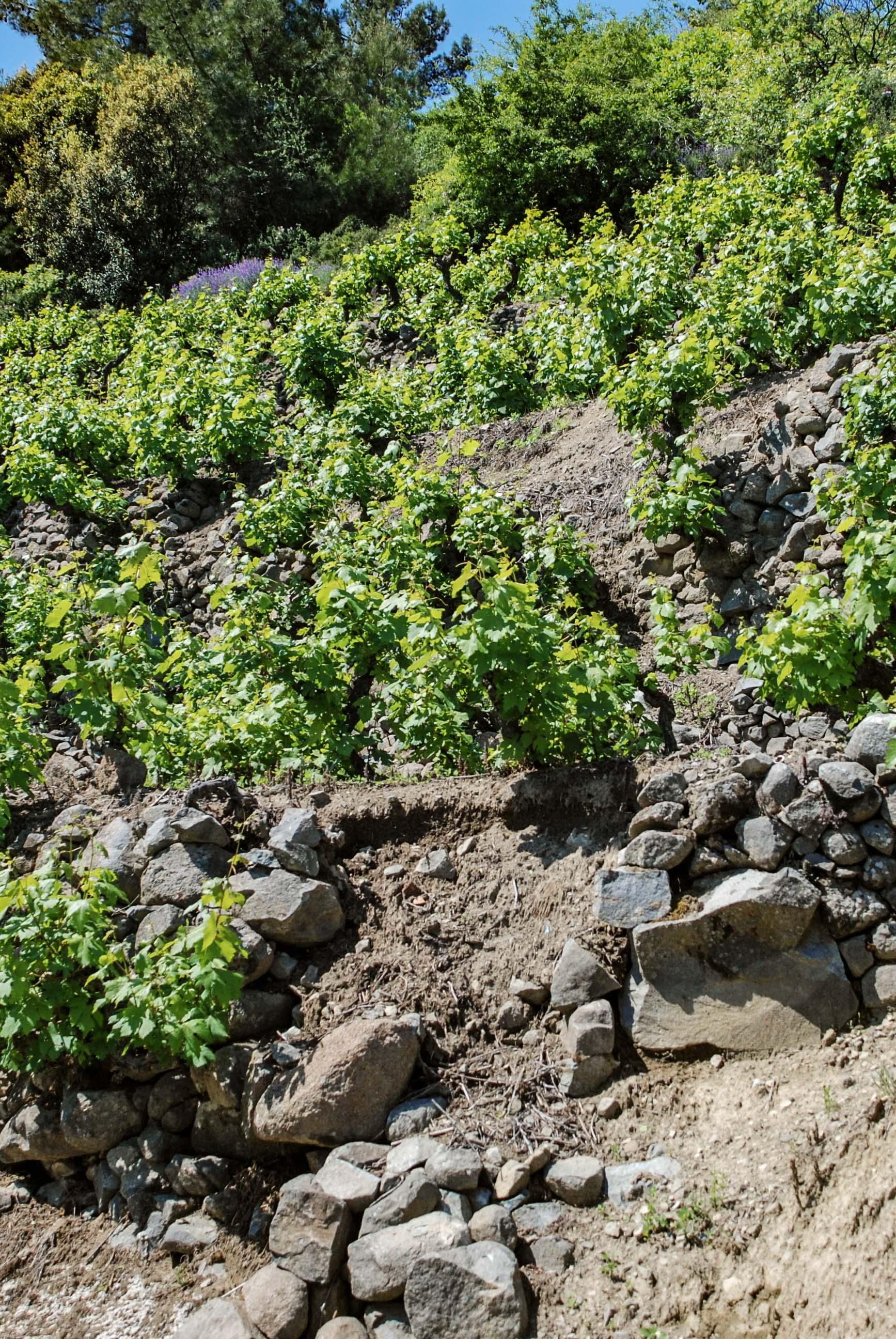
- 📍 Polystypos, Northeast Pitsilia, Nicosia
- 📷 Christos Zoumides