
Carob tree protection from rats
Type: Technologies
Creation: 2015-07-26 14:43 Updated: 2019-03-18 15:41
Compilers: Michalakis Christoforou
Reviewers: Fabian Ottiger, Alexandra Gavilano
Country/ region/ locations where the Technology has been applied and which are covered by this assessment
- Country: Cyprus
- Region/ State/ Province: Limassol
- Further specification of location (e.g. municipality, town, etc.), if relevant: Pissouri
- Map: View Map
Description of the SLM Technology
Short description of the Technology
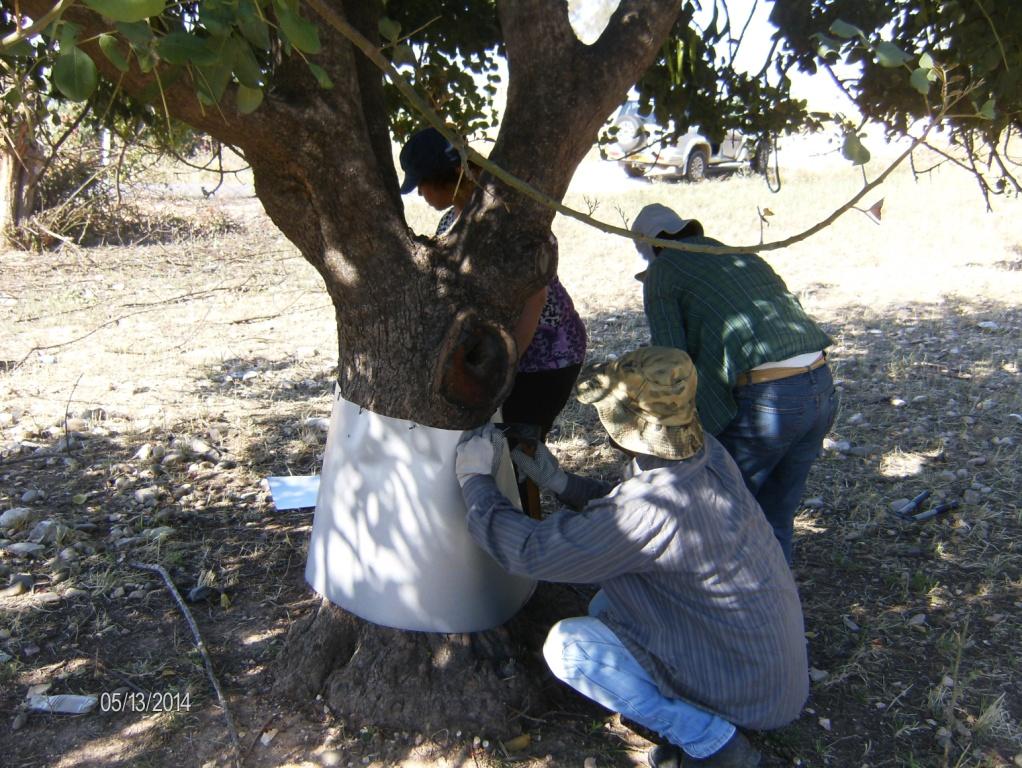
Carrob tree protection from rat attacks include protection of trees directly by using aluminium layers as rings on the neck of the carob trees in order to keep rats away from climbing on the threes and thus causing problens on fruits and new branches. Furthermore, poisonus rat baits are attached on the trees in case the aluminium layers can not be used.
Detailed description of the Technology
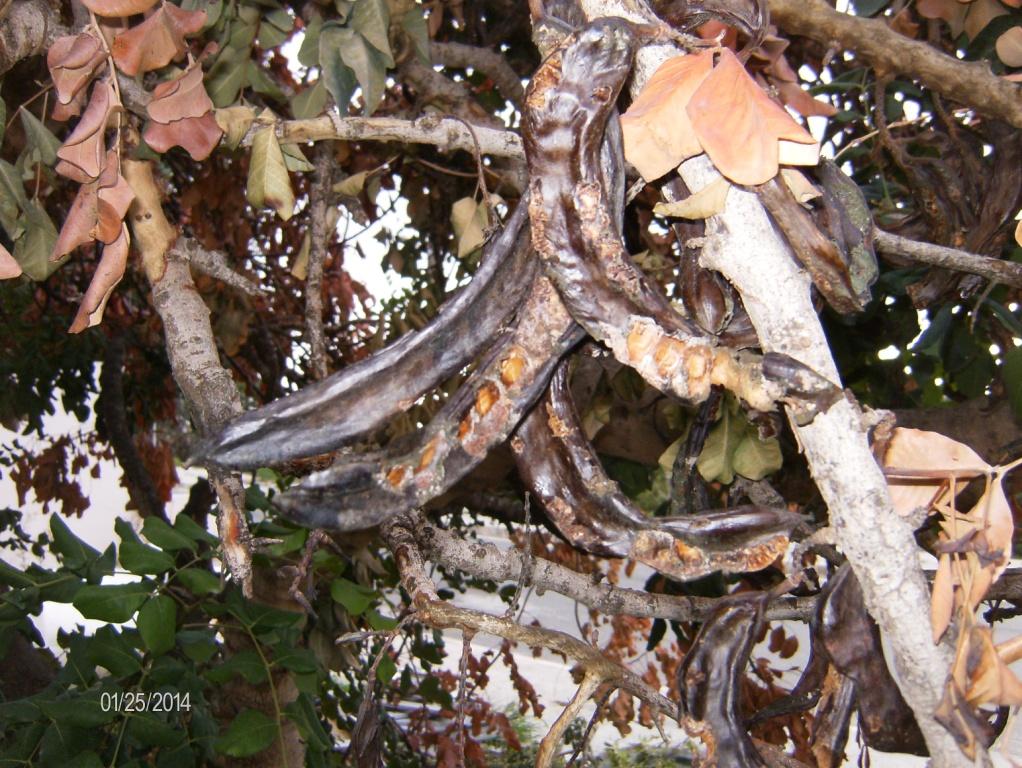
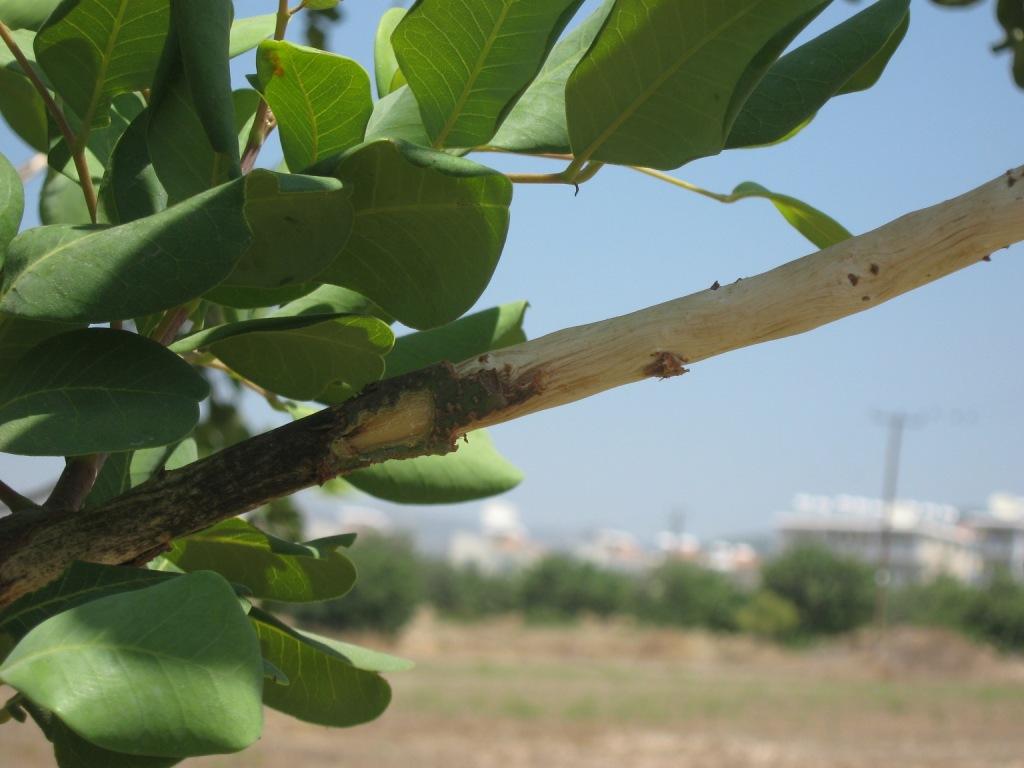
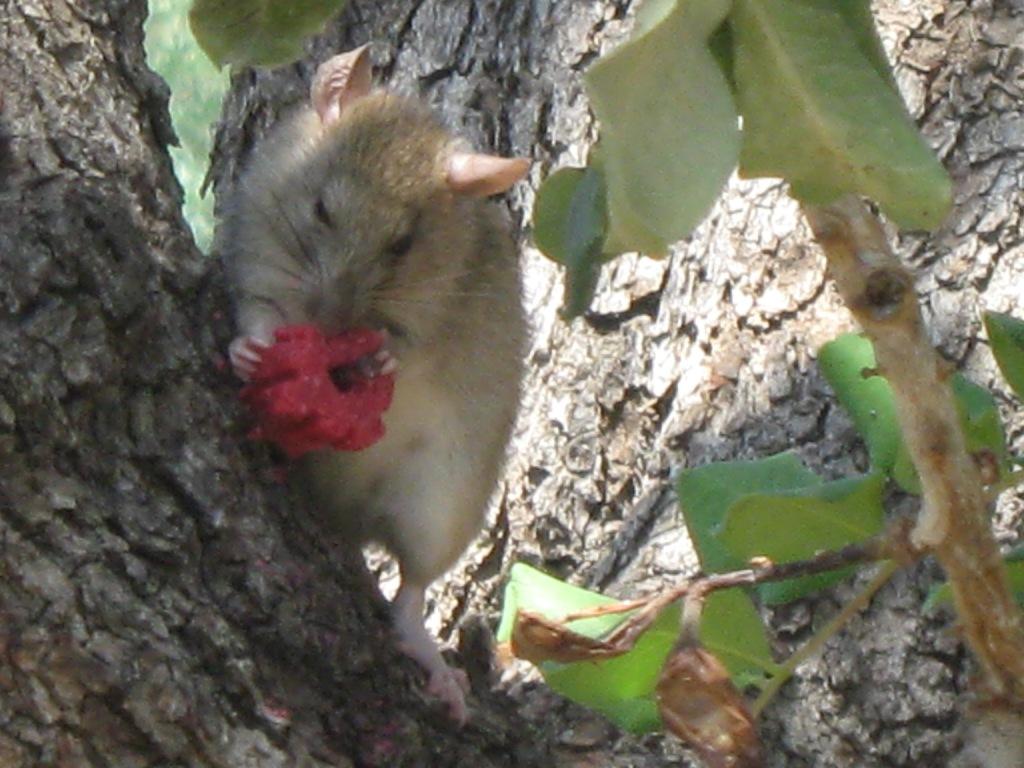
Carob trees are attacked every year by rats who nibble the trunk stem of the tree, remove the bark of the trunk and the branches sucking the juice and eat the mature fruits. Rats nibble the bark of the tree in order to reduce their teeth size which tends to enlarge year by year. This results in the death of the tree branch or even of the entire tree. The tree may also show symptoms of hemiplegia. Rats run on the tree through the trunk. Apart from the direct effect of rat attacks on carob trees, rats also cause other problems to humans and animals. Rats are vectors for serious pest and diseases
Purpose of the Technology: The rat population increases rapidly when there is enough food (such as carobs) available, and the population grows even faster in the absence of natural enemies. . Through interrupting the access from the ground to the tree trunk, or by pruning the branches which are connected to the ground, the rats are hindered from climbing the trees. Rats can also be controlled through the use of chemical baits. However, these baits should only be used by experts who know where and how to place them in order to avoid that other animals come in contact with the baits. Natural enemies such as cats, snakes and birds (e.g. Bam owl (Tyto alba)) should be breeded and established on the carob trees, and farmers, hunters and locals should be informed not to kill the natural enemies of rats.
Establishment / maintenance activities and inputs: The carob trees can be protected from rats by covering the tree neck and trunk from the ground up to 1 meter with a hard material such as aluminium with a slippery surface. This way the rats are not able to climb the trees since they will slither on the ring layer.
Natural / human environment: The carob tree protection will increase the production of carobs and therefore the income of the growers. Already established carob trees could provide a good income to growers with low production cost. The population of rats will decrease since the major source of food will not be provided anymore. Educating farmers, hunters and the local population about the benefits of natural enemies will allow that the environment regulates the rat population by itself.
Photos of the Technology
- 📍 Pissouri, Limassol
- 📷 Costas Michael
- 📍 Pissouri, Limassol
- 📷 Costas Michael
- 📍 Pissouri, Limassol
- 📷 Costas Michael
- 📍 Pissouri, Limassol
- 📷 Costas Michael
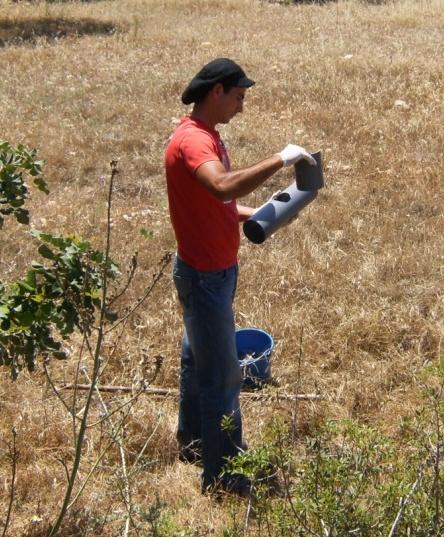
- 📍 Pissouri, Limassol
- 🗓 2010-10-05
- 📷 Costas Michael