
Sediment Traps
Type: Technologies
Creation: 2015-09-01 04:35 Updated: 2019-06-13 12:47
Compilers: Philippine Overview of Conservation Approaches and Technologies
Reviewers: Fabian Ottiger, Alexandra Gavilano
Country/ region/ locations where the Technology has been applied and which are covered by this assessment
- Country: Philippines
- Region/ State/ Province: Valencia City
- Further specification of location (e.g. municipality, town, etc.), if relevant: Bukidnon
- Map: View Map
Description of the SLM Technology
Short description of the Technology
Sediment traps are structures built in the area which includes cascading catchment canal, silt traps and catch basin along perimeter, between pineapple fields and along diversion ditches to collect runoff during rains, preventing and minimizing the eroded soils cascading into natural bodies of water.
Detailed description of the Technology
Strategic construction of water catchment in and around existing pineapple fields to collect runoff during rains, aim to minimize eroded soil cascading into natural bodies of water. Sediment trap structures are earth canals designed to reduce soil erosion. The cascading catchment canal length depends on the slope, a length of five meters or longer is excavated when the slope of the area is less than 2%. The higher the slope percentage, the shorter the length of the canal. Silt traps are built along diversion ditches by stacking bamboo pegs or planting pineapple. Catch basin are bigger canals than the cascading canals which trap sediments that are not trapped in the silt traps and cascading canals. Weeds in this structures are not uprooted to further trap eroded soils or silts.
Purpose of the Technology: The technology aims to: (1) control of dispersed runoff; (2) serves as water harvesting facility; and (3) serves as sediment retention / trapping.
Establishment / maintenance activities and inputs: In the establishment of sediment trap structures, the following activities are undertaken in the area: (1) Depending on the slope, sediment trap structure locations are identified; (2) Excavation of catch basin and cascading canals using back hoe; (3) Establishment of raised beds which are used for pineapple production; and (4) Construction of trenches with silt traps using bamboo pegs and pineapple plants. Cascading canals, trenches and diversion ditches are re-established every cropping season.
Natural / human environment: The area is under humid agro-climate condition with a topography ranging from 1-10% slope. It receives an average annual rainfall of approximately 3072 mm/year. The elevation ranges from 370-890 meter above sea level.
Mt. Kitanglad and Agri Development Corporation (MKADC) operates the area where the technology are being practiced. Farmers living within the area are the laborers of the company.
Photos of the Technology
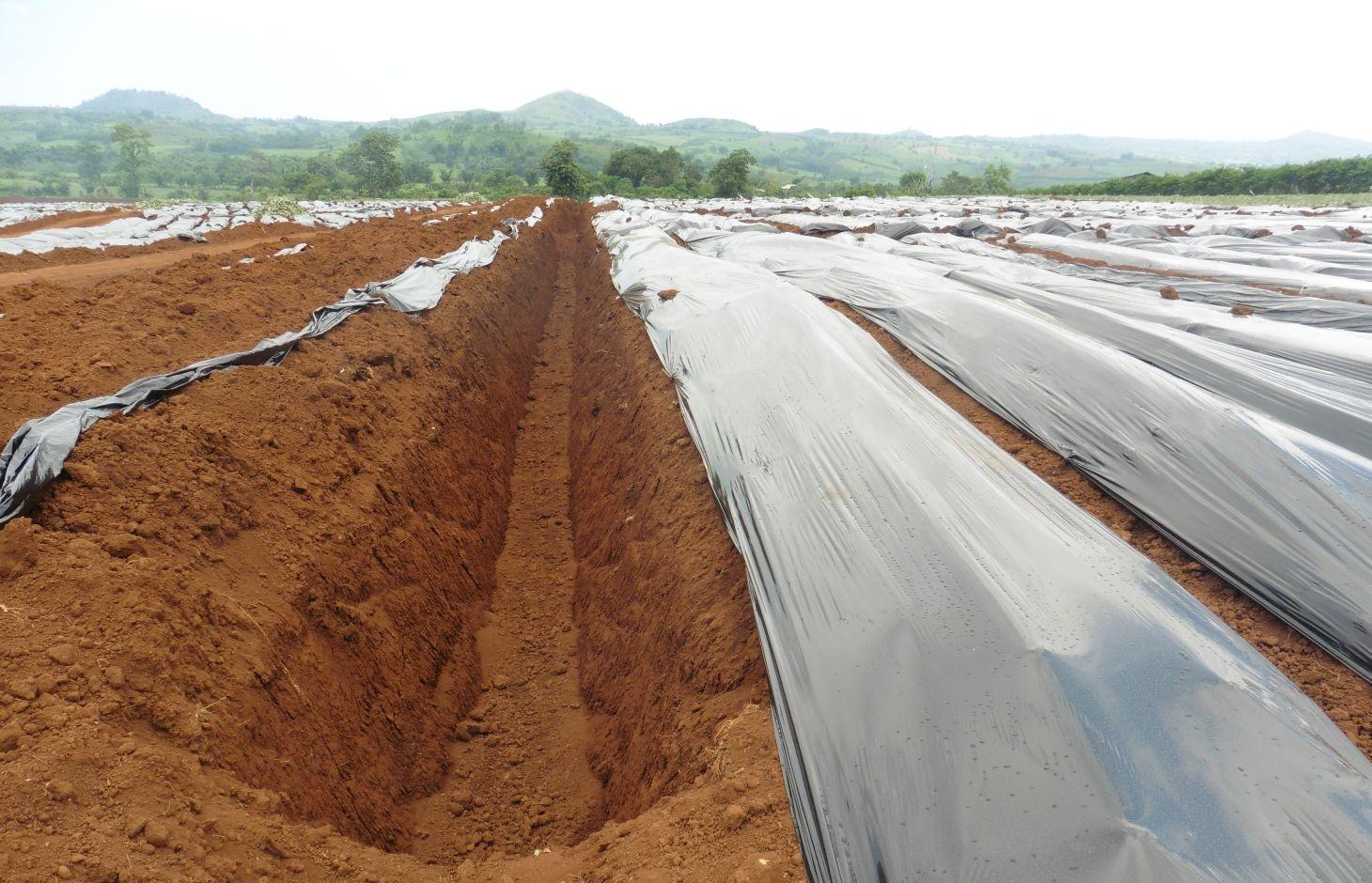
- 📍 Barangay Lurogan, Valencia City, Bukidnon
- 📷 Engr. Djolly Ma. P. Dinamling (Bureau of Soils and Water Management)
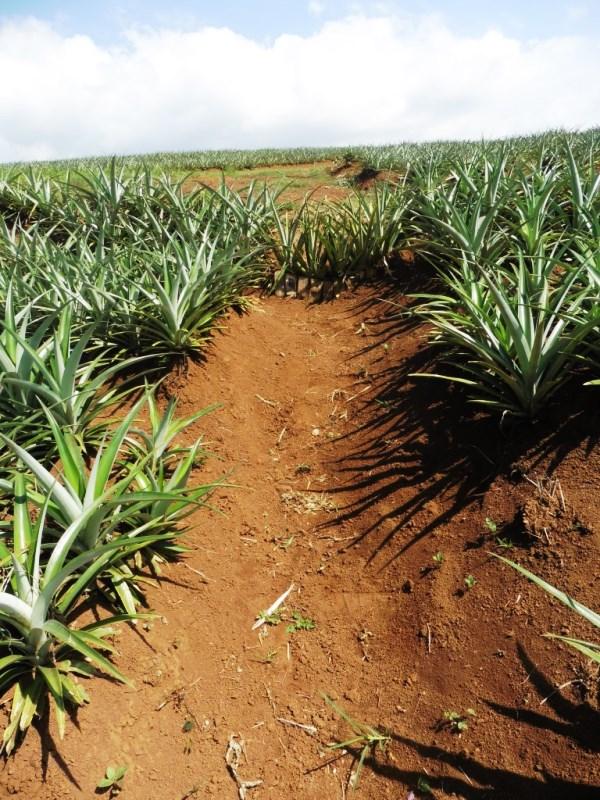
- 📍 Barangay Lurogan, Valencia City, Bukidnon
- 📷 Baldwin M. Pine