
Integrating native trees in rubber monocultures
Type: Technologies
Creation: 2016-02-11 17:15 Updated: 2019-03-13 12:33
Compilers: Gerhard Langenberger
Reviewers: Deborah Niggli, Alexandra Gavilano
Country/ region/ locations where the Technology has been applied and which are covered by this assessment
- Country: China
- Region/ State/ Province: Xishuangbanna Dai Autonomous Prefecture, Yunnan Province, PR China
- Further specification of location (e.g. municipality, town, etc.), if relevant: Naban River Watershed National Nature Reserve
- Map: View Map
Description of the SLM Technology
Short description of the Technology
The technology combines the integration of native tree species into rubber monocultures with changed weed management to mitigate negative environmental impacts and to provide alternative income options for farmers.
Detailed description of the Technology
Natural rubber is a crucial renewable resource produced from the tree Hevea brasiliensis. Production is largely based on monoculture, often associated with chemical-based clean-weeding. This causes environmental problems such as loss of biodiversity, pesticide pollution and erosion of topsoil. The SLM-technology aims at mitigating negative impacts by interplanting the rubber with native tree species which have economic potential of their own. Changes in weed management are part of the package also.
Native (indigenous) tree species are integrated into mature rubber plantations. Criteria for species selection are: a) adapted to environmental conditions; b) shade tolerant; c) vertical growth not affected by light; d) conservation value; e) economic potential; f) easy to manage. Rubber trees are usually planted in rows at a spacing of 6-8 m, and an intra-row distance of 2.5 to 3 m. The native trees are planted between the rubber rows. The plantation should be mature as the canopy will have reached its highest density, and weed competition is naturally suppressed. The spacing of the native trees needs to be adapted to their growth potential and intended usage. After planting, regular monitoring is necessary to identify pests or diseases. The following species were selected for demonstration sites: 1) Parashorea chinensis, a valuable timber tree, 2) Taxus mairei, a multi-purpose tree, providing good timber but also an anti-cancer drug, taxol, and 3) Nyssa yunnanensis, selected for its conservation value. At the end of the economic life span of the rubber trees (about 30 years) there will be several options, but there are three main ones. First the rubber plantation can be replanted, although the harvest of the Parashorea chinensis trees would be premature. The Taxus mairei trees could be maintained through a new plantation cycle. Second, both, the rubber and the intercropped trees could be maintained for future timber and taxol production. Third, the plantation could be transformed into a sustainable forest managed scheme where the rubber trees are extracted step by step and the intercropped trees maintained for their intrinsic value.
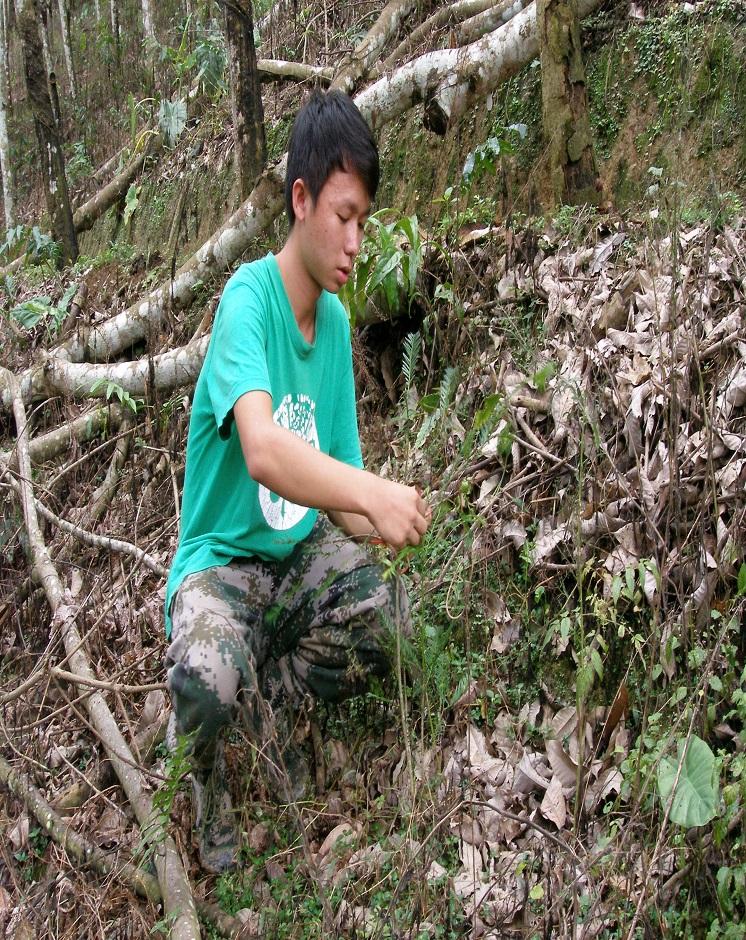
Procedures for the selection and planting of the indigenous tree species are crucial. Identification should be based on suitability for the climate and soil as well as economic potential. The raising of tree seedlings requires experience and nursery propagation by experts might be required. Only healthy seedlings should be used. Planting should take place during rainy periods. Potted seedlings are better than bare-rooted seedlings since they establish better. Generally, weed management (if necessary) should shift from herbicide application to mechanical weeding. Grass competition needs to be avoided in any case! Controlled cover of natural undergrowth will reduce erosion and promote water infiltration.
The implementation site for the trials is located in Xishuangbanna Prefecture, Yunnan Province, SW China. The original vegetation was tropical rain and monsoon forest, but now there is a rich mosaic of different land-use and vegetation types. The whole region is exceptionally species rich and part of the Indo-Burma-Biodiversity Hotspot.
Photos of the Technology
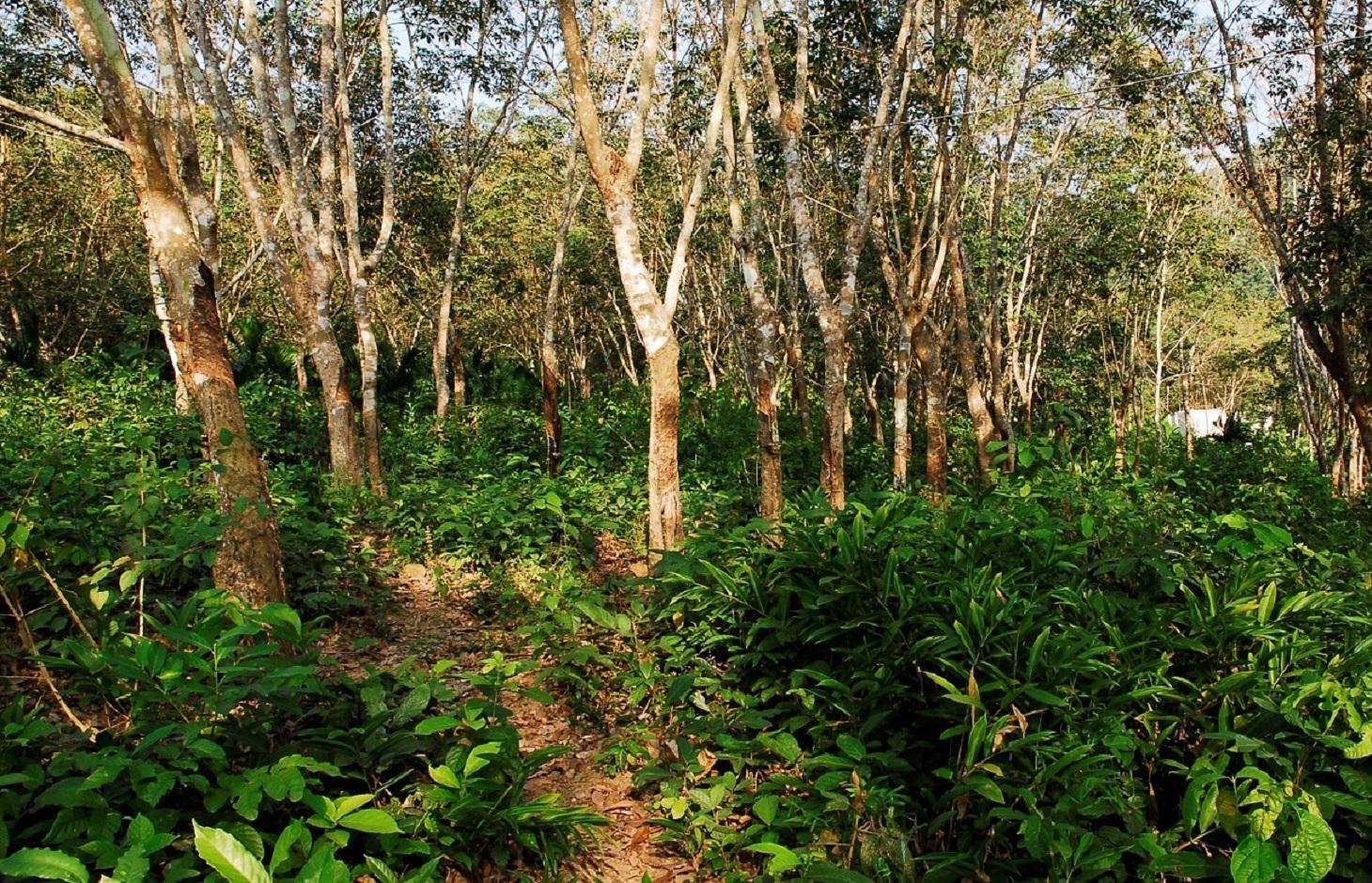
- 📍 Hainan Island, China
- 📷 Gerhard Langenberger
- 📷 Gerhard Langenberger