
Keyhole Garden
Type: Technologies
Creation: 2015-10-19 09:58 Updated: 2019-03-06 14:57
Compilers: Aqila Haidery
Reviewers: David Streiff, Alexandra Gavilano
Country/ region/ locations where the Technology has been applied and which are covered by this assessment
- Country: Afghanistan
- Region/ State/ Province: Ghor province
- Further specification of location (e.g. municipality, town, etc.), if relevant: Lal Wa Sarjangal district
- Map: View Map
Description of the SLM Technology
Short description of the Technology
Keyhole garden farming offers farmers the opportunity to increase production while decreasing garden area.
Detailed description of the Technology
The Keyhole garden technology is documented by Sustainable Land Management Project/HELVETAS Swiss Intercooperation with financial support of Swiss Agency for Development and Cooperation (SDC) and close support and cooperation of the Action Against Hunger International (ACF).
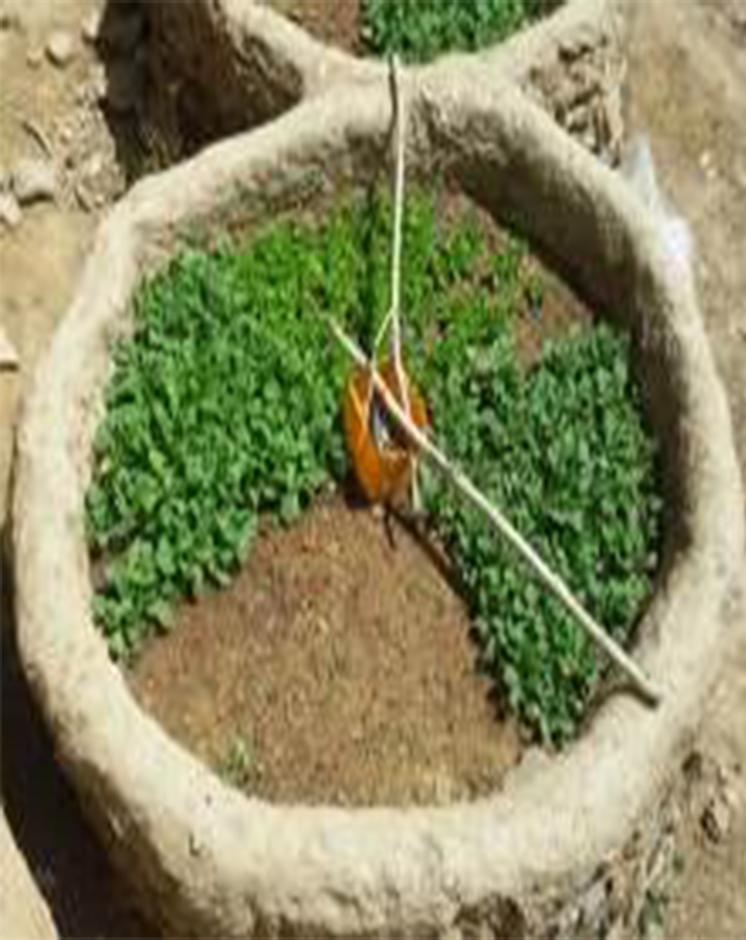
Keyhole gardens were introduced to the Laal_wa_Sarjangal community members to offer them the opportunity to produce vegetables in a small garden area. Keyhole gardens are raised beds that hold moisture and nutrients due to an active compost pile placed in the center of a round bed.
Purpose of the Technology: Keyhole gardens provide opportunities for poor, landless people to grow vegetables and improve their diets. Keyhole gardens are well-suited to places with limited arable land and to fine-textured, clayey soils which do not dry quickly. Keyhole gardens drain and warm up earlier in the spring, which allows planting of cool season vegetable on recommended planting dates. During heavy rain, water is absorbed without erosion. Thus, this technology helps the farmers access year round vegetable production.
Establishment / maintenance activities and inputs: Keyhole gardens are constructed in several steps by layering animal manure and soil, which contributes to soil fertility and drainage. A base layer, that prevents water loss, is made from plastic and carton in the bottom part of the keyhole garden. Then a central watering point is chosen that allows water to disburse into the keyhole garden layers. Leveling the surface of the keyhole garden ensures that all seeds/plants have access to the same amount of water, and helps ensure even germination.
The average size of the keyhole gardens is approximately two square meters. Construction is simple and cheap and can be easily implemented and replicated. The technology is very cost effective as local materials are used. Once they are built, keyhole gardens are easy to prepare for planting and to maintain throughout the growing season. Root crops grow longer and straighter in medium- to coarse-textured soils. Keyhole gardens are well suited to a wide range of intensive gardening techniques such as row covers, trickle irrigation, inter-cropping, successive plantings, compact varieties and mixtures of food and ornamental plantings. Keyhole gardens are usually close to home and are safe from animals, flood, avalanche and etc.
Natural / human environment: Laal_Wa_Sarjangal is one of the central districts of Ghor. It is mountainous and has a very cold dry climate (almost a five-month long winter). Livelihoods in the area are based on a mixture of rain-fed and irrigated agricultural production and animal husbandry. Market access is limited during the winter months when excessive snowfall blocks transportation routes.
Photos of the Technology
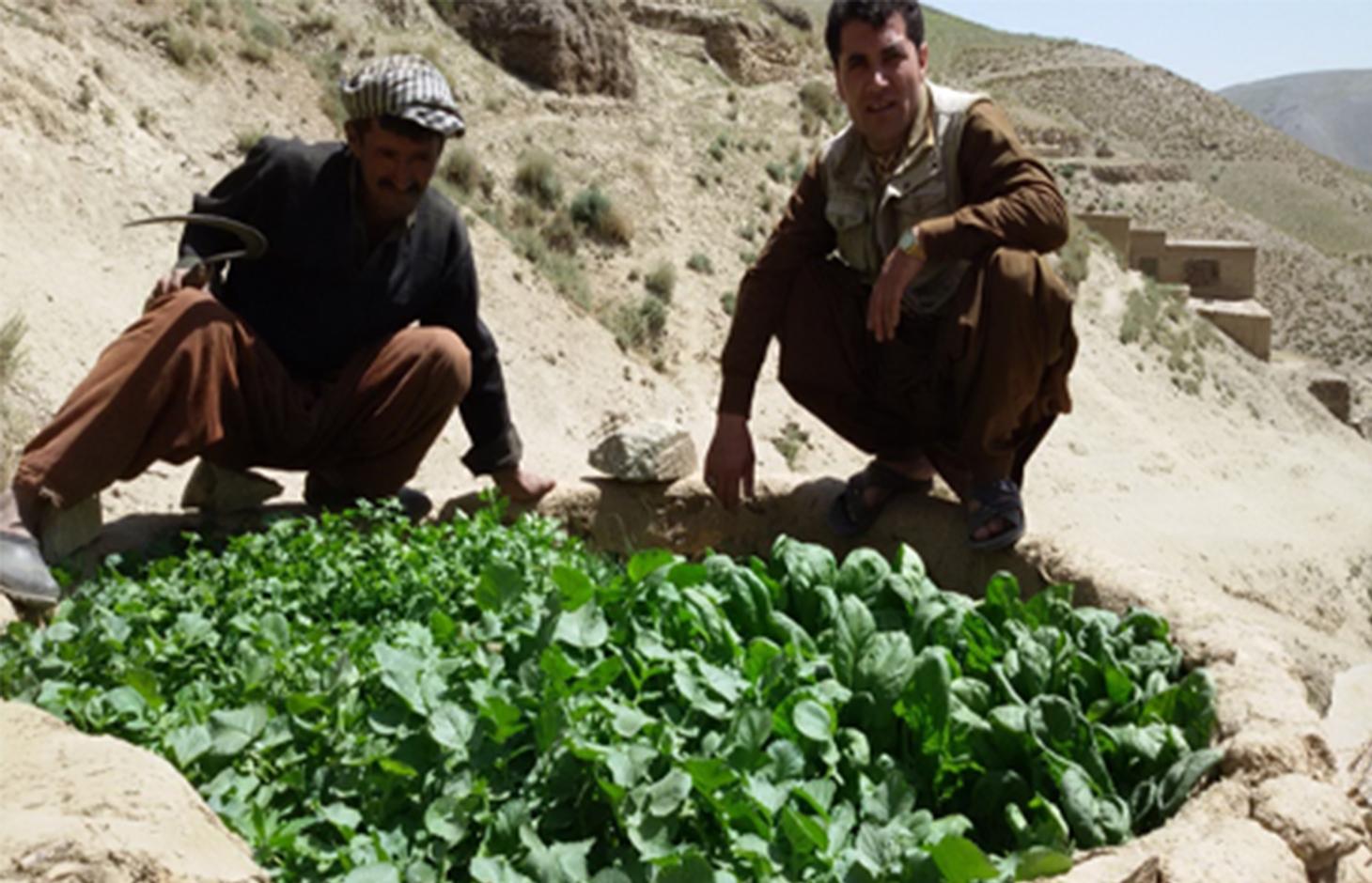
- 📍 Laal_wa_Sarjangal disctrict, Ghor province
- 📷 Ezatullah Noori (Action against hunger (ACF International))
- 📷 Ezatullah Noori