
Almond and Apple sapling plantation
Type: Technologies
Creation: 2013-11-19 11:17 Updated: 2019-04-16 15:53
Compilers: Unknown User
Reviewers: David Streiff, Alexandra Gavilano
Country/ region/ locations where the Technology has been applied and which are covered by this assessment
- Country: Iran, Islamic Republic of
- Region/ State/ Province: Fars Province, Iran
- Further specification of location (e.g. municipality, town, etc.), if relevant: Eghlid District, Dejkord Village
Description of the SLM Technology
Short description of the Technology
Plantation of almond and apple trees on the contour lines instead of annual rainfed crops such as wheat and barley on hills with 8 to 30% slope.
Detailed description of the Technology
Dejkord village is located in north – west of Fars province and west of Eghlid dis-trict. This village is located on hilly steep land with 390 families. Climate of the village, according to Demarton classification, is situated in the Mediterranean temperate zone. The long-term mean annual temperature is 13.5ºc and long-term mean annual rainfall is 510 mm. The landforms of the study area are generally rolling (with slope 8-16%) and medium mountain ridges (with slope 16-30%). The site study is located between 2000 and 2700m above sea level. The average depth of the soil in this region is 50cm. Dominant top soil textures are sandy loam, loam, and sandy clay loam and are commonly shallow with low amounts of organic matter (usually below1% ). The results of soil analysis showed that silt decreases and sand and clay increase with soil depth. The range of clay, silt, and sand is respectively 16 to 35 %, 9 to 33 %, and 47 to 73%. EC (Soil Electrical con-ductivity) is less than 1(dS/m). The main problems in this area are poverty and soil erosion that reduce crops yield. Ploughing in slope aspect increased soil erosion in this area.
The impact of this technology depends on establish pits on contour line that caused to keep runoff and reduce velocity of rain water and also canopy cover of trees caused to prevent of rain splash and provides adequate soil cover, protect-ing the land from Erosion and roots of trees enhanced infiltration. Otherwise this system increased farmer income rather than before implementation technology.
Watershed Cooperative of Dejkord started its activities since 1998 with 548 mem-ber and covering 8 villages but today this watershed cooperative have 8000 members . In order to build capacity for the watershed resident, the Fars province office of natural resource started to give lands for non – irrigated plantation which are suitable for improving the watershed. The mentioned office gives US$ 800 loan as a very cheap facility against 1 hectare of the land to the members of watershed cooperative, and the time of paying back is 5 years after they get the loan. Nowadays 15000 hectares of those lands are converted to non – irrigated gardens of Almond and Apple trees. Out of 15000 hectares, 10000 include productive Almond garden, and 5000 hectares include Apple garden .As an average, for 1 hectare about 4.5 to 5 kg seed with the value of 1.5 US$ are needed. There are 270 to 300 saplings in 1 hectare and the distance between the saplings is 6 meter. Before the watershed program, the income of resident was US$ 80 per hectare per year, however after the project their income increased to US$ 1000 to 1200.per hectare per year. For maintenance of the project some measure like fertilizing, recession, spraying, cropping and etc will be done.
Photos of the Technology
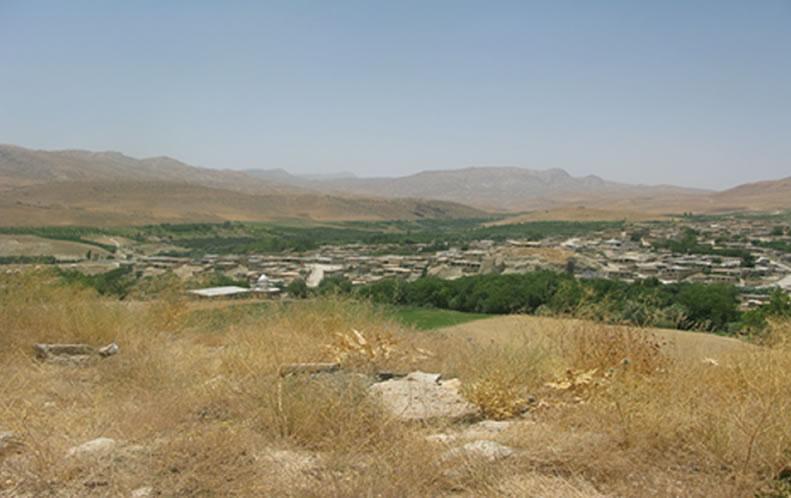
- 📍 Dejkord Village, Eghlid District, Fars Province, Iran
- 📷 Maryam Rahimi
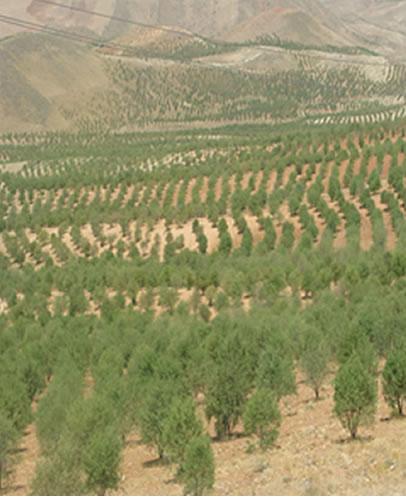
- 📍 Dejkord Village, Eghlid District, Fars Province, Iran
- 📷 Maryam Rahimi