
Improved compost preparation
Type: Technologies
Creation: 2011-06-07 18:53 Updated: 2019-06-05 13:51
Compilers: Richard Allen
Reviewers: David Streiff, Alexandra Gavilano
Country/ region/ locations where the Technology has been applied and which are covered by this assessment
- Country: Nepal
- Further specification of location (e.g. municipality, town, etc.), if relevant: Midhills districts of Nepal
- Map: View Map
Description of the SLM Technology
Short description of the Technology
Improved compost preparation using a range of biomass and waste to produce high value fertiliser
Detailed description of the Technology
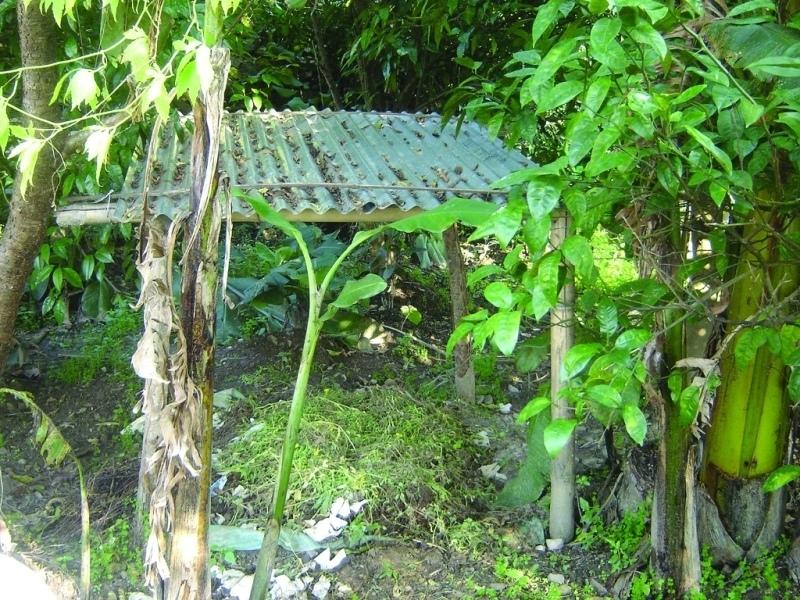
Compost can be prepared from a wide range of organic materials including dead plant material such as crop residues, weeds, forest litter, and kitchen waste. Compost making is an efficient way of converting all kinds of biomass into high value fertiliser that serves as a good alternative to farmyard manure, especially for crop-growing households without livestock. The compost is often mixed with forest soil, ripe compost from the previous batch, or even a small amount of animal dung as a starter for the decomposition process. The mix of materials determines the quality of the final compost as much as the management of the composting process. Nitrogen-rich fresh materials such as legume residues and many types of weeds and shrubs are mixed with carbon-rich forest litter and cereal residues. Small amounts of wood ash, lime, or mineral fertiliser can help increase or balance the overall nutrient content of the compost.
The compost needs to be turned every 30-50 days depending on the mix and the outside temperature. It should be protected from direct sunlight, rainfall and runoff so as to reduce volatilisation and leaching of nutrients. The material must remain moist at all times to avoid slowing down decomposition and hindering the efficiency of the micro and macro-organisms involved in decomposition. Heaping the compost or collecting the material in a pit helps the compost to reach the temperatures needed (700C) to destroy pests and weeds.
Once the compost is well decomposed and has an earthy smell, it can be applied directly or stored for later application. It can be applied as a crop fertiliser in rows or to individual plants for improving general soil fertility and organic matter content, thus improving the soil structure and its water holding capacity.
Photos of the Technology
- 📷 Juerg Merz