
Urine application through drip irrigation for bitter gourd production
Type: Technologies
Creation: 2011-06-07 12:12 Updated: 2019-06-04 10:50
Compilers: Richard Allen
Reviewers: David Streiff, Alexandra Gavilano
Country/ region/ locations where the Technology has been applied and which are covered by this assessment
- Country: Nepal
- Further specification of location (e.g. municipality, town, etc.), if relevant: Midhills districts of Nepal
- Map: View Map
Description of the SLM Technology
Short description of the Technology
Application of cattle urine through drip irrigation technology to provide constant flow of fertiliser to bitter gourd
Detailed description of the Technology
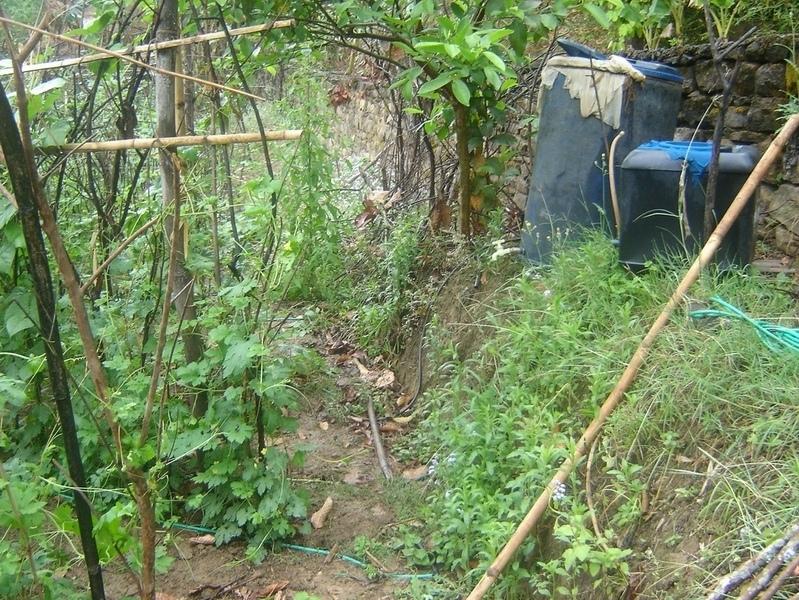
Bitter gourd vegetables fetch a high price in the off-season and respond well if grown with drip irrigation. This crop is planted in December/January and harvested from May through to July/August. The growing period mainly falls in the driest period of the year and therefore requires irrigation.
In addition to water, the plants need fertiliser to ensure healthy growth and good production. Nitrogen is the most important macronutrient for plants and high crop productivity can only be achieved if sufficient nitrogen is available. Nitrogen is also the most limiting nutrient in most areas of Nepal’s midhills. Traditionally farmers applied farmyard manure; but in many places this is being supplemented or entirely replaced by inorganic fertiliser, mainly urea. However, fertiliser prices have increased substantially in recent years and this type of fertiliser is often not available in sufficient quantities in areas away from the roadheads. At the same time cultivation practices are intensifying with greater cropping intensities and more nutrient demanding crops as local varieties are replaced by hybrids and new crops are introduced. This can easily lead to nutrient mining and soil fertility decline unless there is an equivalent increase in inorganic or mineral fertilisation.
Cattle urine is a viable alternative to mineral fertiliser; it is nitrogen rich. The urine is collected in improved cattle sheds (fact sheet on urine collection QT NEP1). For constant fertiliser application and to reduce the water requirement, the collected urine can be added to the irrigation water in the drip irrigation tanks (fertigation). Farmers who have tried this say it has increased the yield of bitter gourd and other cash crops, in some cases by as much as 100%. Other crops that can be grown using drip irrigation with a water-urine mixture are cauliflower, cucumber, and other types of gourd.
Photos of the Technology
- 📷 Juerg Merz