
Intercropping of mung bean and banana in the uplands
Type: Technologies
Creation: 2017-02-24 03:03 Updated: 2019-03-04 14:01
Compilers: SOEM DA
Reviewers: Nimul CHUN, Stephanie Jaquet, Nicole Harari, Ursula Gaemperli, Alexandra Gavilano
Country/ region/ locations where the Technology has been applied and which are covered by this assessment
- Country: Cambodia
- Region/ State/ Province: Tbaeng Mean Chey district, Preah Vihear province
- Further specification of location (e.g. municipality, town, etc.), if relevant: Andoung Preang village, Preah Khleang commune
- Map: View Map
Description of the SLM Technology
Short description of the Technology
Intercropping of mung beans with bananas adds nutrients to the soil, and generates further income while waiting for the yield of the banana trees.
Detailed description of the Technology
The root nodules of mung beans contain rhizobium bacteria that can absorb and store nitrogen from the environment. This is good for any nearby crops, and after the harvest when the field is plowed it improves soil’s nutrient levels (CARDI, 2011). The mung beans residue such as stems, leaves, and shells actively leads to an improvement of the soil’s quality and fertility by increasing the nitrogen level in the soil. Mung beans are mostly grown in March with the seeds being directly placed into pits dug at regular intervals (MAFF, 2005). Bananas are a high-moisture providing crop to the soil, and their root systems add air to the soil and enrich it with humus. Regarding the plantation of banana seedlings, their pits should be 30 cm in depth and should measure 0.5 m x 0.5 m, with a space of 2 meters between each plant (Our Agricultural Market, 2017).
Mrs. Sophea Mun has been living in the upland village known as Andoung Preang, in Preah Khleang commune, Tbaeng Mean Chey district, Preah Vihear province, Cambodia. She was selected for this case study because she has been applying the technique of mung beans intercropped by bananas and thereby contributing to sustainable land management.
One of the reasons for intercropping mung beans between banana trees is to help improve the soil’s fertility by retaining the decomposing residue of the plants in the space between the bananas to act as an organic fertilizer. Moreover, as the cover crop, mung beans also play a role in reducing soil erosion by water and preventing weeds from competing with the growth of the banana trees.
Whilst the technology has beneficial impacts on the soil; it also increases the farmers’ income before the bananas are able to produce a yield. Bananas are the long-term crop and so at the time when they are not yet generating a financial output, the mung beans act as an important source of income to support the farmers’ livelihoods. Banana trees can first be harvested after 10 months and will then produce a higher yield over the second year. The yield will then start to decrease once trees reach the age of six or seven, and once this happens they are cut down. The mung beans are the short-term crop and can be harvested and sold after 3 months and can be grown twice in one season. Generally, when the banana trees are 2 or 3 years old it is not possible to grow mung beans because they provide too much shade and there is not enough sunlight.
The farmer uses about 22 kg of mung bean seeds on a plot of land measuring 70 x 200 meters. The seedlings are planted directly between the banana trees, instead of being broadcast because in this way the seedlings will have enough space between them to allow for ventilation, and ultimately will produce a higher yield. In this case study, the farmer firstly grows mung beans and once these have been harvested will grow soybeans in July and is therefore able to grow twice in one season. Bananas should be planted in rectangular pits measuring 20cm x 30 cm with a depth of 0.5 meters. There should be a space of 4 meters between each of the plants and a distance of 5 meters between the rows. They should be grown in February when there is no rain so that the banana seedlings can flourish. If they are cultivated in the rainy season, they are often vulnerable to mealybugs and do not grow as well as in the dry season.
Photos of the Technology
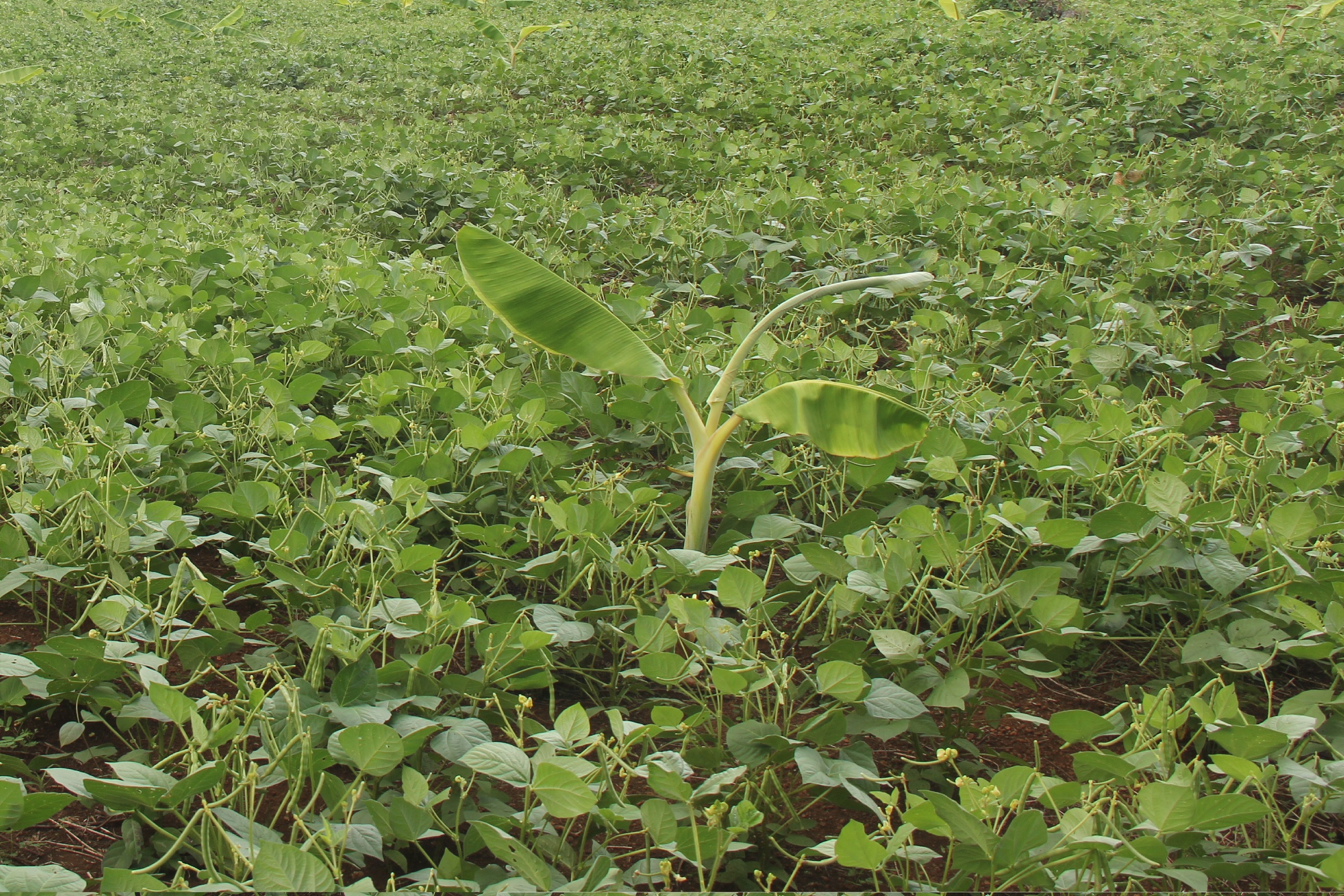
- 📍 Andoung Preang village, Preah Khleang commune, Tbaeng Mean Chey district, Preah Vihear province
- 🗓 2017-05-05
- 📷 Mr. Tim Sophea
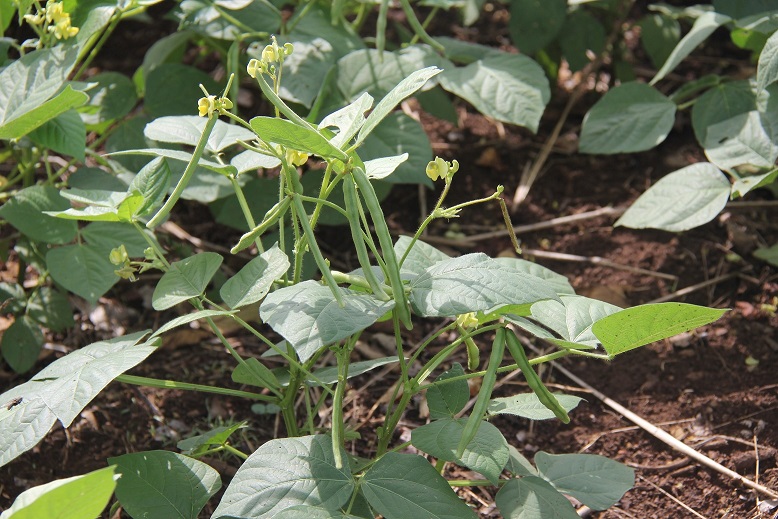
- 📍 Andoung Preang village, Preah Khleang commune, Tbaeng Mean Chey district, Preah Vihear province
- 🗓 2017-05-05
- 📷 Mr. Tim Sophea
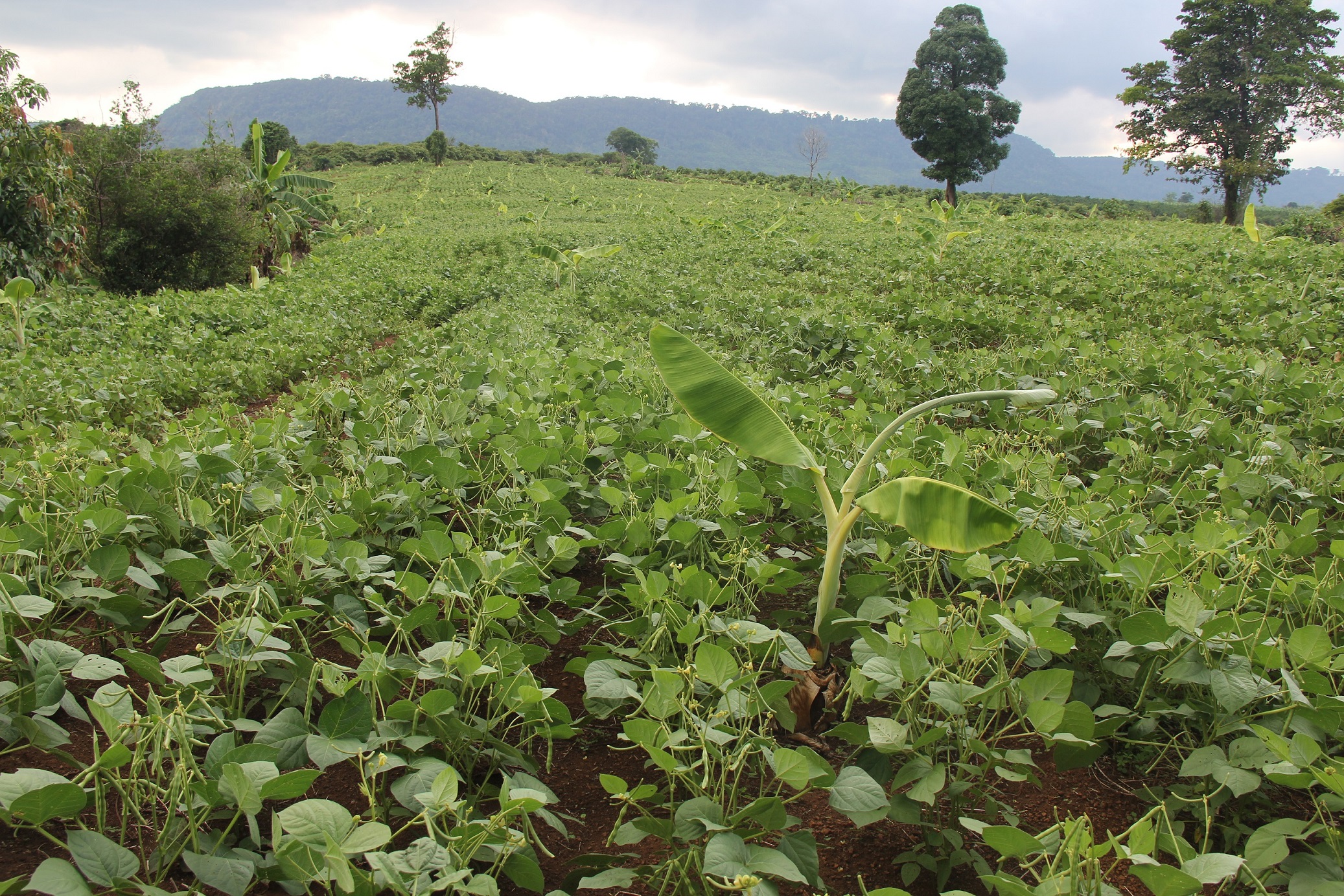
- 📍 Andoung Preang village, Preah Khleang commune, Tbaeng Mean Chey district, Preah Vihear province
- 🗓 2017-05-05
- 📷 Mr. Tim Sophea