
Disability inclusive, flood resilient cluster village
Type: Technologies
Creation: 2017-03-23 12:48 Updated: 2021-11-08 16:29
Compilers: Subir Saha
Reviewers: Alexandra Gavilano, Joana Eichenberger
Country/ region/ locations where the Technology has been applied and which are covered by this assessment
- Country: Bangladesh
- Region/ State/ Province: Gaibandha District
- Further specification of location (e.g. municipality, town, etc.), if relevant: Horipur Union, Sundargonj Sub district,
- Map: View Map
Description of the SLM Technology
Short description of the Technology
The inclusive, flood-resilient cluster village provides safe housing, food security and income generation for multiple families, including persons with disabilities, in a highly flood prone area of Gaibandha District in northern Bangladesh. The land was raised above flood level and is protected by deep rooted fruit trees to prevent soil erosion and provide income for the land users.
Detailed description of the Technology
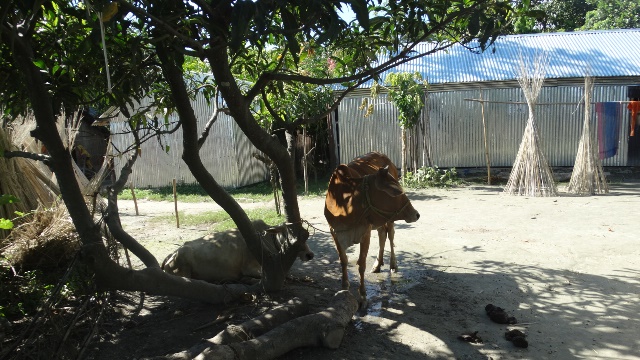
The inclusive, flood-resilient cluster village was introduced in a rural area with a high risk of recurring monsoon floods. The purpose of the technology is to provide safe housing, safe shelter for livestock, food security and income generation for ten families, including persons with disabilities.
The main components of the technology are:
1) The raising of a piece of land by seven feet (213cm), to three feet (91cm) above expected highest flood levels. Solid soil was banked up to encircle a 30'000 square feet (roughly 50x57m) piece of land and then the space within was filled up with sand collected from a nearby river bank. A one-foot layer of solid soil was added to cover the entire area.
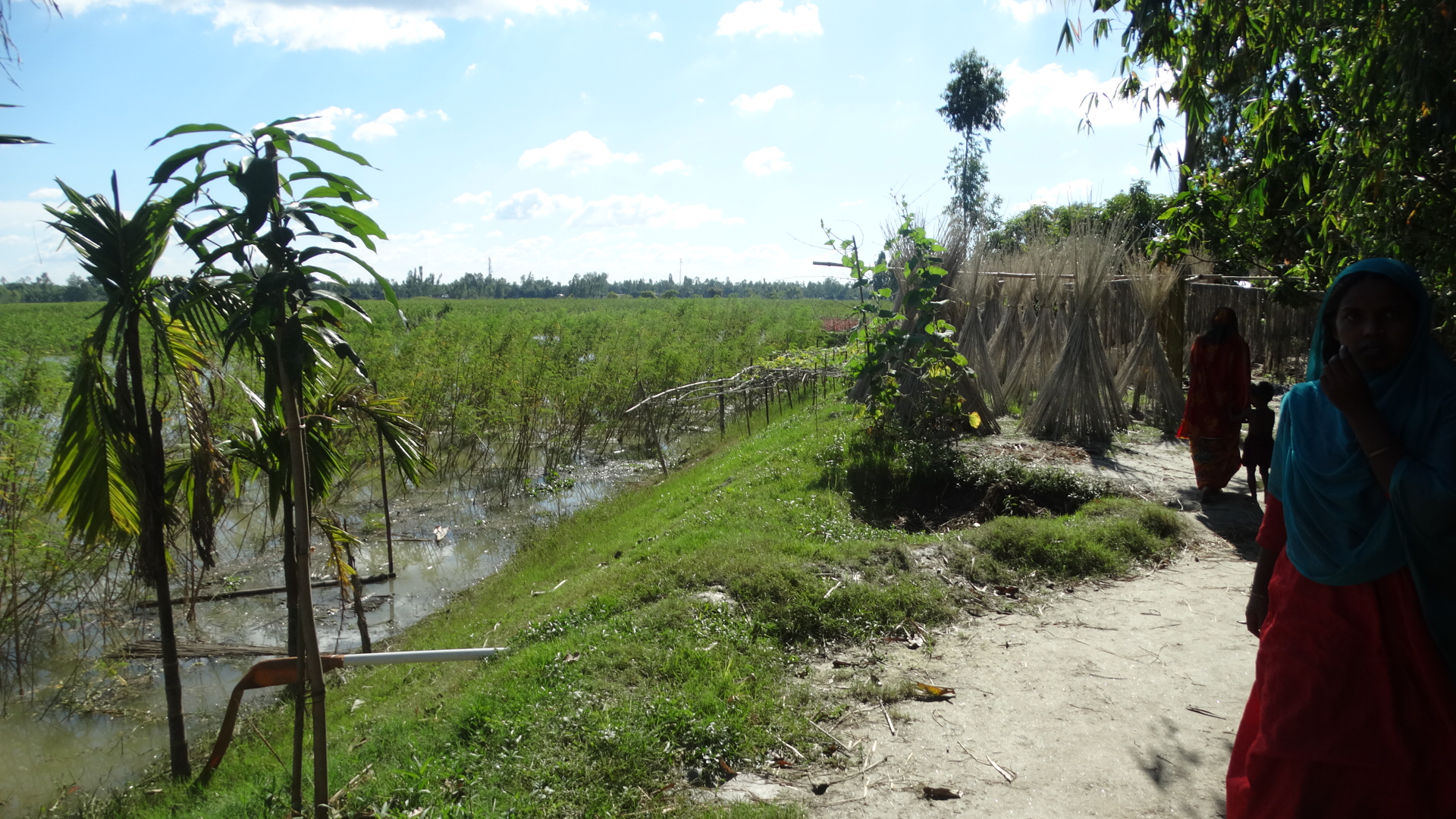
2) The protection of the raised land from soil erosion during floods by planting a combination of deep-rooted fruit- and medicine trees around the border of the raised land. The trees include a number of different types of deep-rooted and light-rooted fruit trees and one type of medicine tree, Azadirachta Indica, locally known as "Neem". In addition, the slope of the border area was covered by grass turf to protect the soil from being washed out by rain. Two types of deep-rooted and flood resistant grasses were used. A drainage system was installed to facilitate water runoff.
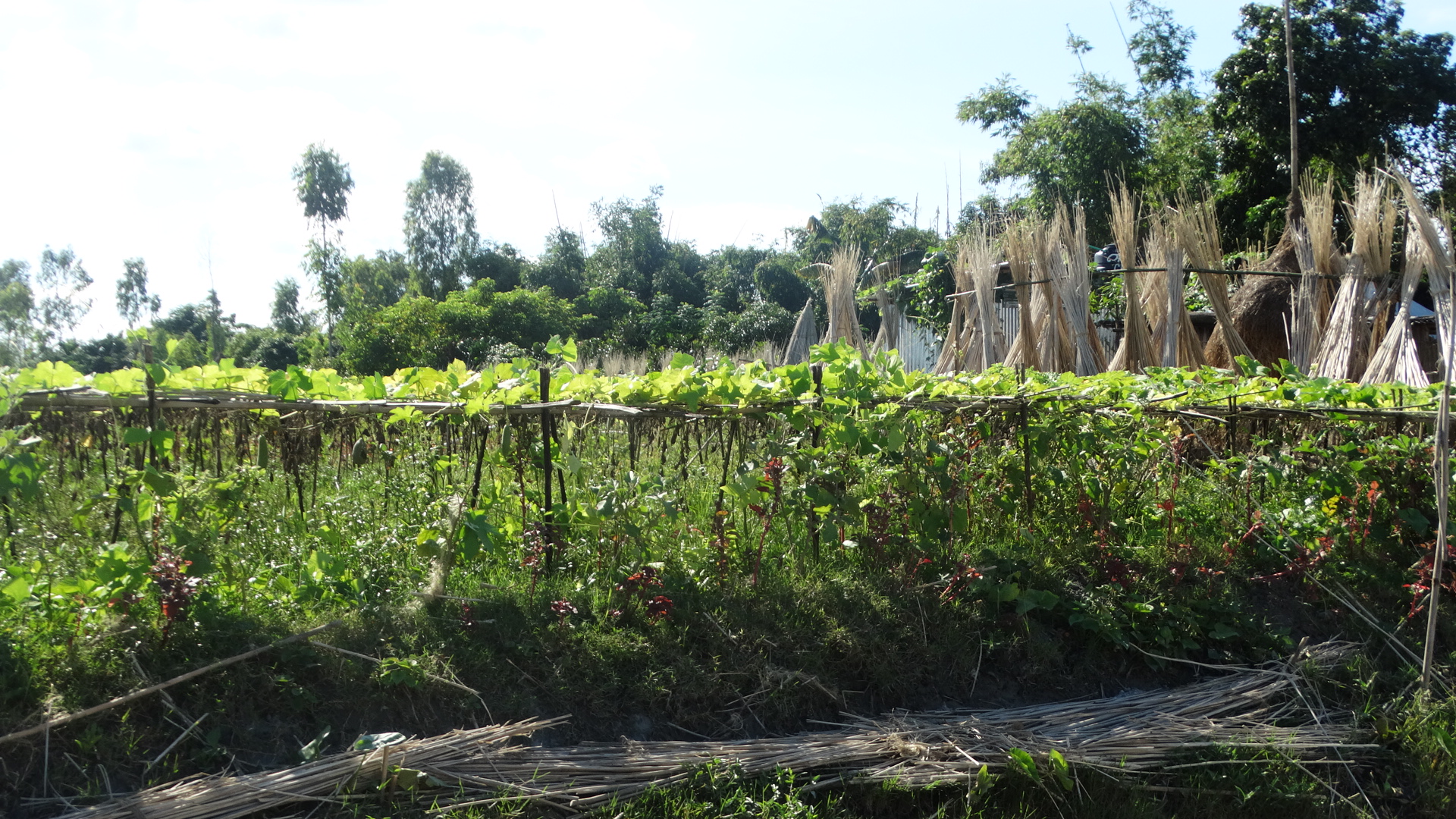
3) The planting of a 150 square feet (14m2) commonly used homestead vegetable garden at the center of the cluster village. The cultivated vegetables include red spinach, jute leaf, basella leaf, spinach, radish, cabbage, okra, bottle-guts, cucumber and beans, allowing for a summer and a winter harvest. Together with the fruit trees, the vegetable garden provides food security during prolonged flooding. They also provide improved nutrition and income generating opportunities through selling of a part of the harvest in the market.
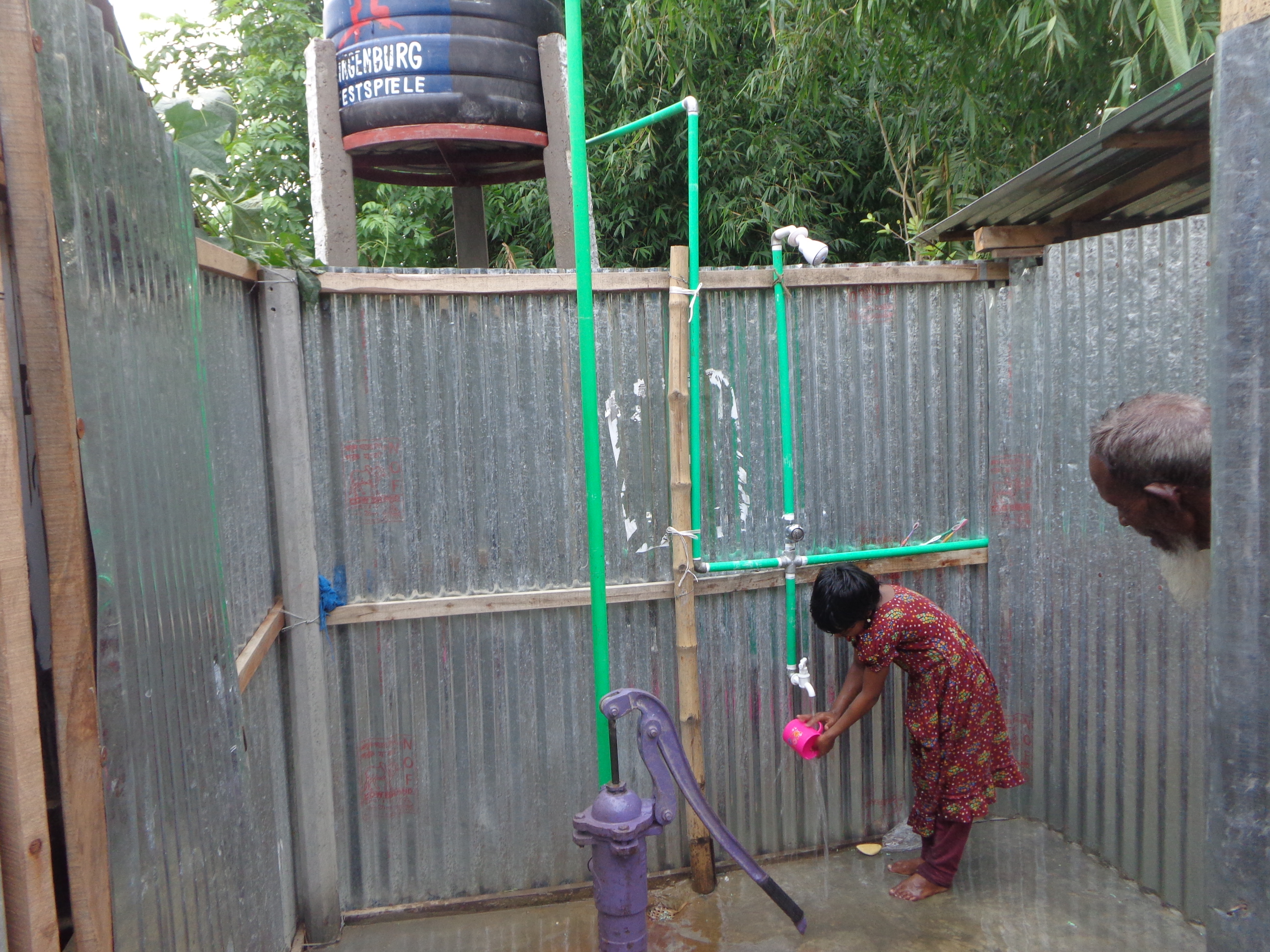
4) Making the village accessible for persons with disabilities through different accessibility measures, including the construction of a ramp, connecting the cluster village entrance with the road, and of accessible common Water-, Sanitation- and Hygiene (WASH) facilities, including a latrine, deep bore hole water source and water storage tank.
5) Installation of a solar panel to ensure uninterrupted, flood-resilient power supply. The level of power supply is sufficient to ensure coverage of electricity needs during flood season, when regular supply is around 15% below annual average.
The Cluster village was constructed as part of a disaster risk reduction project by CDD (Center for Disability in Development) from Bangladesh, with the support of CBM (Christoffel Blindenmission), an international development organization and funded by a donor from Germany. The main cost for inputs were provided to the land users by the project, including rent of construction machinery, paid labor, soil and construction material for the ramp and WASH facilities. The land users contributed labor and seedlings for the planning of the border trees and the homestead vegetable garden.
The main benefits of the technology from the perspective of land users are the protection it provides for houses and livestock, which would otherwise be in danger of loss during floods. The availability of food, water and electricity allows land users to remain in their homes during floods and avoid evacuation and the risk associated with it, including for example protection risks or the risk of theft. The flood protected vegetable gardens and fruit trees provide a year-round, sustainable source of food and income, providing food security and improved nutrition. The Neem tree provides medical and hygiene uses of the branches and leaves.
The cluster village is used as a safe space for the land users and other members of the community and their livestock during floods. Land users who are persons with disabilities or elderly benefit from the accessible infrastructure. With multiple families sharing land, the cluster villages provides optimal utilization of land resources. An additional benefit mentioned by land users is that the joint use by multiple families led to a more progressive social culture.
Photos of the Technology

- 📍 Gaibandha, Bangladesh
- 🗓 2016-09-11
- 📷 Shahidul Islam
- 📍 Gaibandha, Bangladesh
- 🗓 2016-09-11
- 📷 Shahidul Islam
- 📍 Gaibandha, Bangladesh
- 🗓 2016-09-11
- 📷 Shahidul Islam
- 📍 Gaibandha, Bangladesh
- 🗓 2016-09-11
- 📷 Shahidul Islam
- 📍 Gaibandha, Bangladesh
- 🗓 2016-09-11
- 📷 Shahidul Islam

- 📍 Gaibandha, Bangladesh
- 🗓 2016-09-11
- 📷 Shahidul Islam