
Using slurry from biodigester for soil improvement
Type: Technologies
Creation: 2017-05-02 06:54 Updated: 2019-09-02 09:09
Compilers: Nary Lay
Reviewers: SO Than, Ursula Gaemperli, Alexandra Gavilano
Country/ region/ locations where the Technology has been applied and which are covered by this assessment
- Country: Cambodia
- Region/ State/ Province: Kamboa village, Kouleap commune, Chitrborie district, Kratie province.
- Further specification of location (e.g. municipality, town, etc.), if relevant: Rural
- Map: View Map
Description of the SLM Technology
Short description of the Technology
Biodigester slurry sourced from cow manure is used as an important natural fertilizer for the cultivation of crops. It is a form of organic fertilizer that is thoroughly decomposed, does not have an awful smell, or contain living weed seeds, fungi and other viruses. It can also be used immediately after the slurry flows out of the biodigester tank. Such fertilizer helps to improve the soil quality in the long-term due to the rich organic matter that it contains which slowly decomposes to plant nutrients.
Detailed description of the Technology
There are many kinds of biodigesters and the one used in this technology is a 5000 liter plastic cylinder. It was installed by placing part of the tank into the ground and setting up an inlet-outlet pipe as well as a gas pipe system. The whole installation process takes around a day to complete. In order to produce gas initially the biodigester needs about 120 buckets (around 2000 kg) of fresh cow manure and 120 buckets (1200 liters) of water, which then needs to be kept for one week so that it can produce gas and slurry as fertilizer. After that the farmer has to add one bucket (around 20 kg) of fresh cow manure and one bucket (20 liters) of water every day in order to maintain the continuous production of gas and slurry. As a result, the farmer’s family has gas from the biodigester which provides sufficient energy for cooking. In this way they are able to save time which is otherwise spent collecting fuel-wood and it reduces their firewood consumption by around 2190 kg per year. The fresh cow manure for the biodigester should be free from rubbish and not contain small gravel because this blocks the inlet /outlet of the biodigester tank.
In addition, to be able to use the gas for cooking and lighting, the farmer also has the opportunity of using the slurry from the biodigester as fertilizer for all kinds of crops, including bitter gourds, eggplants, mangos, yard long beans, rice, bamboo shoots and other supplementary crops. The slurry from the biodigester can be applied as fertilizer either in a liquid, a semi-dry or a dry form. The slurry can be applied to the crops directly or compost can be made by mixing it with other degradable materials such as woody herb, rice straw and other green leaves. This practice will increase the quantity of the fertilizer because the slurry from bioidigester helps to accelerate the decomposition process and it also produces a higher quality compost.
The slurry from biodigester improves soil aggregates and fertility for a longer period than chemical fertilizers. The slurry contains a lot of nutrients specially nitrogen, phosphorus and potassium that are necessary for plants, and it does not have an awful smell, or contain weed seeds and parasites. The nutrients are in a chemical form which can easily be absorbed by plants, and it contains vitamin B12 which stimulates the growth of earth worms. The use of slurry enables the growth of various microorganisms and besides earth worms, other useful animals such as frogs and soil-insects, thereby maintaining a natural balance of the environment. The fertilizer enhances the growth of crops, builds resistance to disease, and does not affect the soil and human health. For poorer quality soil, the slurry or compost improves both the physical and biological conditions of the soil. It improves the nutrient content including macronutrients and micronutrients, and also helps to keep soil aggregates and moisture.
Photos of the Technology
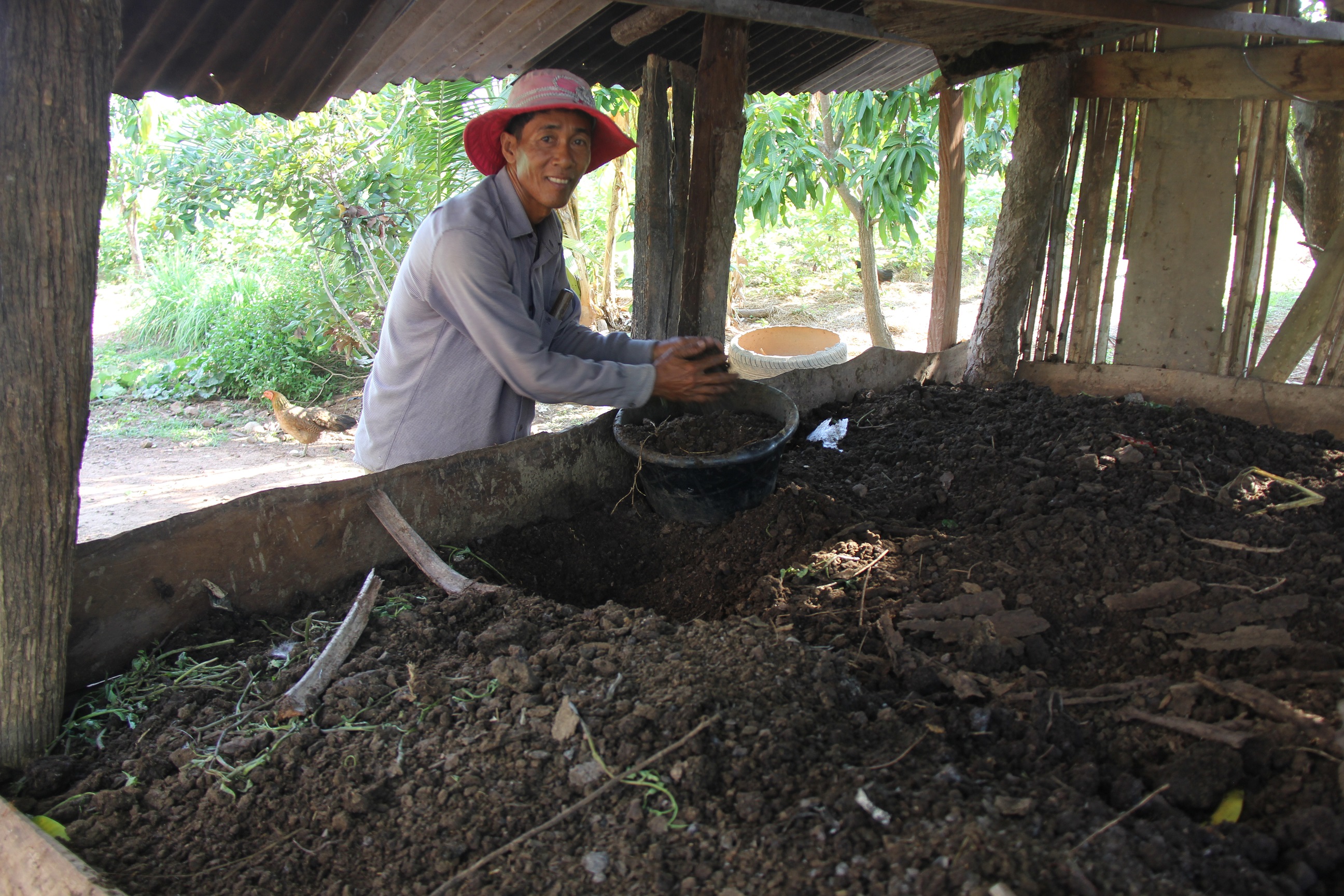
- 📍 Kamboa village, Kou Loab commune, Chetr Borei district, Kratie province
- 🗓 2017-10-04
- 📷 Mr. Kim Soben
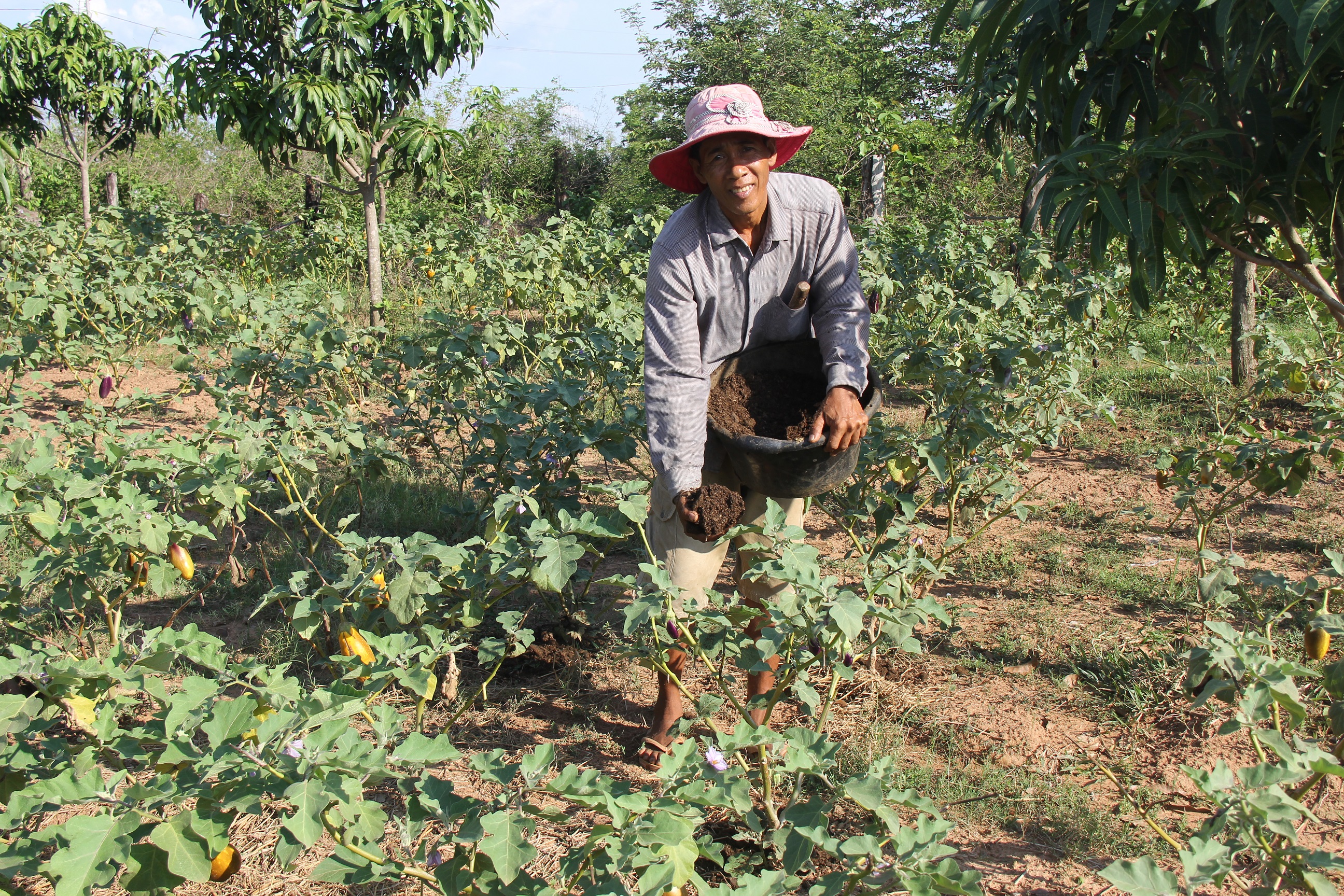
- 📍 Kamboa village, Kou Loab commune, Chetr Borei district, Kratie province
- 🗓 2017-10-04
- 📷 Mr. Kim Soben