
Crop rotation between mango trees in combination with drip irrigation
Type: Technologies
Creation: 2017-05-14 13:34 Updated: 2019-09-02 08:25
Compilers: Be Gechkim
Reviewers: TOM SAY, SO Than, Ursula Gaemperli, Alexandra Gavilano
Country/ region/ locations where the Technology has been applied and which are covered by this assessment
- Country: Cambodia
- Region/ State/ Province: Saob Krom Village, Saob commune, Preaek Prasab District, Kratie Province
- Map: View Map
Description of the SLM Technology
Short description of the Technology
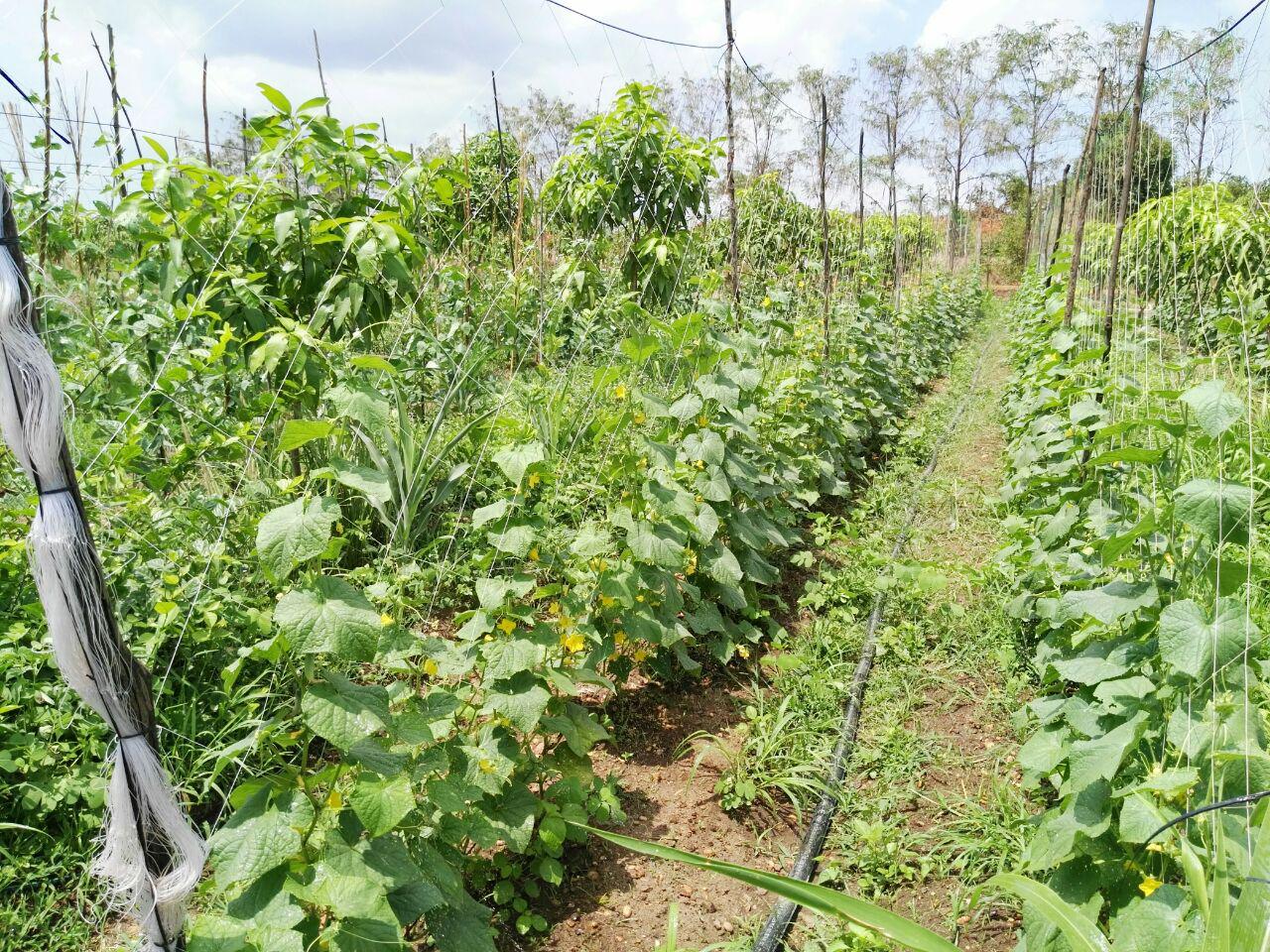
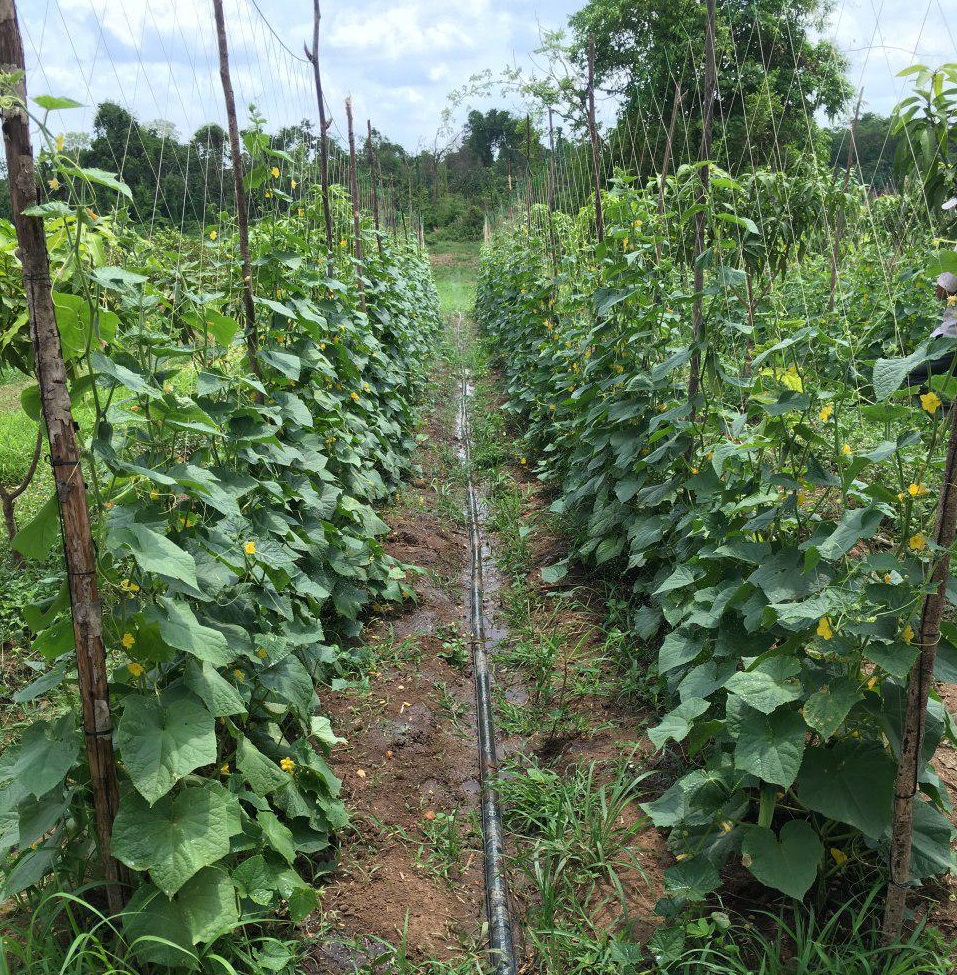
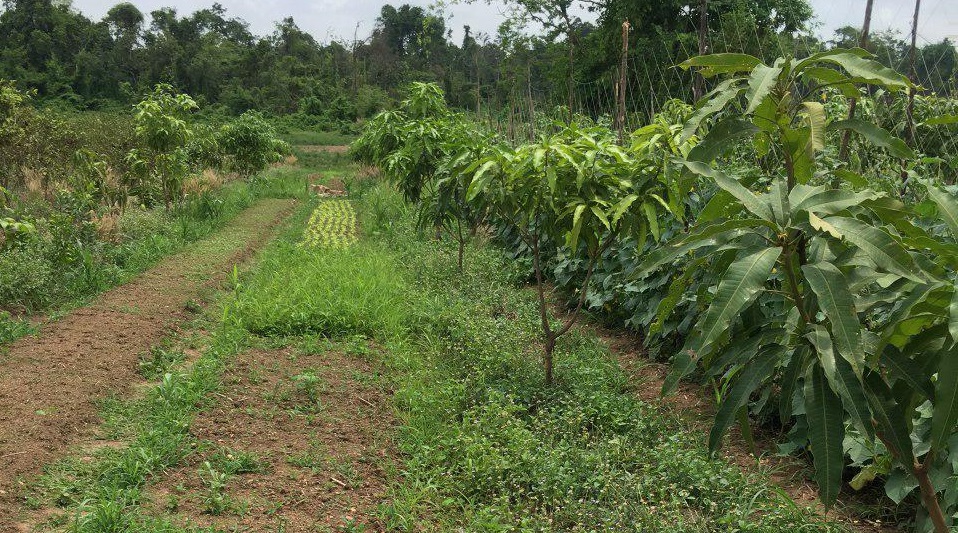
The rotational intercropping of vegetables between mango trees is a form of agroforestry. The technique aims to bear yield and income to the farmers when the trees do not bear fruit at young stage. Further purposes are the permanent soil cover which impede weed growth, reduces evaporation and soil erosion, and finally, in combination with drip irrigation it supports the adaptation to climate change.
Detailed description of the Technology
Agroforestry is the practice of cultivating cash crops and/or the rearing of livestock on a plot of land together with growing trees such as fruit trees, coco trees, bamboo or other trees so as to improve agricultural output and gain other benefits (MoE et al., 2016). Agroforestry plays a vital role in providing ecological and economic benefits which include the harvest of timber and cash crops, improved soil fertility, reduced chemical fertilizer and pesticide input, reduced cost, better adaptation to climate change (MoE et al., 2016), as well as a reduced risk of crop failure (FA and DANIDA, 2005).
Mr. Hour is one of the farmers who shifted from monoculture to agroforestry. He is living with his family at Saob Krom Village, Saob Commune, Preaek Prasab District, Kratié Province (the northeastern province of Cambodia). On a hillside plot of 2100 square meters he has 135 mango trees planted in 9 rows with a space of 4 meters between each row and each tree. A number of different cash crops are intercropped in rotation between the rows of the mango trees which include amongst others: cucumbers, morning glory, cabbages and lettuce. The mango trees are cultivated after the land has been plowed and allowed to dry for 15 days. A dimension 0.5 meter of four-size hole with 0.5 meter deep is dug for each tree into which a 2 to 3kg mixture of cow manure, husk rice and bran that has been allowed to mature for 15 days is added. The farmer makes use of a drip irrigation system which extends to each tree and runs along the rows of the cash crops. The vegetable rows are prepared according to the season, as in the dry season ridge of the rows are 10 cm and in the rainy season they are 20 cm so as to prevent the vegetables being damaged by excessive amounts of water. Moreover, this technique does not cost much and generates income when the long-term crop is not yet ready to bear fruit. Additionally there are no negative impacts on the environment because the farmer applies liquid compost and bio-extract pesticide that he has produced on his own. The liquid compost is made up of a mixture of fish residue, bran and palm sugar mixed with water, which is then allowed to mature for around 15 days before it can be used. Meanwhile, the bio-pesticide is extracted from strong-smelling and bitter trees such as strychnine plants, yellow cheesewood, neem, boraphed and galangal. The materials are chopped into small pieces and mixed with palm sugar and water, which is then allowed to settle for at least 15 days before it is ready to be applied. In order to spray the crops, a liter of the liquid pesticide should be mixed with 25 liters of water.
All in all, this form of agroforestry brings a wide range of benefits. With this system, the farmer is able to generate an income from the different cash crops which can be harvested in both dry and rainy seasons especially in the first three years of the mango tree’s life when they are still unproductive. It therefore helps to reduce the financial burden of running the whole farm. This technique also helps to regulate the local micro-climate with the shade provided by the mango trees, reduces evaporation and soil erosion, as well as adapts to drought conditions that have been brought on by climate change. Moreover, this practice avoids leaving a space between the trees that would otherwise enable the growth of unwanted weeds, which could also become a habitat for insects and the outbreak of diseases that lead to economic loss.
At first sight it may be a disadvantage that at the beginning the farmer has to raise a lot of money in order to install the drip irrigation system for example. However, once installed the system can last for many years which reduces labor costs related to irrigation. Regarding the cash crops the farmer also faces the challenge of unstable market prices. But if the prices are good and stable, the farmer is able to generate substantial income to improve the family’s livelihood. Therefore, the institutions in charge need to take into account the market forces, too.
Photos of the Technology
- 📍 Saob Krom Village, Saob commune, Preaek Prasab District, Kratie Province
- 🗓 2017-12-04
- 📷 Kim Soben
- 📍 Saob Krom Village, Saob commune, Preaek Prasab District, Kratie Province
- 🗓 2017-12-04
- 📷 Kim Soben
- 📍 Saob Krom Village, Saob commune, Preaek Prasab District, Kratie Province
- 🗓 2017-12-04
- 📷 Kim Soben