
Wild cardamom plantation for sustainable forest management
Type: Technologies
Creation: 2017-05-15 05:36 Updated: 2019-05-10 10:23
Compilers: Bounthanom Bouahom
Reviewers: viengsavanh phimphachanhvongsod, Nicole Harari, Stephanie Jaquet, Alexandra Gavilano
Country/ region/ locations where the Technology has been applied and which are covered by this assessment
- Country: Lao People's Democratic Republic
- Region/ State/ Province: Attapue province
- Further specification of location (e.g. municipality, town, etc.), if relevant: Xayxay district
- Map: View Map
Description of the SLM Technology
Short description of the Technology
Cardamom planting is a non timber forest product. Wild cardamom planting take place in traditional agroforestry systems based on shifting agriculture. The objectives of this technologies are to reach sustainable forest use and to generate household income.
Detailed description of the Technology
Wild cardamom (Amomum subulatum) is a non-timber forest product (NTFP) that grows naturally in South Asia at elevations between 600 and 1.200 meters under the canopy of humid tropical forests (average temperature between 15-25 °C, PH level between 5,5- 6,5). In Laos, completely wild cardamom is still found in mountainous secondary forest at an elevation upwards of 700 meters, mainly near watercourses. In the past, it was commonly found by local people but never harvested or used. However, the international demand for cardamom began in 2000, and increased dramatically since then. This encouraged an increasing number of local villagers to collect cardamom from natural forest areas for sale to generate income for their households. This, however, caused depletion of cardamom in forest areas and also created conflicts among the people. Hence, the village people started to collect cardamom seedlings from the forest to cultivate them in their own upland fields, where farmers used to have upland rice cultivation before. Normally after rice harvest, they planted wild cardamom seedlings and led them grow up thogether with other wild plants and trees. It was treated as a kind of fallow. As a result of the domestication they were able to save time compared to the collection of wild cardamom in the forest. In 2002 it is estimated that two third of the harvest came from plantations. Cardamom cultivation on former fallow fields does not require significant investments – only hoes, knifes, and bags for collecting natural cardamom seedlings. One hectare of land requires around 15 days of seedling collection in the forest. The selected seedlings should reach an appropriate maturity (dark green leaves with 1 to 2 yellow leaves, height of stem about 1 to 2 meters) that promotes stem production, ensures high survival rate during transportation, and tolerates new environmental conditions at the planting site. Then, cardamom seedlings need to be replanted at latest two days after collection in the prepared plot. Typically, people plant cardamom during June – July with the beginning of wet season. Before in May, bush clearance is needed, but higher trees should be preserved at approximately 40 percent to provide a canopy for the required shadow to the cardamom. Vegetation removal necessitates observation and background knowledge of the individual land user. Cardamom planting should be established in lines and rows as follow: the space between the rows is 1 meter and 1.2 meters between the lines. The planting holes for the cardamom seedlings are 20 x 20 cm and 10 to 15 centimetres in depth. The space between the plants is 2 x 2 m, which facilitates the accessibility during weeding, maintenance, and harvest. It is recommended that farmers should plant three seedlings per hole. On average, there will be 2,500 holes/ha that requires a total of 7,500 seedlings per hectare. After that, fertile soil should be applied to refill the holes by moderate feet pressure at the end. Most farmers don’t use manure or fertilizers in their cardamom cultivations. Maintenance requires mainly the thinning of some tree branches to provide adequate sunlight as required by the cardamom plants. This can be implemented once a year after harvest. Cardamom plants provide fruits within four years after planting. During the establishment period till the first harvest the farmer’s workload increases as they have to collect still wild cardamom in the forests as well. Harvesting can be carried out annually during August – September with an average production of 320 kg per hectare for dried cardamom and approximately 578 kg of fresh cardamom. The market demand for this kind of cardamom is high, because it is internationally requested as medicinal product. Therefore, the local people are satisfied with the selling price offered by middle men who buy the production at 70,000 Kip/kg. Benefits from cardamom plantation include more income for local people, increase in forest cover, stabilization of slash and burn shifting cultivation and less impacts on agricultural lands. In addition, cardamom plantations help balancing the ecosystem and provide natural habitats for various animal and plant species.
Photos of the Technology

- 📍 Chalernxay village, Xanxay district of Attapue province
- 📷 Catherine Aubertin
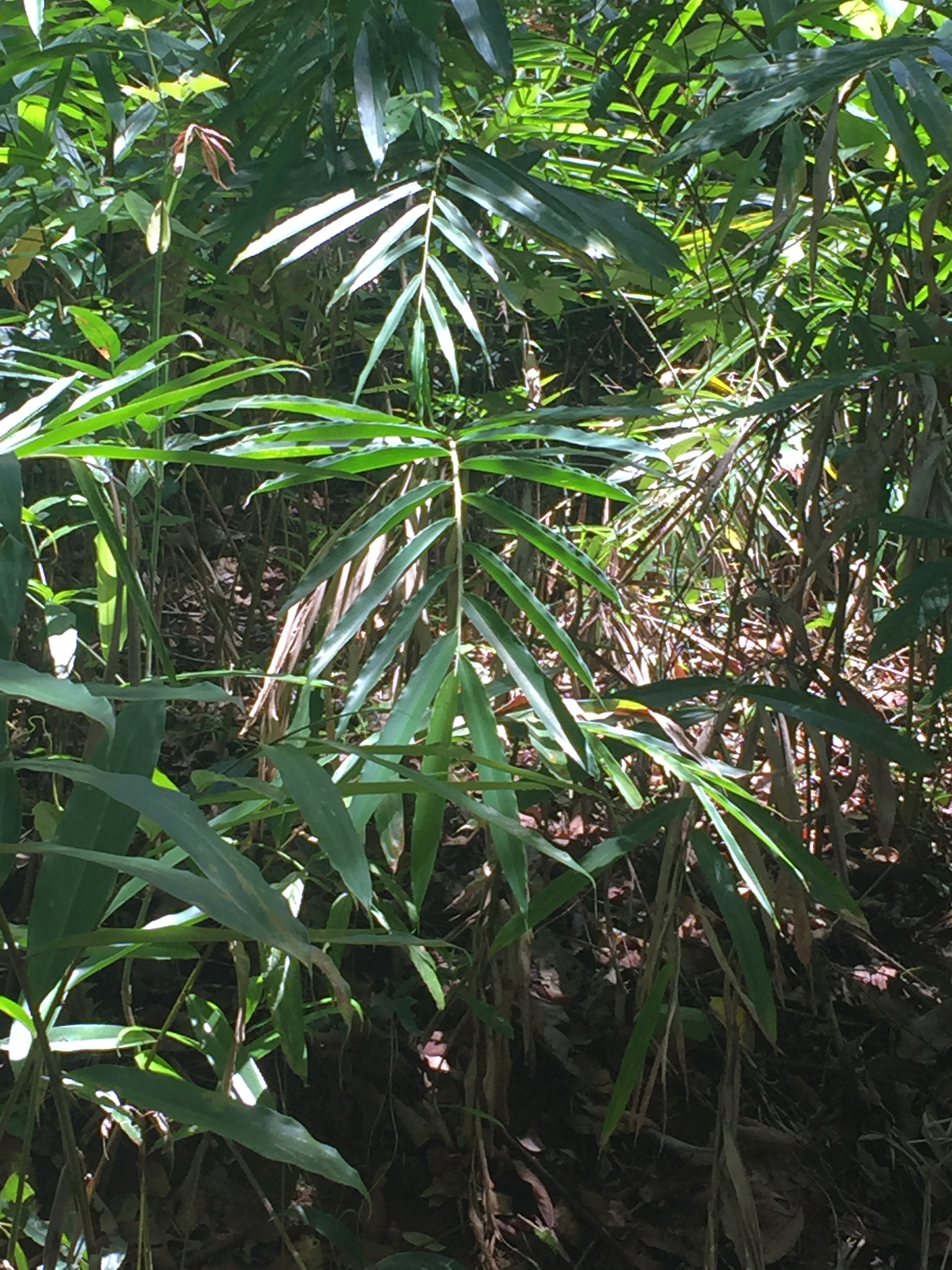
- 📍 Chalernxay village, Xanxay district of Attapue province
- 🗓 2017-12-05
- 📷 Bounthanom Bouahom