
Logs to reduce surface run-off during the rainy season
Type: Technologies
Creation: 2017-05-18 04:19 Updated: 2019-05-10 11:27
Compilers: kang phanvongsa
Reviewers: Nicole Harari, Stephanie Jaquet, Alexandra Gavilano
Country/ region/ locations where the Technology has been applied and which are covered by this assessment
- Country: Lao People's Democratic Republic
- Region/ State/ Province: Attapue Province
- Further specification of location (e.g. municipality, town, etc.), if relevant: Phouvong District, North Vongvillay village
- Map: View Map
Description of the SLM Technology
Short description of the Technology
Logs to reduce surface run-off during the rainy season.
Detailed description of the Technology
In the upland areas with 3-5 % at foot slopes and 16-30% hill slopes of Lao PDR rotational shifting cultivation has been the primary means of the local people’s livelihood for many generations. Given the topography of the area with its hill slopes it restricts the opportunities for agricultural development. After the land on foot slopes has been cleared and the remaining vegetation burned off in preparation for agricultural activities there are significant impacts on land use particularly during the rainy season which occurs between May-November. There are heavy downpours especially in the months of September and October that create significant sediment transport along the mountain valleys and it also results in flushing organic matter on the surface being flushed along the road sides and ending up in waterways. Furthermore decayed vegetation is washed over the crops. The negative impacts experienced from the loss of fertile topsoil motivated many of the land users to develop some kind of technology in 2015 that could control this run-off from the mountains.
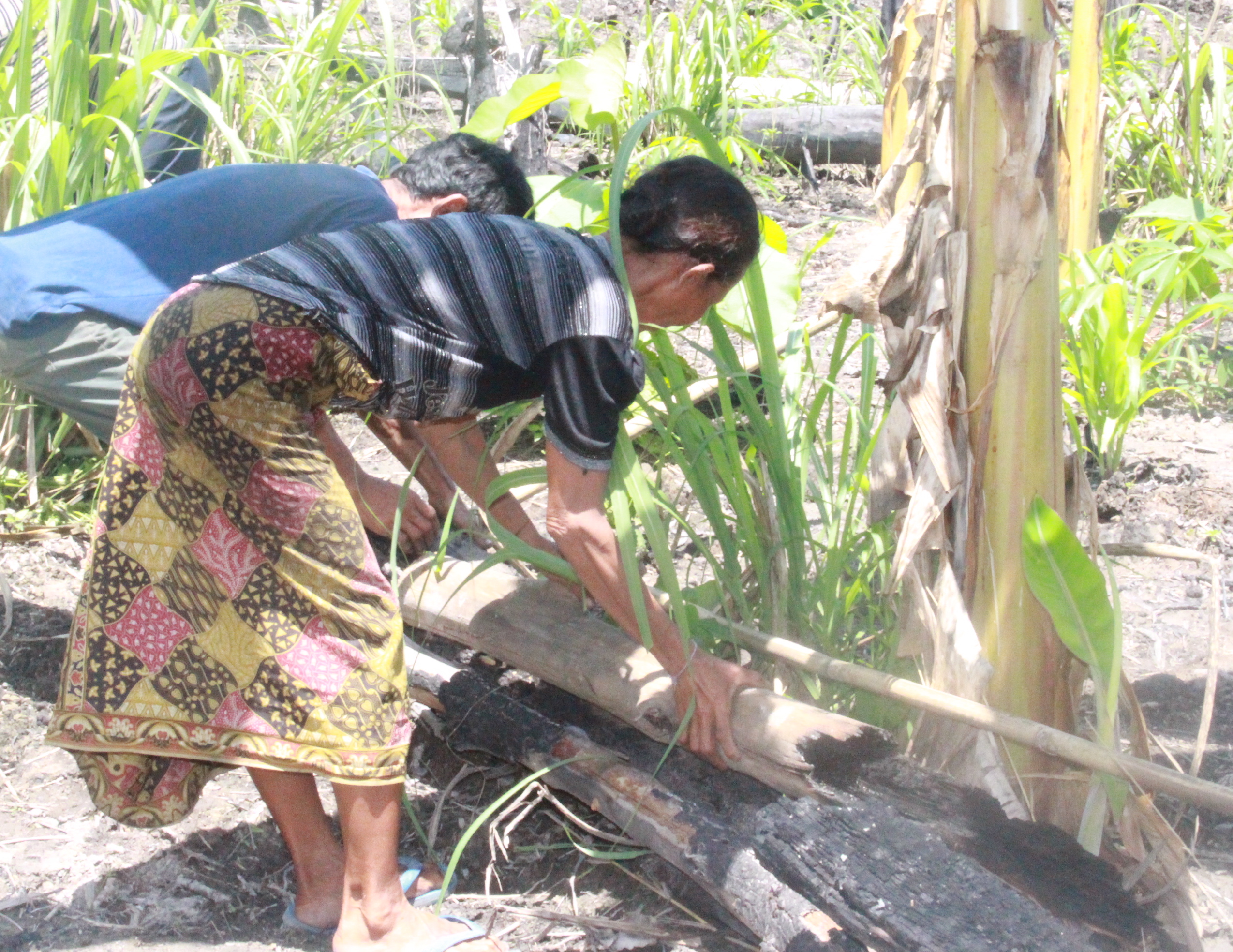
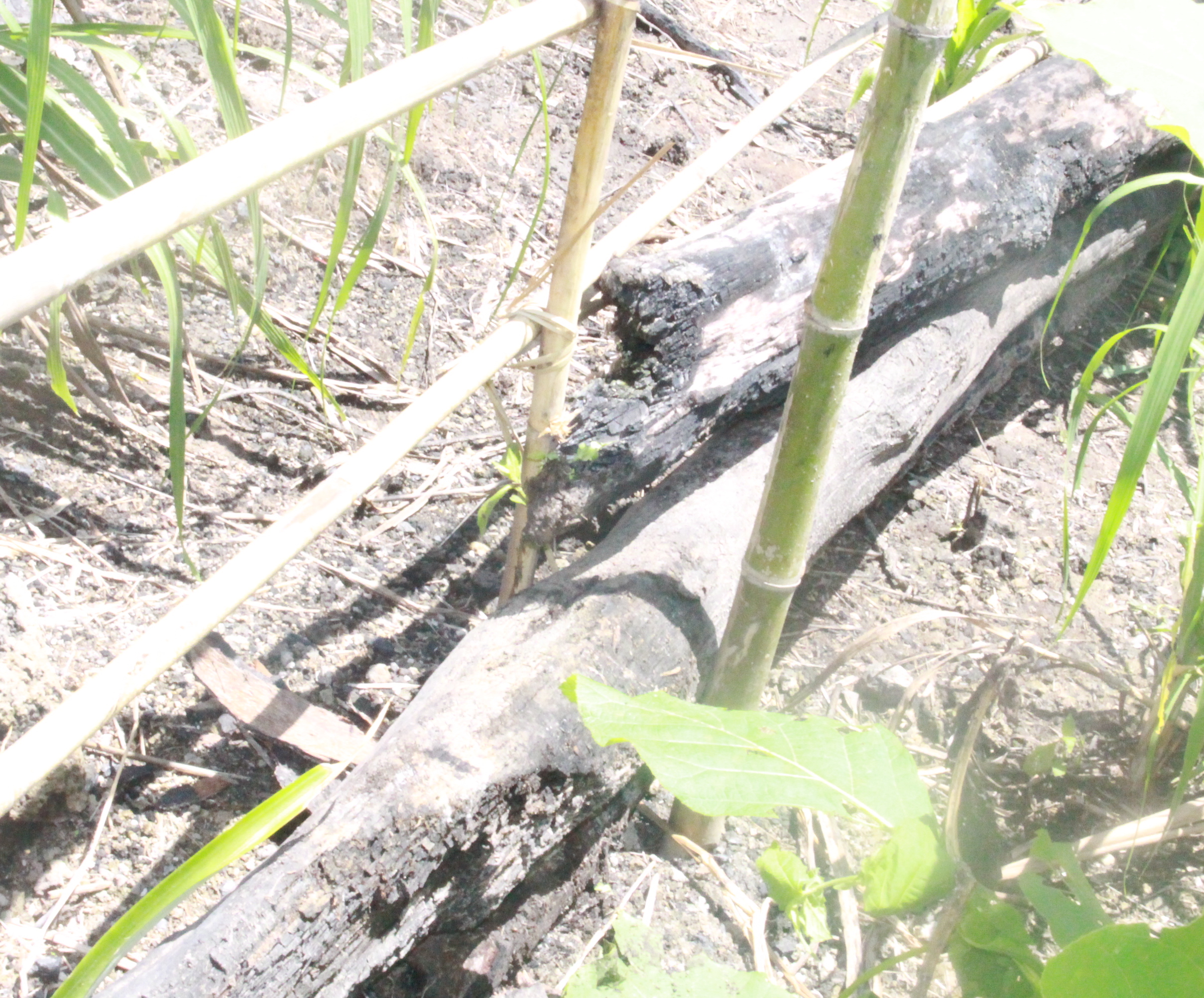
This technology was also meant to help maintain nutrient levels on topsoil as without a technology the nutrients are being flushed down the hillside. It can be assembled using a collection of local logs approximately 4-5 meters in length and around 15-20 cm in diameter (obtained through the clearance of upland rice fields). The logs should be arranged horizontally at the position of a designated drainage site where the run-off flows from a particular agricultural area. They should be stacked on top of one another until reaching a height of about 1 meter. A buttress should also be erected using mature bamboo poles as supporting posts with a length of 1.5 meters and diameter of about 10 cm so as to prevent the logs from sliding down the hillside. The bamboo poles should be driven about 50 cm into the ground and then tightened with ropes. This technology should only be constructed after the planting of upland rice fields has been completed in mountainous areas which have slopes between 20-25%. In general, the local residents have set up this mechanism at 2-3 selected sites within an agricultural plot. The benefits of this technology include mitigating the impacts of soil run-off whilst facilitating the distribution of soil nutrients around the agricultural plot of land. The water and top soil run-off is slowed down when it reaches the log wall and is then directed to flow out on either side of the technology. Previously the average rice yield used to be 1.5 tons/ha, but then the upland rice yields increased to 2 tons/ha after the application of this technology. This is due to the reduction of soil surface losses and an increase in the soil’s organic matter that accumulates through the processes of sedimentation and biomass transport. The quality of the surrounding soil improves through the decay of biomass and the breakdown of the soil by organisms such as earthworms and millipedes.
This technology can be installed on hill slopes . The technology is approximately 1 meter in height (above ground) and 4 -5 meters in length. The supporting posts need to be driven 50 cm into the ground. This technology can be used at the location of seasonal drainage points or water channels on hill slopes between 20-25% (with usually 2 or 3 sites per agricultural plot).
Strengths: Reduces sediment run-off, increases organic matter on the soil’s surface (builds a thicker layer of soil), financially economical, and distributes nutrients on agricultural plots.
Weaknesses disadvantages/ risks of the technology/ how to overcome them: Most of these technologies are not permanent and quite exposed and therefore require annual repair and maintenance. If the run-off facility is to be upgraded, it would need the use of a better quality of rope and concrete posts. However, most people still use the readily available local materials which affects the quality of the water run-off technology as well as its effectiveness. Furthermore this technology may need to be installed at several sites along the same channel on the foot slopes.
Photos of the Technology
- 📍 North Vongvillay village, Phouvong district, Attapue Province
- 📷 Vadsana Boualaivan
- 📍 North Vongvillay village, Phouvong district, Attapue Province
- 📷 Vadsana Boualaivan