
Plantation of Yangbong (Persea kurzii) Trees on Slopes
Type: Technologies
Creation: 2017-05-19 04:46 Updated: 2019-05-27 12:05
Compilers: jimmy luangphithack
Reviewers: Nivong Sipaseuth, Nicole Harari, Stephanie Jaquet, Alexandra Gavilano
Country/ region/ locations where the Technology has been applied and which are covered by this assessment
- Country: Lao People's Democratic Republic
- Region/ State/ Province: Samou y district, Salavan province
- Further specification of location (e.g. municipality, town, etc.), if relevant: Lavatai village
- Map: View Map
Description of the SLM Technology
Short description of the Technology
Bong tree (Persea kurzii) plantation in slope area to increase forest canopy and to utilize the plantation areas for animal grazing such as cows and poultry.
Detailed description of the Technology
Bong tree (Persea kurzii), is a native tree species found in different regions in Lao PDR. In the past, farmers collected Bong barks from natural forest, as it contains gum and aromatic oils for the internationally very requested production of joss sticks. But the availability of wild Bong trees has been declining significantly. In order to keep this important source of income for farmers, Bong tree cultivation can be seen as valuable alternative to maintain the local livelihood whilst ensuring the preservation of the natural forests. The idea of commercial Bong tree plantation came from a Vietnamese trader (in 2000) who introduced Bong tree through a trial plantation. In 2006 land users who were experienced in the highly costly and labor-intensive coffee and pepper cultivation shifted to Bong tree cultivation. And in 2010, land users who gained lessons on seedling production and Bong tree cultivation from Vietnam established first trial cultivations on their farms. Later an IFAD Project in collaboration with the Samouey District Agriculture and Forestry Office promoted Bong tree plantation by providing organic fertilizer and advisory support to model households of the Samouey District .
Due to the easy handling and the potential benefits a number of farmers have been interested to participate. Bong trees are perennial and fast growing plants (first harvest of bark or log 6-7 years after planting) preferring humid climate and can be easily planted also on sloping terrain. Currently, Bong tree covers approximately 38 ha of land with an average increase of 1-2 ha/year. This land belongs to Mr. Sailava at Samoey district. The detailed method of Bong tree plantation is following:
1)Land preparation: first, it requires land clearance by removing weeds and bushes, along with hole digging in advance of rainy season (July to September);
2)Spacing: the appropriate spacing between the tree plants should measure about 2.5 x 2.5 meters. Staking is required throughout the plantation area before the holes can be dug. The planting holes are 25 cm x 25cm. The excavated topsoil should be stockpiled around the holes for refilling them later;
3)Planting and applying fertilizers: Bong seedlings need organic fertilizer (0.5kg/tree) that is mixed with soil and then filled in the holes. Finally the seedlings are gently placed in the holes by filling up with further topsoil. If the seedlings are tall, staking is required.
4)Maintenance: 2-3 months after planting ‒ only in case it is needed ‒ additional fertilizer will be added and/or weeding is carried out. The plant residues from weeding are used to cover the ground around the seedlings to keep soil moisture, and once decomposed, to provide natural organic matters to the soil. In conditions of dry climate and hard soil, watering is required to prevent soil cracking which is a cause of breaking tree’s roots and subsequently trees will die.
The advantages of planting Bong trees include direct income generation for households as well as increased forest canopy. It minimize the carbon emissions of slash-and-burn land use. The falling Bong tree leaves provide organic matters to soils, help retaining soil moisture and subsequently increase soil fertility. Under-story vegetation includes lianas and grasses that provide fodder for livestock. Three years after plantation, the land users can utilize the area for animal grazing such as cows and poultry. In fact, poultry can find earthworms around Bong trees which provide rich nutrition for animals. However, some disadvantages of planting Bong trees have to be mentioned as well: Some plantations may become shrubs where weeding is not conducted regularly. Poor maintenance provokes invasion of snakes, bees, and mosquitos.
Photos of the Technology
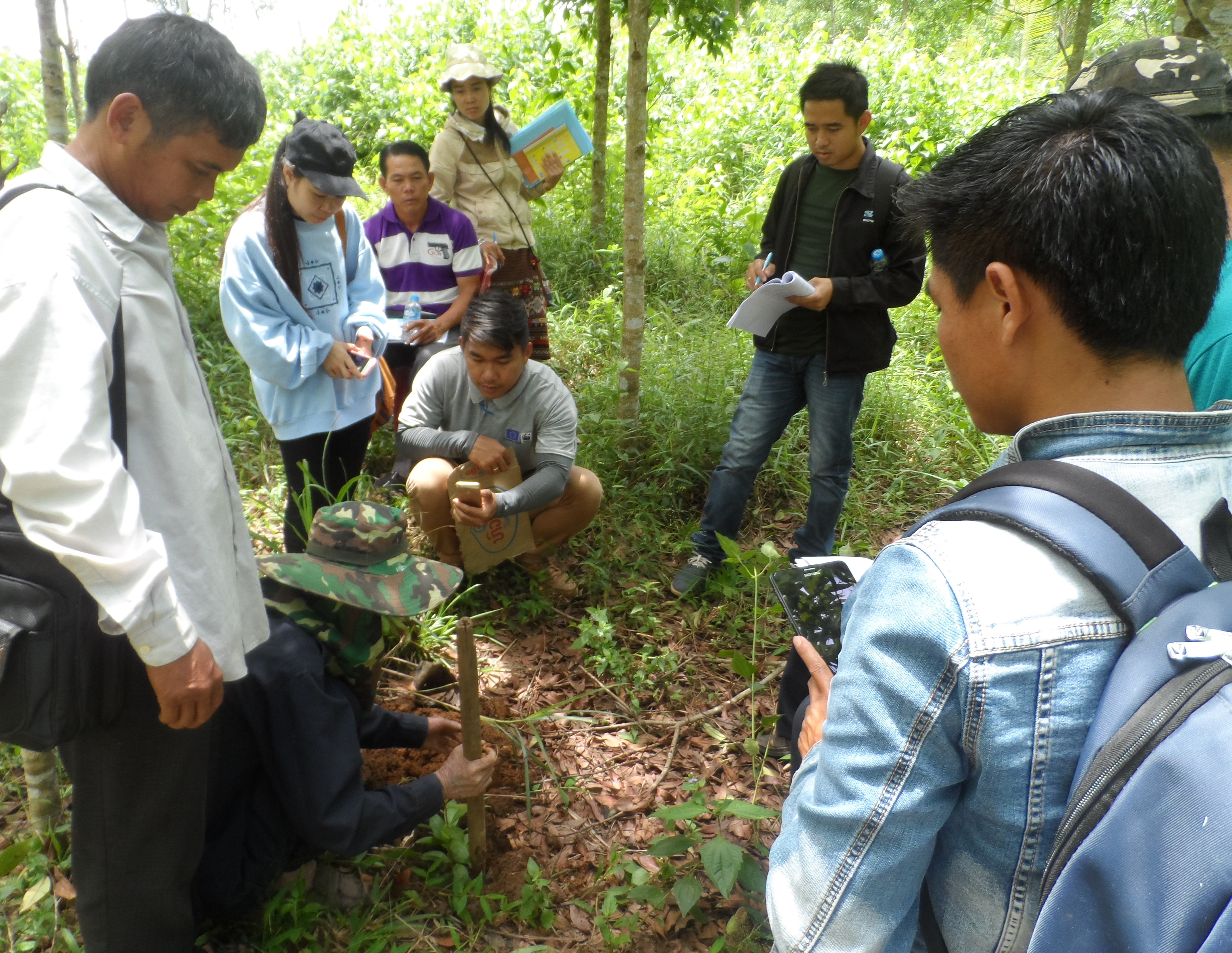
- 📍 Lavatai village, Samou y district, Salavan province
- 📷 Pasalath Khounsy
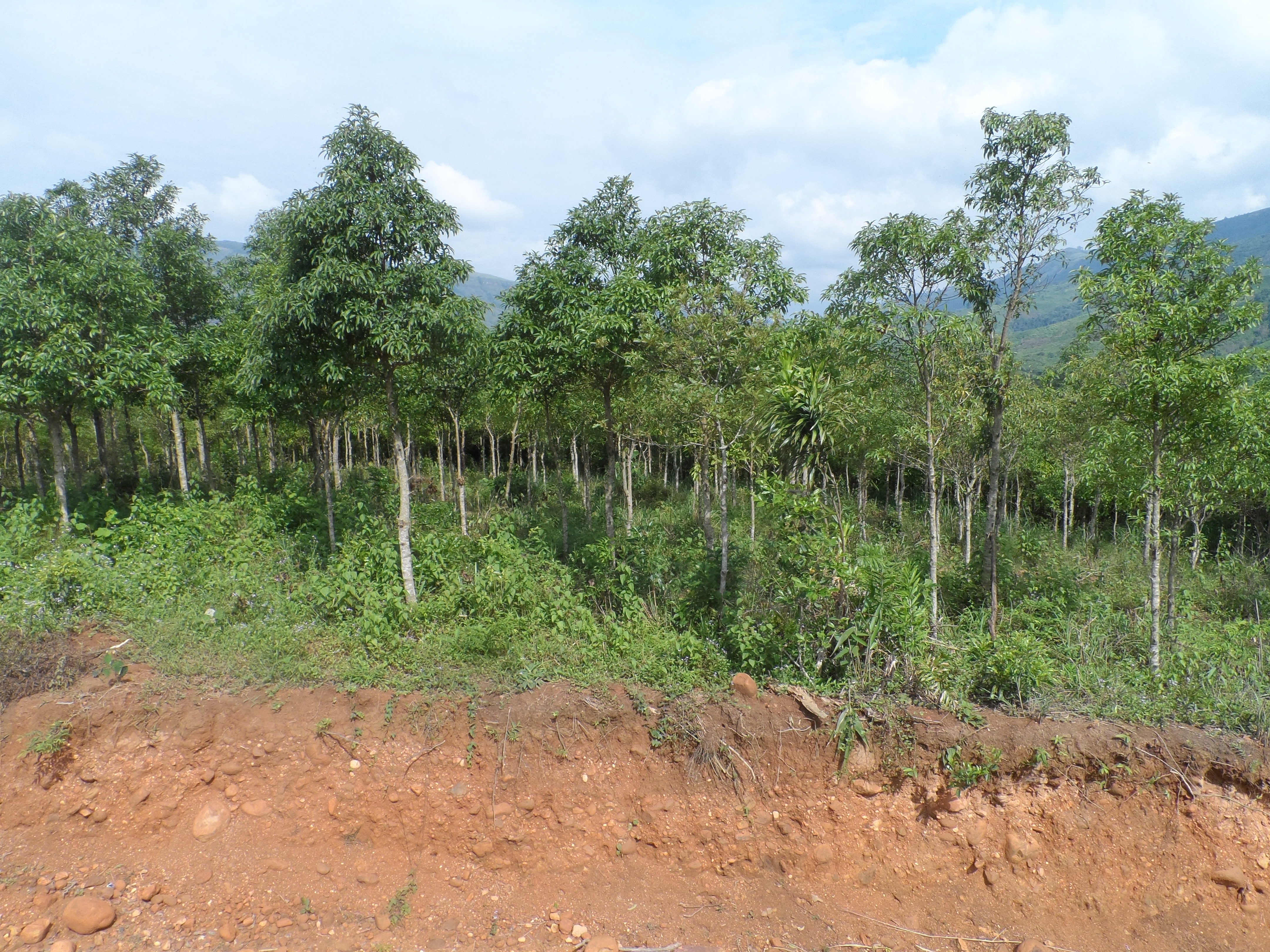
- 📍 Lavatai village, Samou y district, Salavan province
- 📷 jimmy Luangphithuck