
Agroforestry-intercropping of peanut between cashew nut trees in upland areas
Type: Technologies
Creation: 2017-05-19 09:12 Updated: 2019-03-08 11:30
Compilers: Navin Chea
Reviewers: SO Than, Ursula Gaemperli, Alexandra Gavilano
Country/ region/ locations where the Technology has been applied and which are covered by this assessment
- Country: Cambodia
- Region/ State/ Province: BengKoang Village, PreahKhleang Commune,Tbaeng Mean Chey District, Preah Vihear Province.
- Further specification of location (e.g. municipality, town, etc.), if relevant: The farm is 2 kilometers in distance from the mountain.
- Map: View Map
Description of the SLM Technology
Short description of the Technology
Intercropping of annual cropping (peanut) with cashew trees farm aims to fill the free space of land between cashew trees. This kind of crop cover prevents soil erosion and improves soil fertility. At the same time peanut cultivation is economically interesting for the farmers as it enjoys high market demand.
Detailed description of the Technology
Peanut belongs to the family of Leguminosae (scientific name: Aarachishypogeae L) and contains many beneficial substances. The grain of peanut contains nutrients such as protein, calcium, vitamin B, and acid glutamine and its oil content at 40-60 percent is very high. The average yield of peanut is 0.73 ton/hectare (Cambodian Agricultural Research and Development Institute, 2006). Cambodians are growing it at household scale or on large farms.
Peanut can grow on many soil types especially on sandy soils mixed with alluvial soil (alluvial soils easily absorb water). The plant requires much sunlight as lacking light delays the plant growing. Adequate water is another need of the plant - not too much and not too little water. Peanuts grow from April to May and from September to October on the uplands and in November along the river after water has receded. The time of harvesting depends on the seed variety. Short term seeds can be harvested after 90 - 100 days and long term seeds after 120 - 140 days (Agritoday, 2016,Yayo, 2016).
Cashew belongs to the family of Asanardiaceae (scientific name: Anacardiumoccidentale L, Royal University of Agriculture, 2006). Cashew trees are grown in many tropical countries. The nutrition value of cashew nuts is high at about 500 calories per 100 gr. The first worthwhile harvest begins after 3 or 4 years (first yield 2.5 to 3 kilogram per tree) but can be started already with low yield after second year. But seven years after planting the yield of this evergreen tree remains constantly high nearly until it’s cut down after 25 years. In 2017, fresh cashew nuts got 8500 riel per kilogram (Agritoday, 2017).
As main purposes of the peanut as intercrop between cashew trees can be seen in the reduction of weed at 50 percentage and in the increase of additional income (MoE,2016).
Miss. Uth Vin living in the uplands of Preah Vihear province (Cambodia) is one of the farmers engaged in this agroforestry system. Before she started on some plots the land was degraded forest land. Firstly she converted it into a mono-cropping system (cassava, banana, mung bean, and soy bean). In 2016 she changed to cashew trees combined with peanuts.
The main benefits of this intercropping system are:
1. The technology meets the farmer’s ultimate economic need of enough cultivable land, as - to a certain extent - also degraded land can be cultivated by this technique and thus, create yield to improve the household income.
2. Before the farmers gets enough yields from cashew trees (after 3 years), peanuts provide them immediate income (yield after 3 month/2 harvests). On one hectare, peanut can provide a net income of 3,000,000 Riel (4000 Riel per kilogram).
As peanuts need enough sunlight, the intercropping must be stopped after 3 years, because the branches of the cashew trees provide too much shadow that is not convenient to peanut growing.
Beside the benefits already mentioned, the intercropping of peanut can improve soil fertility because the plant takes nitrogen from the air and ''fix'' it into the soil via its roots and by support of Rhizobium bacteria. After harvesting, the plant residues are ploughed into the soil as organic fertilizer. Thus, it is a very important green manure, which reduces the application of chemical fertilizers. Weed control at the first years of cashew growing is important as well. This also can be attained by the peanut cover plantation on the ground. Last but not least, peanut and cashew trees are crops which prevent soil erosion by water.
Photos of the Technology
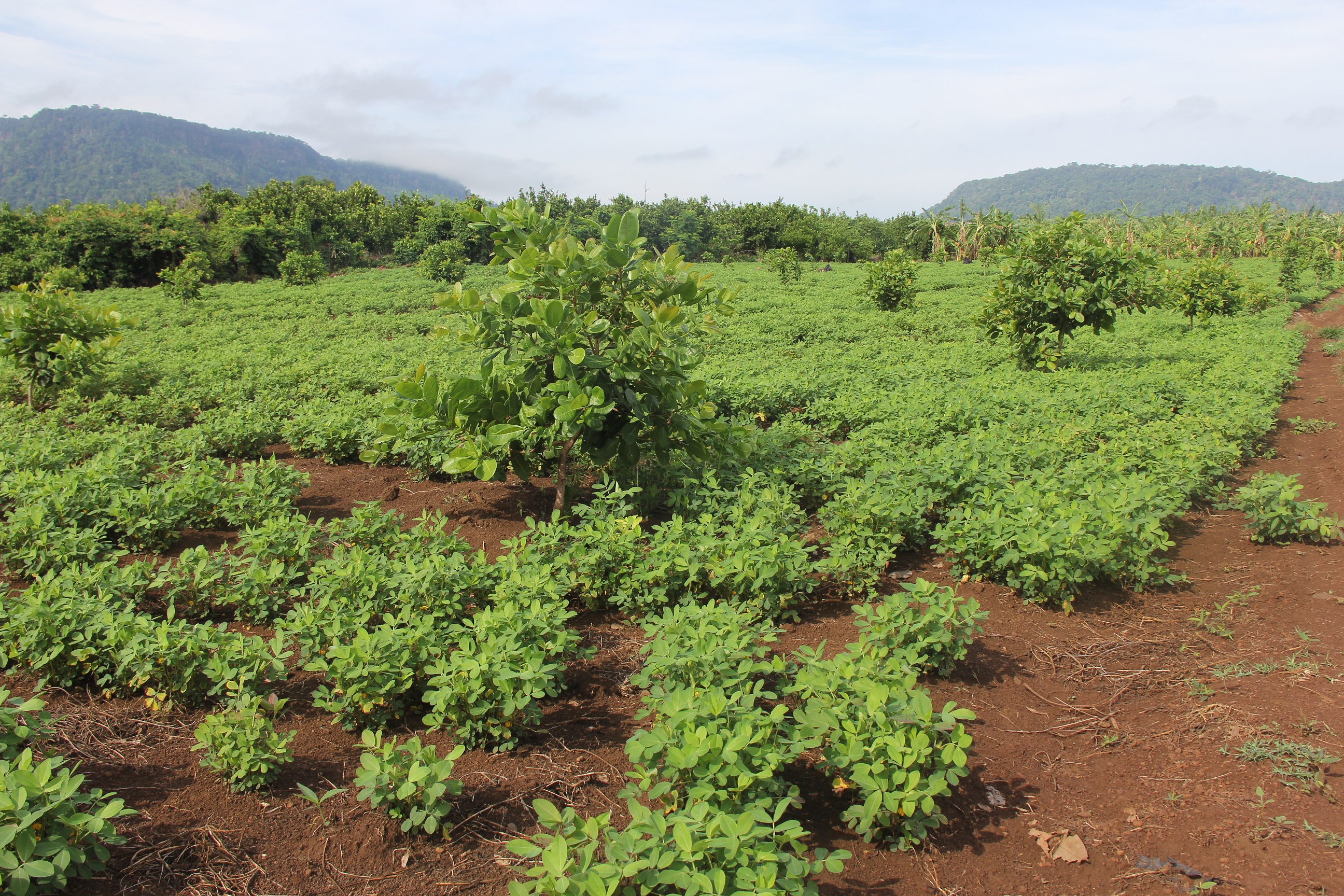
- 📍 BengKoang Village, PreahKhleang Commune,Tbaeng Mean Chey District, Preah Vihear Province
- 🗓 2017-05-05
- 📷 Mr. Tim Sophea
- 📍 BengKoang Village, PreahKhleang Commune,Tbaeng Mean Chey District, Preah Vihear Province
- 🗓 2017-05-05
- 📷 Mr. Tim Sophea
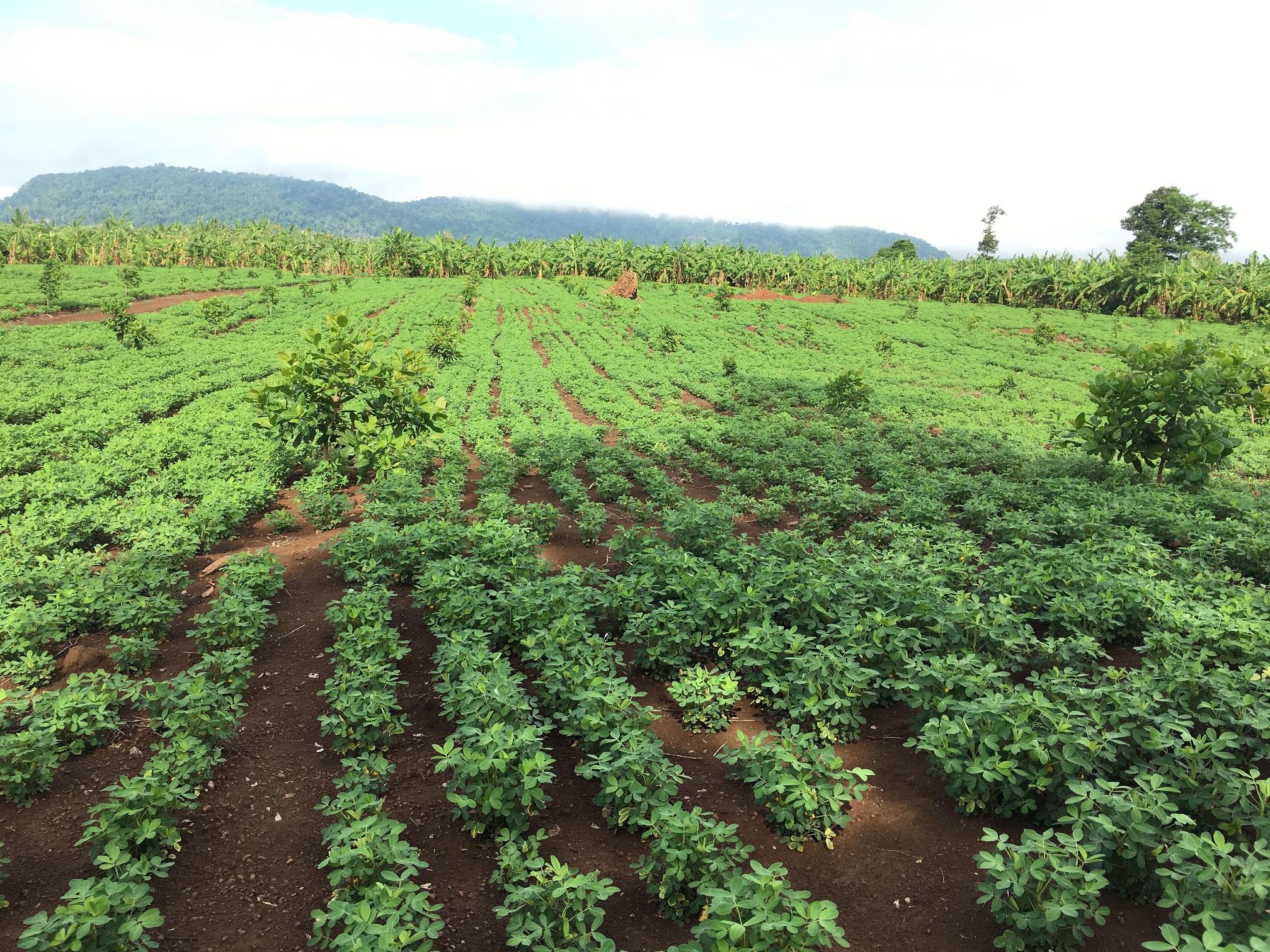
- 📍 BengKoang Village, PreahKhleang Commune,Tbaeng Mean Chey District, Preah Vihear Province
- 🗓 2017-05-05
- 📷 Mr. Tim Sophea
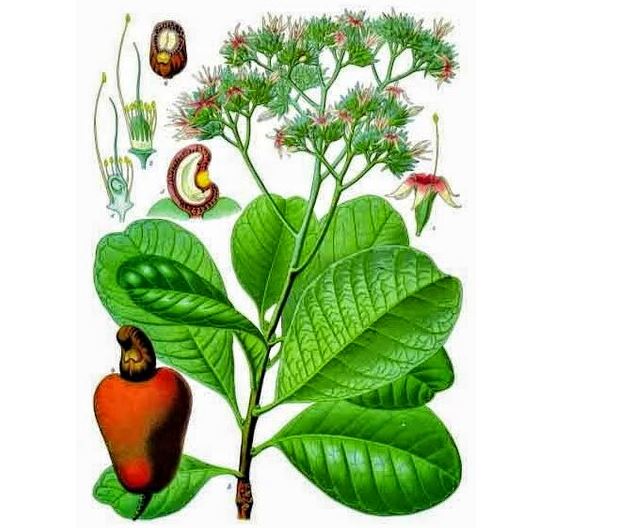
- 📍 N/A
- 📷 Saang. (2017). Cashew crop