
Agroforestry: intercropping of pineapple between orange and mango trees
Type: Technologies
Creation: 2017-06-22 05:26 Updated: 2019-06-28 03:53
Compilers: Be Gechkim
Reviewers: Ursula Gaemperli, Stephanie Jaquet, Nicole Harari, SO Than, Alexandra Gavilano
Country/ region/ locations where the Technology has been applied and which are covered by this assessment
- Country: Cambodia
- Region/ State/ Province: Kouk Sralau Village, Choam Khsant Commune, Choam Khsant District, Preah Vihear Province
- Map: View Map
Description of the SLM Technology
Short description of the Technology
The agroforestry practice based on intercropping of pineapple between mango and orange trees helps to maintain soil nutrients while enhancing potential economic benefits through multiple cropping to meet the market demand.
Detailed description of the Technology
The increase in forest cover loss has been dramatic, especially in plateau areas due to population growth and agricultural land expansion. The net result is seen in increased soil erosion and decreasing soil fertility, leading to land degradation (MPWT et al., 2016). Thus, agroforestry is being promoted based on its potential benefits through reducing soil erosion, increasing the economic returns, improved crop yields, improved soil fertility, and soil moisture. Agroforestry is the process of planting vegetables or other crops known as annual crops with long-term crops such as mango and orange trees (MoE et al., 2016).
Farmers adopt agro-forestry intercropping as a technique for reducing the application of chemical fertilizers, more economic use of water and soil moisture, higher yields and higher income. Pineapple is a suitable crop for intercropping in the unused space between mango and oranges trees, because it is share tolerant and does not need much sunlight. Pineapple is also resistance to water logging (for up to 7 days). Occasionally, the areas closest to rivers can become flooded for about 24 hours after periods of heavy rain. Often farmers who adopt the practice of intercropping not use chemical fertilizers or pesticide because they rely on the potential benefits of crop residues, leaf material, small plants, and grass cutting. Normally, mango trees and oranges are the long-term crops, and when grown there is usually a large amount of unused spacing in the area where the trees are grown. If this area is not used for other crops, there is weed ingress which can be difficult to control. Therefore, the cultivation of pineapples in this space will provide an income source in the period before the mango and orange trees become productive. The intercropping also saves labour input for weed control and facilitates the maintenance of the land. Moreover, when mango trees and orange became mature trees, pineapples can continue to be grown as they are shade tolerant but little sunlight may of course lead to lower production. However, pineapples are a relatively new product for that locality's markets.
An examined block of land at Kouk Sralau Village, 2000 square meters in area (20 meters wide and 100 meters long), contained 10 orange trees and 14 mango trees, and about 1000 pineapple plants. The mango trees were planted in two rows on both edges of the land (one row contained about 6 to 7 trees). The oranges were planted in the middle, and then the pineapples between the mango and orange trees. When planting the mango trees 0.5 meter holes were dug with a depth of half a meter. The distance between the mango trees was 15 meters. Leaf and other waste materials that had been kept for about a year were used to fill the holes. The orange trees were planted in a small dike about 20 cm high and length 2m in square shape around the planting hole (the hole was the same size as mango's hole), with a 4 meter distance between the trees. The land was cultivated during April or May and the trees planted after some rain. Weeding was needed in 3 to 4 months period after planting, and a year later cow manure was added to provide a source of organic nutrients. The interrow planting of pineapple plants used a plant-to-plant interval of one meter (collate as triangles shape), with planting taking place into holes 20 cm wide and 10 cm deep. If deeper holes are used, often the pineapples will rot. As it normally takes 9 to 10 months before the pineapples can be harvested, only one pineapple crop is grown per year. After harvest, it took time about 1 to 2 month more before the copies growth (more than 10 leaves) bigger and ready as planting materials for the next plantation cycle. After, all pineapple residue is collected and buried in a part of the land to provide a later source of organic nutrients.
Photos of the Technology
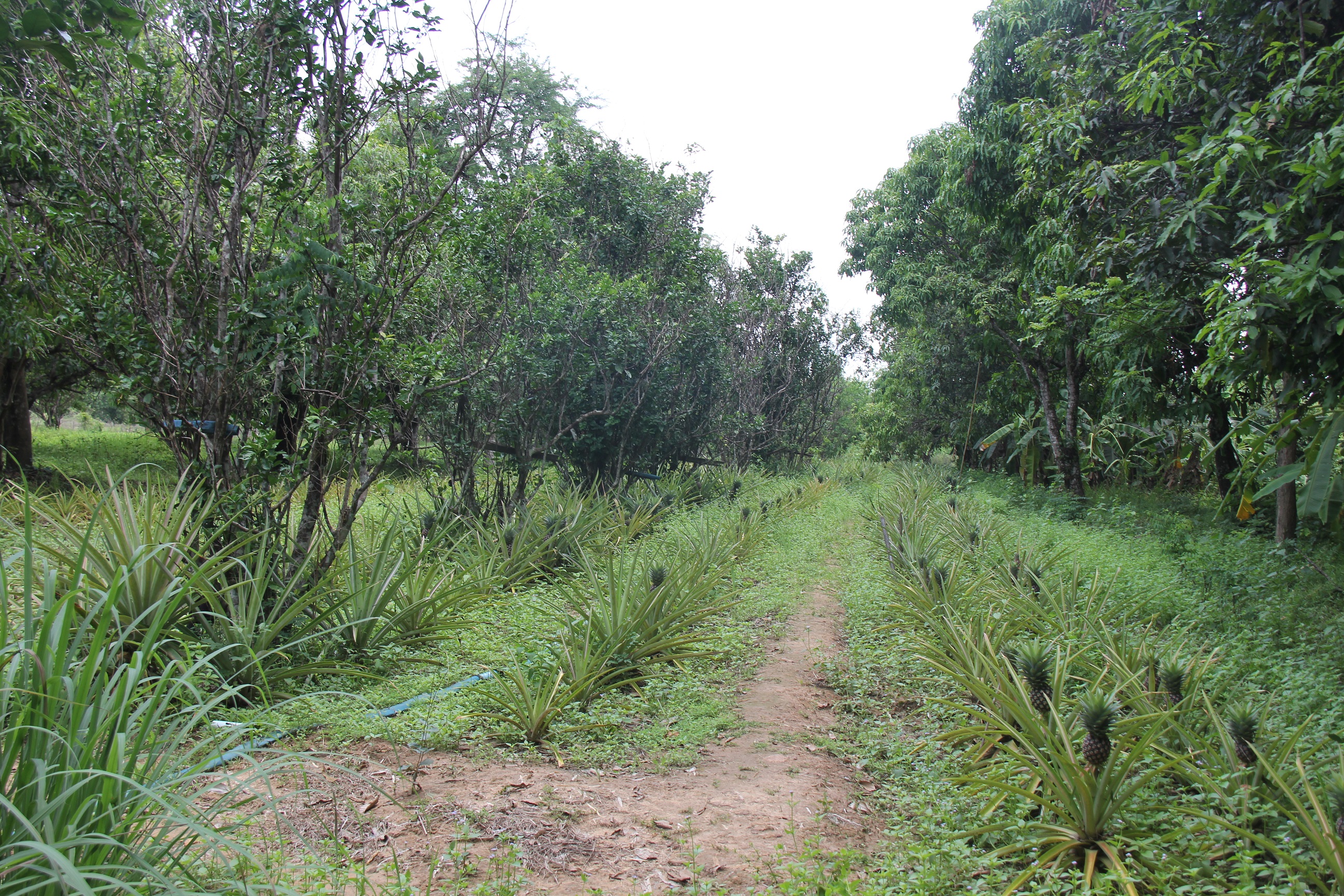
- 📍 Kouk Sralau Village, Choam Khsant Commune, Choam Khsant District, Preah Vihear Province
- 🗓 2017-06-05
- 📷 Mr. Tim Sophea
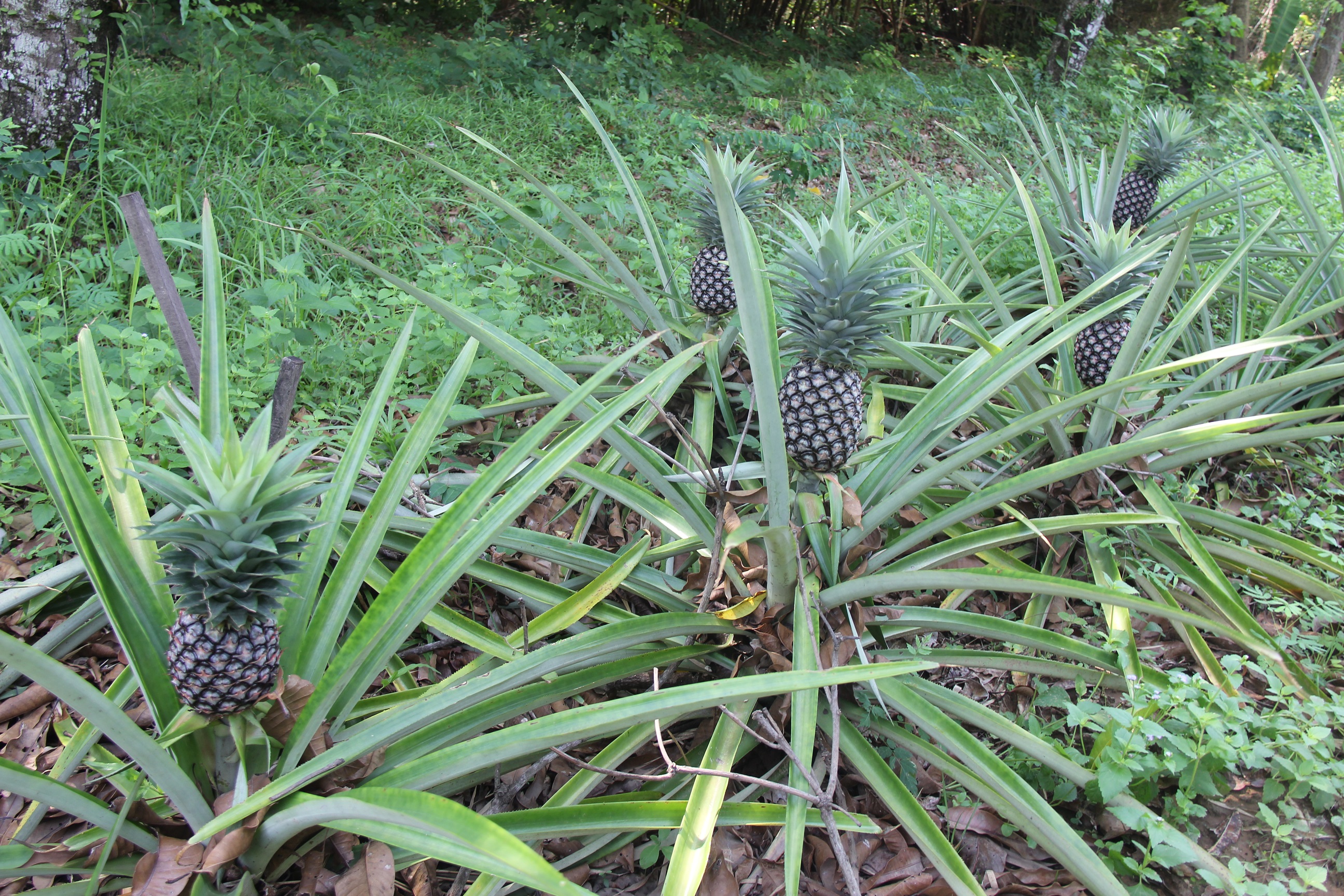
- 📍 Kouk Sralau Village, Choam Khsant Commune, Choam Khsant District, Preah Vihear Province
- 🗓 2017-06-05
- 📷 Mr. Tim Sophea