
On-farm ponds to alleviate the potential impact of seasonal droughts and for increasing crop cultivation and aquaculture
Type: Technologies
Creation: 2017-06-24 13:34 Updated: 2019-03-19 14:47
Compilers: Nary Lay
Reviewers: Nicole Harari, Nimul CHUN, Stephanie Jaquet, Alexandra Gavilano
Country/ region/ locations where the Technology has been applied and which are covered by this assessment
- Country: Cambodia
- Region/ State/ Province: Srayang Tboung village, Srayang commune, Kuleaen district, Preah Vihear province
- Map: View Map
Description of the SLM Technology
Short description of the Technology
Digging ponds on farms to harvest rain water used for irrigating crops during drought provides a means for addressing a lack of water at the start of crop cultivation, both before the start of the rainy season and after the end of the rainy season. The main objective of this practice is to increase the duration of the potential growing seasons for crops. A pond with a storage capacity of 2,412 cubic meter of water can potentially irrigate crops year-round in an area of at least 1.6 hectares, including during the dry-season.
Detailed description of the Technology
In areas with low rainfall and limited or lack of irrigation systems, the harvesting of rainwater for potential irrigation is an important practice for crop cultivation and food security. The amount of water potentially available is also an integral factor that farmers need to take into account. Furthermore, climate change is another pressure for farmers to adapt to, due to the potential adverse impact on agricultural activities, including a reduction in crop yields, increases in the incidence of crop diseases and insect pests, together with more frequent extreme weather events, including irregular rainfall, droughts and floods.
In response to the above issues, farmers have the potential to dig ponds for water storage, and the application of drip irrigation for cropping activities. The development of on-farm ponds provides a crop water resource during drought periods, while also providing opportunities for small-scale aquaculture and vegetable cropping. Having a pond in a field is regarded as being resilient to climate change (climate-smart agriculture) because farmers can have sufficient water for irrigation in all seasons throughout the year.
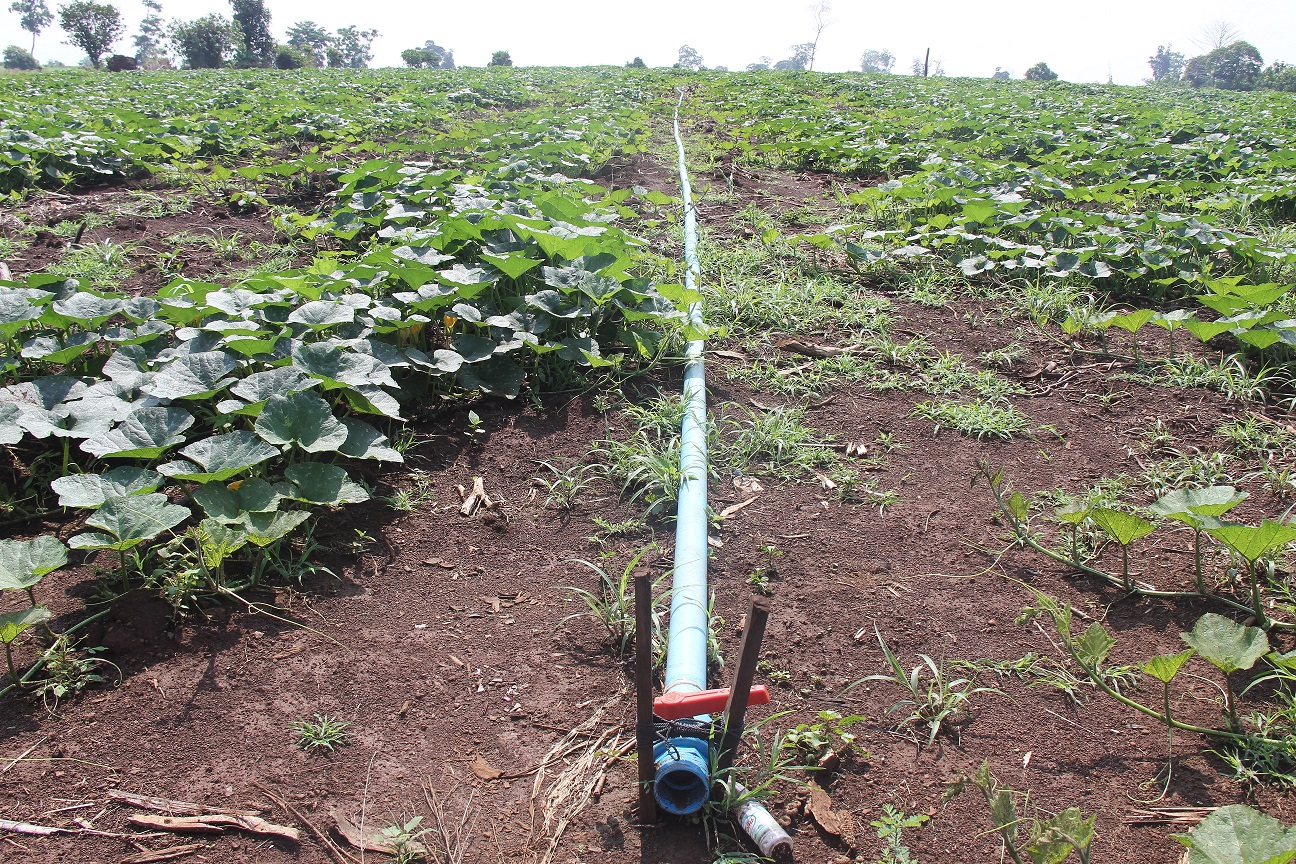
With the application of drip irrigation, farmers save water and time. Labour input for irrigation is reduced while a better environment is provided for crop growth, reduced soil erosion and better management of weeds, diseases and some insect pests. Drip irrigation is also a system of irrigation that maximizes water use efficiency in periods of drought in response to climate change.
Before making the decision to dig a pond, the farmer had observed and estimated the availability of water resources including the groundwater in the area for around two years by learning from the existing wells of neighbours around his land. The selected point for digging the pond is at the lowest part of his land, and it is also based on the fact he found that the neighbouring pump wells have good source of groundwater. This pond hence collects rainwater and connects to underground water aquifer, which is not very deep.
A farmer may not have to spend money for the digging of a pond on his land, as it is potentially possible to reach an agreement with the owner of an excavator (soil digging machine), to allow the owner of the machine to take the excavated soil in payment for the excavation of the pond. Without such a mutual agreement, the cost to the farmer of digging a pond could be as high as 8 million riel (about US$2,000). A suitable farm pond would need to have surface size of 40 x 20 meters and a bottom size of 29 x 14 meters. A pond depth of 4 meters might potentially provide 2 meters depth of water which can potentially provide sufficient water to irrigate over 1.6 hectares of crop in the dry-season, thereby enable farmers to grow at least two crops per year (or perhaps four crops that are short maturing). Farmers have also been able to raise at least 600 Tilapia fish (a freshwater fish) in the ponds.
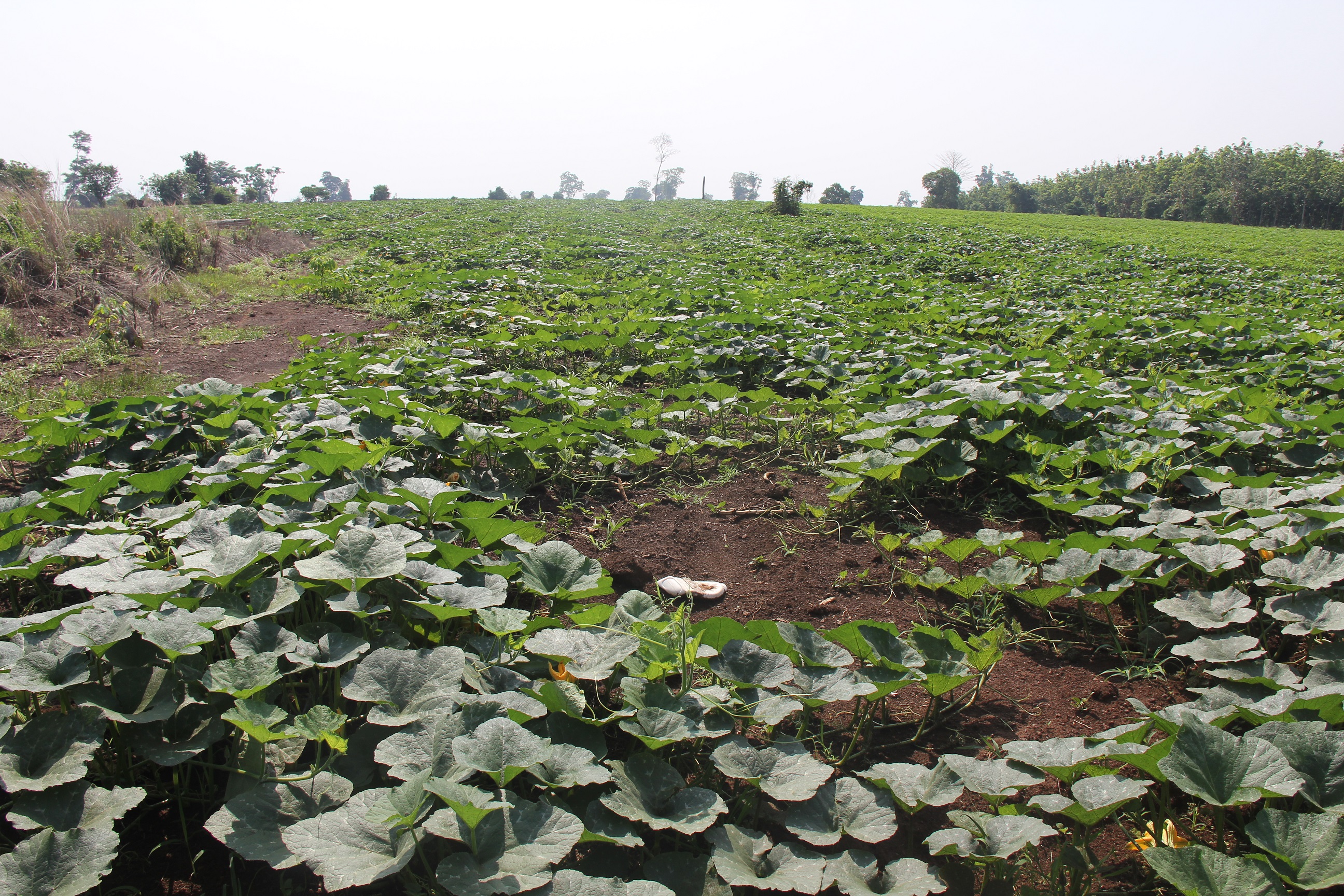
Farmers with access to water from a farm pond are able to grow more crops than previously, get higher yields, and grow crops such as pumpkin in the dry-season due to having access to water for irrigation.
Photos of the Technology
- 📍 Srayang Tboung Village, Srayang commune, Kuleaen district, Preah Vihear province
- 🗓 2017-05-05
- 📷 Mr. Tim Sophea
- 📍 Srayang Tboung village, Srayang commune, Kuleaen district, Preah Vihear province
- 🗓 2017-05-05
- 📷 Tim Sophea
- 📍 Srayang Tboung village, Srayang commune, Kuleaen district, Preah Vihear province
- 🗓 2017-05-05
- 📷 Tim Sophea