
Planting bamboo for fencing and wind protection
Type: Technologies
Creation: 2017-07-05 04:04 Updated: 2019-09-05 11:53
Compilers: jimmy luangphithack
Reviewers: Nicole Harari, viengsavanh phimphachanhvongsod, Alexandra Gavilano
Country/ region/ locations where the Technology has been applied and which are covered by this assessment
- Country: Lao People's Democratic Republic
- Region/ State/ Province: Salavan province
- Further specification of location (e.g. municipality, town, etc.), if relevant: Samouy
- Map: View Map
Description of the SLM Technology
Short description of the Technology
Bamboo is planted for fencing agricultural land, protecting the land from strong winds and reducing the demand of wood from the forest. Bamboo shoots are also a source of nourishment and income generation.
Detailed description of the Technology
After experiencing serious impacts from the typhoon Ketsana in 2010, which included the loss of agricultural produce, the farmers needed to examine means of protecting their Yang Bong tree plantation from strong wind. One of the methods is to plant bamboo to act as fencing which at the same time protects the crops from strong winds. Initially farmers observed that natural bamboo grows in plentiful supplies along the stream banks and islands within the watercourses. Therefore, this stimulated their interest and so to start off with they conducted a trial with two tuffs. They noticed that the bamboo grows quite quickly and that the stems are a reasonably good protection against strong winds. The farmers thus decided to extend the area under cultivation and plant it around the edge of their Yang Bong tree plantation, which is approximately 1 hectare. In fact, farmers had usually harvested considerable amounts of bamboo from the surrounding natural forests for the construction of fencing around their agriculture land. This practice had actually placed ever increasing pressure on these natural forests, is quite time consuming and requires considerable labour power in order to transport it over long distances.
Normally, bamboo fences need to be constructed and maintained annually in the first year of bamboo plantation. Moreover, there is also the issue of wildlife and livestock damaging the plantation area, which results in the loss of produce (approximately 70- 80% of the damaged area).
The bamboo should be planted in holes with a diameter and a depth of 20 cm with a gap of 2 m between each hole. The seedlings are selected from one to two year old stems. The individual rhizomes should be removed from parent plant and then the roots trimmed. The bamboo culms should not be too long, normally about 50-80 cm, about the length of an average human arm. Replanting should take place on the same day and at the very latest not more than two days after the rhizomes have been collected from the parent plant. May and June are the most appropriate months for planting as this is the start of the wet season. Bamboo should flourish during this period and thus it reduces the likelihood that the bamboo seedlings will wither. Maintenance of the plants may require watering, especially during the dry season, which should be done once every five to seven days until the commencement of the rainy season. Watering may not be necessary once the bamboo plants have been able to survive for two years, but they should be weeded at least twice per year.
Planting bamboo provides environmental, economic and social benefits. It helps to increase soil nutrients, porosity, and moisture and lower the temperature of the immediate surroundings. Bamboo shoots are a source of food and bamboo culms can be used for many purposes, such as the manufacture of handicrafts. Dried out bamboo can be sold for 40.000 Kip/kg and, on average, each farmer is able to sell up to 40kg per year. It is possible to harvest bamboo shoots three years after the rhizomes have been planted. Households have learnt from these positive experiences and began to plant bamboo around their rice paddies and home gardens to prevent livestock from damaging their crops and gain additional benefits.
Photos of the Technology
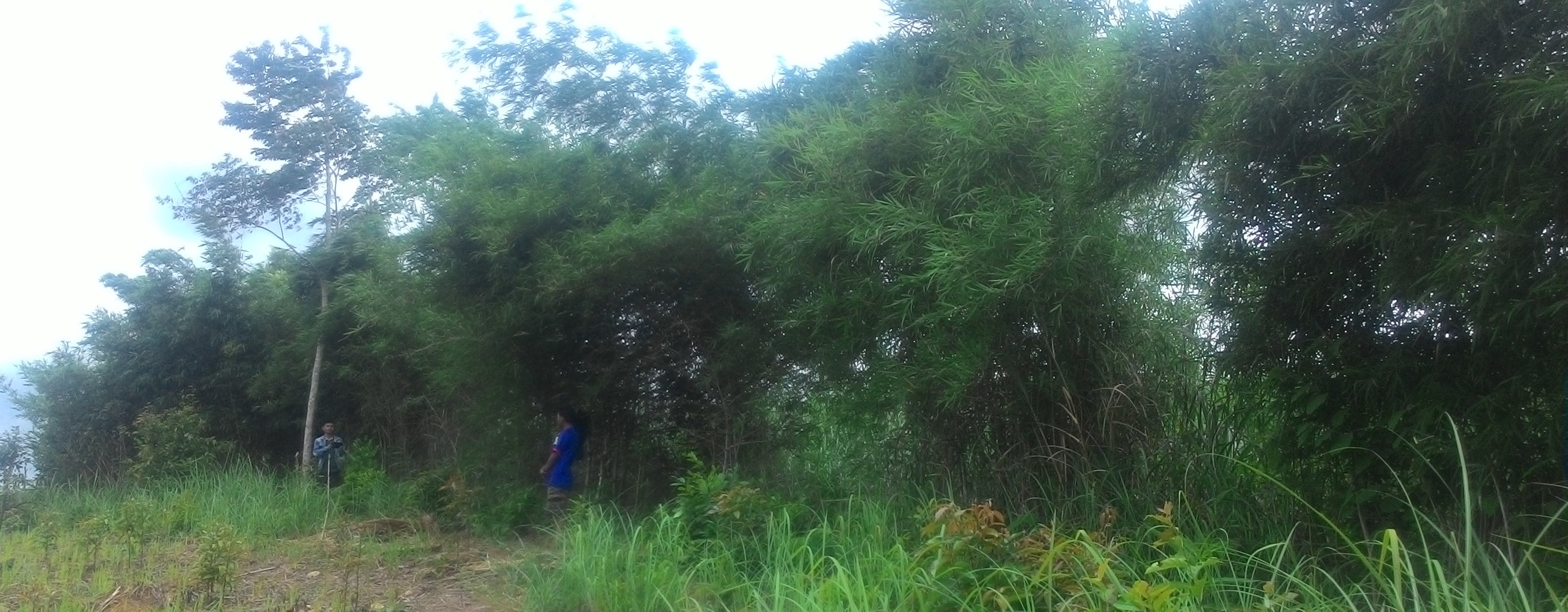
- 📍 Meo village, Samouy district of Salavan province
- 🗓 2017-04-07
- 📷 Jimmy Luangphitak

- 📍 Meo village, Samouy district of Salavan province
- 🗓 2017-04-07
- 📷 Jimmy Luangphitak